Skip to content

Raising healthy kids in a digital world

Five young adults smiling for a selfie

As a tween or teen, it can be difficult to navigate the complexities of social media. These strategies can empower parents and caregivers to create a realistic plan for their family’s screen use.

Parents and caregivers of tweens and teens can’t fail to have seen—probably on social media—a recent report from the U.S. Surgeon General about the “profound risk of harm” to adolescents’ mental health and well-being caused by excessive use of social media.

“Parents tell me they watch their children retreat to their bedrooms and spend hours alone with their screens,” wrote the Surgeon General in the Washington Post, “exposed to an endless feed of flawless bodies and unrealistic ideals.”

The report substantiates what many researchers, doctors, parents and lawmakers have long suspected about social media use in youths, elevating the conversation of how to address the issue to the national level.

And it is indeed an issue: a 2022 Pew Research survey found that 95 percent of teens said they had daily access to a smartphone, while 35 percent said they were using at least one of the top five social media platforms (YouTube, TikTok, Instagram, Snapchat and Facebook) “almost constantly.”

According to Screen Sanity, a national nonprofit focused on digital health for youth, 80% of teens check their phones throughout the night and respond to every notification.

That’s a lot of lost sleep.

Clinical diagnoses and self-reporting among adolescents of anxiety and depression, along with emergency room visits for self-harm and suicidal ideation, have risen in recent years in a seemingly parallel pattern with increasingly prevalent use of social media.

But the correlation between social media use and increasing rates of distress among young people is unclear.

Recent research considering the connection between social media and youth well-being has been consistently inconclusive, demonstrating both a positive and a negative effect: while excessive screen time of any kind disrupts sleep and can supplant activities like exercise, reading and other hobbies, social media use has allowed countless youths to connect with a community and express themselves.

There is a correlation between time spent on social media or in online gaming and monetary cost as well. Alexis Hiniker, associate professor at the UW Information School, has researched the prevalence in apps and games of “dark patterns”, interactive designs deployed in the ‘attention economy’ that encourage longer gameplay or reengagement with gameplay, ad viewing and making in-app purchases.

For kids who are still developing their digital critical thinking skills, coercive dark pattern design can result in hundreds of dollars spent on in-app purchases.

Earlier this year, the American Psychological Association issued its first-ever social media guidance recommendations, suggesting that parents and caregivers keep careful tabs on kids’ usage. The APA also suggested that tech companies producing apps like Instagram, TikTok and Snapchat reconsider features like endless scrolling and the “like” button.

What can we do to help our kids have a healthier relationship with screens and social media?

Dr. Dimitri Christakis, a leading child development expert and director of the Center for Child Health, Behavior and Development at Seattle Children’s, has said that screen time isn’t all inherently bad, and might even have some educational benefit for kids—as long as parents and caregivers are engaged in the curation and management of the content being consumed.

While this is particularly true for parents and caregivers of young children, engagement also goes a long way with tweens and teens.

Dr. Christakis suggests taking a highly active role in children’s media education by co-viewing programs with them and talking about them afterward—what was new, exciting or funny.

With older kids, playing video games with them and sharing fun and engaging apps and social media sites together—helping them to curate their feeds—goes a long way toward a healthier approach to its use.

It’s never a bad idea to remind kids that social media is a highlight reel

Of course, not all screen time is created equal. An hour spent watching a Minecraft gamer setting TNT on his opponent’s build, for example, is not equivalent to an hour spent video chatting with grandparents.

And for older kids, video chatting and text have become the standard means of socializing—so does that count as screen time?

“A lot of preteens and older adolescents do their socializing via screens,” Dr. Christakis said. “Texting and video chats have displaced talking on the phone, so I wouldn’t necessarily count that as screen time.”

Nonetheless, time spent socializing via a device is time not spent in healthy, face-to-face interactions developing real-life relationships—an essential skill for young adults.

Getting kids started with social media

For parents or caregivers considering when to allow their kids to begin using social media, note that the Children’s Online Privacy Protection Act prohibits companies from collecting data online from children under 13. Consequently, social media companies prohibit children under 13 from creating their own accounts.

Of course, the 12-and-under set can easily evade this rule by lying about their birth year—so it really is incumbent upon parents to help their kids navigate social media in positive ways.

Social media expert Devorah Heitner, author of “Growing up in Public: Coming of Age in a Digital World,” offers the following strategies in setting the ground rules for social media use for kids:

  • Create a family media plan to set expectations and check in with that plan regularly. Check out a sample “Media Time Family Pledge” for online media use.
  • Start slow: add new apps one at a time and give kids time to get the hang of how to use them and determine whether the app is a good fit for their personality and temperament.
  • Keep mealtimes and in-person gatherings free of devices to promote family bonding, meaningful conversations and authentic engagement.
  • Set time limits: when kids first get their own device, or first start using social media apps, don’t give them 24/7 access to it. Experts strongly discourage allowing devices in the bedroom at night, or phones used as alarm clocks—too much temptation.
    • You can set a limit via your own phone — on Apple look for the Family Sharing settings and on Android you can use an app called Family Link.
  • Prevent unwanted downloads with an Ask to Buy setting on Apple phones that will send a request to the parent when kids want to buy or download a new item.
  • Help your teen understand and curate their feed by encouraging them to like and follow a diverse group of role models—peers, celebrities doing good works, athletes encouraging positive change in the world.
  • Talk to your kids about who they follow and why and share the same about your own social media accounts. Be sure they understand your boundaries around content and how—and why—to keep their personal information private.
  • Define “sexting” to kids of all ages and make sure they know that it is never ok to send or receive pictures of people without clothing, whether they know the person or not.
  • Resist the urge to take away their device or access to social media if they post something you don’t like, which can backfire if kids go “underground”. Instead, talk with them about deleting a poorly planned post and repairing any damaged relationships.
  • For younger children, consider Pinwheel, a smartphone with multiple built-in parental controls, including the ability to monitor your child’s communications.

Helping teens wean off social media

What if your tween or teen already has a device and access to social media—and is one of the 35% checking apps “almost constantly” and suffering the negative mental and physical health consequences of it?

Much media coverage has been allotted to “tech’s toxic effect” on self-esteem—particularly for girls. Considerably less media suggest how parents and caregivers can help kids wean themselves off or cut back on social media—especially when social media platforms and apps are designed to be both addictive and deceptive.

Jean Twenge, a psychologist at San Diego State University who has extensively researched the effect of social media on teens’ mental health, has some suggestions for helping them cut back:

Set boundaries collaboratively by asking your child what kinds of changes feel manageable, such as cutting down on the number of apps available or limiting overall social media time. Consider using the American Academy of Pediatrics’ free tool for creating a family media plan.

Suggest a social media vacation: a day, a week, a month—any time off from social media can be beneficial to teens. Expect pushback, and be prepared to offer alternatives for the time they would have spent scrolling: a family outing, such as a special shopping trip or visit to a theme park or family fun center, might be just the thing.

Stay firm on your own rules around the amount of screen time teens are allowed, keeping screens out of the bedroom at night and turned off during mealtimes. Like any aspect of parenting, consistency is key.

Additional resources

Bright Horizons + Screen Sanity: UW WorkLife’s employee backup care provider, Bright Horizons, has partnered with Screen Sanity to offer a comprehensive webinar, Improving your family’s digital wellness, to empower parents and caregivers  to create a plan for their family’s screen use, introducing kids to smartphones and safely introducing social media.

Looking for additional support navigating screens or social media with your family? UW’s employee assistance program, Washington EAP, has a variety of resources available to parents and caregivers, including parenting articleswebinars and counseling (available for both parents and caregivers and children).

How to take parental leave: tips from your UW Human Resources leave specialists

So, you’re expecting a new child, either through birth or adoption. Congratulations! It’s wonderful news, but also one of the biggest life events that can come along. Here are tips for taking time away from work to bond with the new member of your family.

What are my leave options?

Erin Rice, assistant vice president of UW Human Resources Campus Operations, says that parental leave is complicated by multiple overlapping state and federal laws, UW policies and union contracts that play into the amount of time you can take off and the means of getting paid during your leave.

“The good news,” she says, “is that there are a lot of options, and UWHR has resources and people to help you understand and navigate your options.”

Below, Rice and her team answer the most commonly asked leave questions.

What are the different components of parental leave?

Birth parents can take 6 to 8 weeks for temporary pregnancy disability, or as prescribed by a health care provider, immediately following the birth. Bonding leave starts after the disability period for birth parents, after birth or placement for non-birth parents.

What government policies affect my leave?

The federal Family & Medical Leave Act (FMLA) is a leave entitlement that provides job and health insurance protection when eligible employees take a leave of absence for a qualifying reason. Eligible employees have worked for the UW for at least 12 months and 1,250 hours.

The Paid Family & Medical Leave (PFML) program is a program of the state of Washington that provides partial wage replacement for employees on qualifying leave who have worked in the state of Washington for 820 hours during the “qualifying period.”

How long can I take leave?

Under UW policy, union contracts and civil service rules, parental leave (after post-birth parent disability) is 4-6 months, depending on which policy or contract applies to you.

For FMLA-eligible parents, the FMLA period (12 weeks minus any FMLA you have used within the last year) runs concurrently with pregnancy disability and parental leave. FMLA is not a separate leave period.

PFML-eligible birth parents can receive up to 16 weeks benefits (up to 18 weeks if you have pregnancy complications). Non-birth parents can receive up to 12 weeks.

Do I have to take leave all at once?

UW Parental Leave is generally taken as continuous (full) leave of absence or, if it meets business needs and has the approval of your unit, can be granted as intermittent leave or a modified work schedule.

Leave covered by PFML can be taken intermittently or on a reduced schedule for the 12 months following the date of a child’s birth, adoption or placement.

How do I get paid?

If you accrue paid time off, you can be paid while on leave by using your paid time off or through parental shared leave. For parental shared leave:

  • Donations from other UW and state employees can be used once your Vacation Time Off and Sick Time Off balances in Workday are each reduced to 40 hours or less.
  • Birth parents can use donated time during disability period + the following 16 weeks.
  • Non-birth parents can use donated time for the 16 weeks immediately after birth or placement.

Faculty can use available paid sick leave to care for the birth parent by following the process to request leave to care for a family member.

It is also possible to take approved leave as unpaid time off.

Through PFML, the weekly benefit amount is generally up to 90% of weekly wages, with a $100 per week minimum and a $1,456 per week maximum (2024).

During a PFML leave, it is the employee’s choice whether to use accrued paid time off. Employees can receive both paid time off from the UW and the PFML benefit for the same period. This is called using “supplemental benefits.”

How do I maintain health benefits while on leave?

If you have worked for the UW for 12 months and 1,250 hours prior to taking parental leave, your health insurance benefits continue just as if you were working during FMLA and PFML.

After your FMLA and/ or PFML is exhausted, or if you are not eligible for FMLA or PFML, you will need to remain in “pay status” to maintain your benefits.

Pay status means that you either use eight hours of paid time off or work eight hours a month.

The UW Benefits office can help with additional questions regarding benefits. And UW WorkLife offers a wide range of other child care resources.

How do I request leave?

All staff and academic personnel complete and submit a parental leave form. Request the entire period you would like to take parental leave in Workday (see Leave of Absence – Sick/Injured or Becoming a Parent User Guide) at least 30 days prior to birth/placement. After approval, request time offs (sick, vacation, unpaid) for each day of your parental leave in Workday.

Parental shared leave is requested by checking a box on the parental leave form.

PFML is requested through the Employment Security Department.

Who can I contact for help with family leave?

Campus staff and academic personnel – hrleaves@uw.edu

Medical Centers staff – medctrfmla@uw.edu

Students – uwdrs@uw.edu/TitleIX@uw.edu

“The most important thing to know is that you should not hesitate to reach out to our leave specialists at hrleaves@uw.edu to discuss any of these issues and how they relate to your leave situation,” Rice says. “They can answer questions by email or over a meeting on Teams or Zoom. They want to help you get your questions answered so you can get on to enjoy being a parent!”

Online resources

UWHR – https://hr.uw.edu/ops/leaves/parental-leave/

Pregnancy Accommodation – https://hr.uw.edu/policies/pregnancy-accommodation/

PFML – https://hr.uw.edu/ops/leaves/paid-family-and-medical-leave-pfml/eligibility-and-benefits/

Academic Personnel – https://ap.washington.edu/ahr/working/leaves/leaves-for-becoming-a-parent/

Students – https://www.washington.edu/titleix/pregnant-parenting/

UW Benefits – https://hr.uw.edu/benefits/

UW WorkLife – https://hr.uw.edu/worklife/child-care-and-caregiving/

For more information, you can watch this new panel discussion on navigating leaves and benefits for new caregivers:

Many hungry Huskies: food pantries fight rising food insecurity across the UW

“We have all the data,” says Ellie Green, student director of the UW Food Pantry, as she pries open a thick ring binder packed with spreadsheets, charts and graphs tracking every aspect, in minute detail, of the essential campus resource she manages. Sources of food. Volunteer hours. Donations. Food drives. Quantity distributed.

But one data visualization in particular paints a strikingly vivid—and vertiginous—picture of the situation the pantry is addressing. The trend line of quarterly visits rises steadily for the past few years before skyrocketing last fall, when the pantry hosted more than 6,000 visits. That is a tripling of demand in just five years.

“It’s hard to think about your future if you don’t have food on your plate now,” Green says.

Fortunately, free food distribution centers are ramping up to meet the exploding need on all three campuses with determination, resourcefulness and extreme empathy. They are the UW Food Pantry in Seattle, the Husky Pantry at UW Bothell and The Pantry at UW Tacoma.

Every dollar makes a difference.

By the numbers

The most recent National Postsecondary Student Aid Study by the U.S. Department of Education found that 23% of undergraduates and 12% of graduate students experienced food insecurity in 2020—rates higher than the general public. The study also revealed that 35% of Black students, 30% of Indigenous students and 25% of Hispanic students experienced basic needs insecurity.

In a more localized 2019 study by Urban@UW, 20% of UW Students reported that they often or sometimes ran out of food and lacked the money to buy enough to eat.

Judging by each UW food bank’s recent accounting, the need has only grown since pre-pandemic days.

The UW Food Pantry served the university’s largest campus community at a rate of 600 visits per week last quarter, which has continued to increase through the first month of 2024. The Pantry at UW Tacoma is now serving 100 students a week, according to manager Dalia Susana. And visits to the Husky Pantry at UW Bothell have doubled each quarter over the past year, reaching more than 420 in the fall “and we continue to be just as busy in the new year,” says Heather Kenning, manager of UW Bothell’s Basic Needs Program. “We have started seeing a major increase in usage.”

Economic conundrum

The recent expansion of campus food insecurity comes down to basic economics. High inflation, supply chain woes, rising labor costs, insufficient housing and other fiscal forces have sent the costs of rent, fuel, food and basic necessities soaring in the Puget Sound region.

Although systemic racial inequities make populations of color most susceptible, just about everyone is feeling the pressure on their budgets. And students tend to be especially vulnerable.

It is a myth that college is a bastion of the affluent and entitled alone. In reality, many students live on an economic razor’s edge, surviving on financial aid, loans and other campus resources that can often run out. Savings are often minimal. Work hours can be limited by the demands of schoolwork. And students often don’t qualify for benefits through the federal Supplemental Nutrition Assistance Program (SNAP).

At UW, the large population of first-generation students face extra financial challenges, according to Green. “The reality is that people go to college and try to make it work for the promise of a better future. But the resources available are not always sufficient.”

Beyond the stereotype of the “starving student” who eats only ramen, Kenning says that the unique economic situation in our region shines a spotlight on how inflation and the extreme rise in the cost of living are impacting students. “Food insecurity in our community means students are having to make tough choices about housing, tuition and groceries,” she says, “while keeping up with school.”

In this equation, food is often first to be sacrificed.

Critical community resources

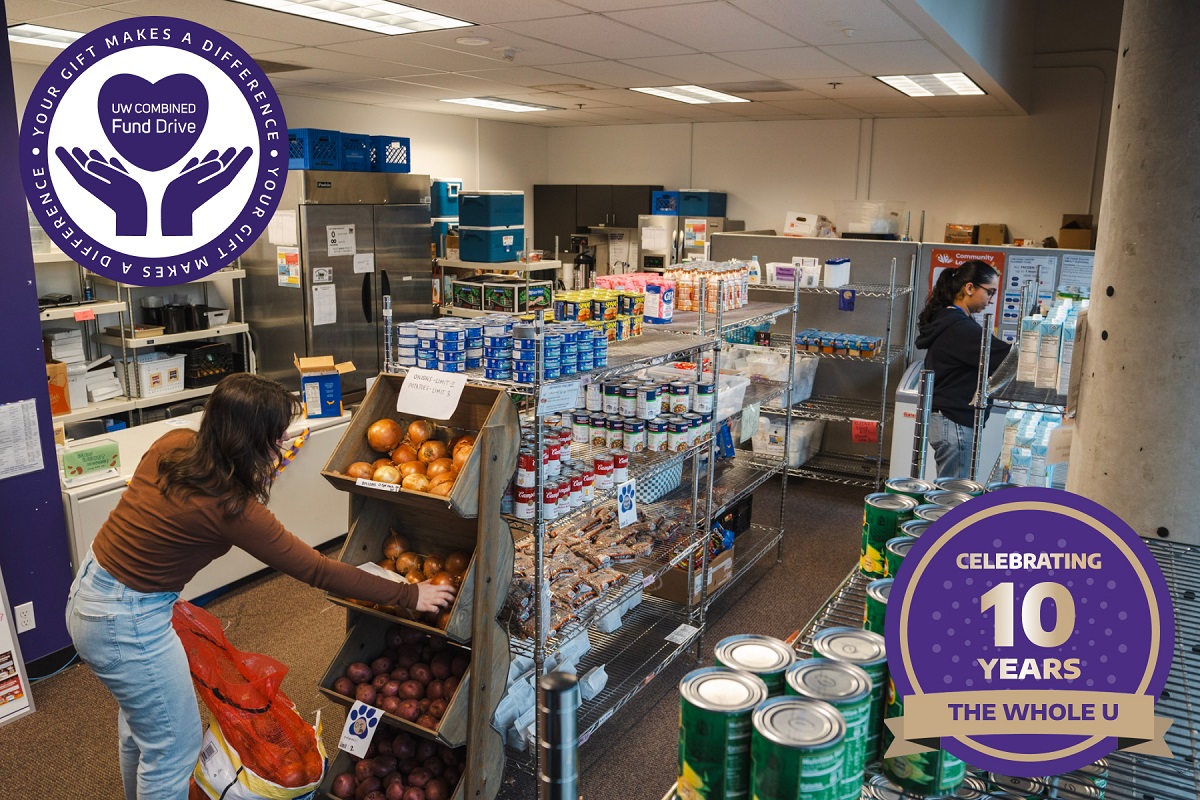
On a weekday in January, the wire shelves of the compact UW Food Pantry are stacked with canned goods and bags of rice, oats, dried noodles, flour and dried beans. Bins of onions and potatoes are filled from 50-pound bags. A double-wide refrigerator is stocked with milks, salads and ready-to-eat meals. Another shelf displays hygiene products, diapers, Covid tests and Narcan doses.

Food drive coordinator Harmony Tinley, student director Ellie Green and volunteer Riya Lele at the UW Food Pantry.

The Seattle campus pantry collected and distributed nearly 40,000 pounds of grocery products last quarter alone. Inventory derives from contributions to the Any Hungry Husky Fund (44%), food drives (19%), individual food donations (12%), food recovery from UW Housing & Food Services and on-campus retail partners (10%) and Northwest Harvest (8%). Additionally, an organization called Community Loaves delivers fresh baked bread and cookies twice a month. And the high demand for fresh produce is boosted in season by twice-weekly deliveries from the UW Farm. “Overwhelmingly, folks want produce,” Green says. “But they’re also looking for staples. It seems simple, but with prices going up, they hold people over longer.”

This complicated operation is orchestrated by an overlapping team of four part-time staff (Green is a graduate student at the Evans School of Public Policy) and upwards of 80 volunteers each week.

They communicate on social media, coordinate food drives, receive and process donations and source food from local establishments. “Our team is fantastic,” Green gushes. “I can’t say enough about them. They are so passionate and problem-solving and collaborative. And then we have amazing volunteers who bring energy and potential solutions to our challenges. We’re trying to level everyone up.”

The fuel to thrive

With the need growing so rapidly, each of the pantries are struggling to keep pace. Doing so will require increased donations of cash and food, via drop-offs, food drives or even Amazon orders. And they need more volunteer hands to keep the shelves stocked and the community served.

“Helping us keep our inventory is our biggest need,” says Kenning. “Hosting food drives or donation drives are extremely important in helping us keep up. We do a pretty good job as a campus community rallying to support the Husky Pantry, but having assistance from people who can leverage their community resources helps us expand our reach.”

The Pantry at UW Tacoma’s would benefit from contributions of time and food items. But the greatest need is “funding, funding, funding,” according to Susana. “Due to budget cuts, we have lost many of our donors, vendors and funds. We know that the volunteers will show if we have the need for them, which will be when we increase our funding.”

Riya Lele, a student volunteer, stocks shelves in the UW Food Pantry.

Green at the UW Food Pantry echoes the call of her colleagues. “We rely on donations. Food drives—in person or virtual—are really impactful. And spreading the word is really important.”

That includes advocating for more resources from Olympia addressing food insecurity on UW campuses.

“More awareness is always my answer,” Green says.

Because these pantries are providing an essential resource, making miracles out of shoe-string budgets. “We provide food for students who are food insecure,” says Susana. “This allows them to get the necessary nutrients that they need to thrive in class and gives them the opportunity to be at the same level and mindset as their peeps.”

“For anyone affiliated with UW who is experiencing food insecurity, we are here to support you,” Green says. “We can’t provide everything. We’re one tool in a toolbox. “But we know that food insecurity is detrimental to health, impacts attention span, ability to concentrate—ability to do anything! We don’t want anyone to be hungry.”

Get to know your UW food pantries

UW Food Pantry

  • Established in 2016 as a series of pop-ups before moving into its permanent home in Poplar Hall in 2018.
  • Located in 210 Poplar Hall, 1311 NE 41st St.
  • Open Monday through Friday (various hours)
  • Offers shelf-stable and fresh food, baked goods, hygiene products, Covid tests, Narcan
  • Serves UW students and staff (with UW ID); one visit per week to receive 2-3 days of food

Husky Pantry at UW Bothell

  • Founded in 2016 as an initiative through the Student Diversity Center; now part of the Health and Wellness Resource Center (HaWRC).
  • Located in 120 ARC (Health and Wellness Research Center)
  • Open Monday through Thursday, 10 a.m. – 4 p.m.
  • Offers grocery staples, seasonal products, hygiene and toiletry items (all non-perishable)
  • Serves UW Bothell students (with UW ID)

The Pantry at UW Tacoma

  • Created by the Center for Equity and Inclusion in 2013 in response to a survey revealing that 40% of UT Tacoma students were food insecure.
  • Located in 104 Dougan Hall; moving to 010 William Phillip Hall (WPH) on Feb. 16.
  • Open Monday through Friday, 10 a.m. – 4;45 p.m.
  • Offers shelf-stable and perishable food accommodating different dietary and cultural needs plus hygiene items.
  • Serves UW Tacoma students (with UW ID); one visit per week; up to 20 items per visit.

How to give or get help

Visit the websites of the UW Food Pantry (Seattle), The Pantry (Tacoma) and Husky Pantry (Bothell) to learn how you can access their services or support their work through donations of money, food or time.

You can also give financial support by setting up a gift through the UW Combined Fund Drive. University of Washington Husky Hunger Relief (); University of Washington Tacoma Pantry (#); University of Washington Bothell Food Pantry (#

Volunteering is good for the world—and good for you

Volunteering is a fun way to support your favorite nonprofit organization – plus, research demonstrates that it’s good for you. Whether you are able to volunteer on a regular basis, or just have the occasional hour or two to spare, you can support a cause you are passionate about.

Why volunteer?

Volunteering is good for you. In study after study, researchers have found that people who volunteer lead longer, healthier, happier lives. Volunteerism correlates positively to stronger self-confidence, better quality of friendships and improved job prospects.

Volunteering connects you with others and builds more robust social networks. Feeling lonely? Volunteer! Want to make some new friends? Commit to a shared activity with someone, and watch your friendship blossom. Bonus: because volunteering often helps people discover their passions, it also helps develop the ability to tell one’s own story.

Volunteering fosters a sense of purpose. Giving your time and energy with no expectation of compensation – that is, being altruistic – gives meaning to one’s life. Particularly for those undergoing a life change such as retirement, empty nest or the death of a loved one, volunteering can help relieve stress, improve self-esteem and promote emotional stability.

Volunteering is good for your career. Volunteer experience on your resume demonstrates to potential employers that you can take initiative, overcome challenges and learn new skills. Significantly, volunteering can grow your professional network and may even lead to your next job.

Volunteering financially supports organizations. In Washington state, each hour you volunteer saves a nonprofit an average of $30.00 an hour.

Volunteering can build teams

Volunteering with work colleagues is a great way to bond over a shared experience. This is especially valuable in the era of hybrid work.

“One of my favorite things about being a volunteer coordinator for the Combined Fund Drive is having the opportunity to interact with members of our large department that I otherwise would not meet in my daily work,” says Brooke Emrich, program operations specialist in the Department of Laboratory Medicine and Pathology. “Whether they are asking me a question about how the CFD works, participating in a fundraiser or dropping off items for a drive that I am organizing, I love meeting people and also seeing the generosity of our department.”

Emrich enjoys highlighting the work of nonprofits, especially the ones she is passionate about supporting, like Facing Homelessness, PAWS and Solid Ground. In April, she’s organizing a group of departmental faculty and staff to volunteer for a 3-4 hour shift at Solid Ground’s Marra Farm as part of their annual celebration of Medical Laboratory Professionals Week.

More than just a “cool opportunity to spend time outside and learn a bit about growing food and farming while helping them keep the farm running,” she says she’s really “looking forward to the opportunity to get to know some of my fellow DLMP members.”

Ready to get working?

Below are a wide variety of local volunteer opportunities, put together in partnership with the UWCFD, that you can participate in on your own, with your family or with a group of coworkers.


Get outside

Washington Trails Association offers a variety of opportunities, from local one-day work parties to multi-day volunteer vacations, working to restore and maintain our state’s public lands.

In an effort to make all 2,500 acres of Seattle’s parkland healthy and accessible to all, Green Seattle Partnership offers a variety of local restoration, reforestation and work parties every week with over 1,500 events a year at 155 area parks.

Want to plant trees? Seattle’s Tree Ambassador program engages volunteers in leading educational tree walks, hosting tree stewardship events and planting trees with the Trees for Neighborhoods program.

Shark Garden: Located in White Center, this garden provides learning opportunities for students in the Highline School District and provided more that 2,500 pounds of food to the White Center Food Bank annually. Volunteer to help with garden maintenance, harvesting food for the food bank, construction projects, teaching classes, and more.

Outdoors For All is a national leader in delivering adaptive and therapeutic recreation for children and adults with disabilities. Programming includes snowboarding, snowshoeing, cross country and downhill skiing, cycling, mountain biking, kayaking, hiking, rock climbing, youth and adult day camps, yoga and weekend excursions.

City Fruit volunteers give their time in many ways to help support the mission of promoting the cultivation of urban fruit in order to nourish people, prevent food waste, and build community. Group and individual volunteer opportunities are available. Volunteer shifts are often on a Saturday for 2-4 hours and include training.

Puget SoundKeeper Alliance has weekly kayak cleanup patrols on Wednesdays from 11 am – 1 pm on Lake Union.

For animal lovers

Seattle HumanePAWS and Homeward Pet are great organizations that offer plenty of in-shelter volunteer opportunities such as clinic assistants and animal socializers. Seattle Animal Shelter particularly needs foster homes for dogs, cats and critters.

Seattle Veterinary Outreach, which provides free care for the pets of homeless people, has immediate need of medical staff and clinic support staff.

Want to be a puppy sitter? Summit Assistance Dogs’ single greatest volunteer need is for loving and devoted foster homes and sitter for their puppies and adolescent dogs training to become service pets.

Pasado’s Safe Haven needs volunteers for a variety of roles, including collecting and distributing donations at their pet food bank.

Little Bit Therapeutic Riding: Take care of the horses used for the therapeutic riding by grooming and tacking horses before class, supporting riders while in class, leading horses, and putting away horses after class. We encourage a weekly placement and ask for a commitment of at least six months.

Pet Partners is always looking for  people to register with their animal to become a therapy animal team and volunteer within your community visiting people in need at hospitals, retirement centers, schools, libraries, etc. Pet Partners registers dogs, cats, equine, llamas and alpacas, pigs, birds, guinea pigs, rabbits, and rats as therapy animals.

Have an adorable animal? Nominate them to become Pet Partners Pet of the Year! Your pet doesn’t need to be a registered therapy animal to “volunteer” and fundraise.

Use your skills

Create fun DIY displays at a local Habitat for Humanity store – it’s not all hammers and nails. Want to build? Project sites are now accepting volunteers in Lake City and Renton for individuals and groups.

Cookies baked with love is a program for volunteers to bake cookies at their home for Recovery Café members attending a monthly resource connection day at the new South Lake Union café. This monthly event offers a variety of other opportunities as well.

Bake bread at home for Community Loaves, a grassroots community bread brigade supporting local food banks with fresh and nutritious home-baked bread.

Do you enjoy cooking? Use your skills to provide healthy, delicious dinner for young people in need at YouthCare. Cook at home and drop off the food so youth can get the nutrition they need before they go to work or school the next day. This can be a one-time opportunity, or you can deliver food on a regular basis.

Seattle World School is looking for volunteers to tutor immigrant and refugee students during and after school. Students range from K-12 and subjects tutored include English, math, science, social studies, etc. SWS also needs volunteer field trip chaperones and gym and sports safety assistants.

Seattle Recreative collects donations of used materials that can be used for crafting and art that would otherwise end up in a landfill from local businesses and individuals to redistribute to our community through a retail store and classes. Volunteers help sorted donated crafting supplies, prep supplies for classes, and other projects needed that day.

Bike Works needs volunteers to refurbish donated bicycles by fixing flat tires, replacing broken parts and fine-tuning components like brakes, gears and bearing systems. A staff member will help you choose a project that matches your skill level. We work with all levels of experience!

Seattle/King County Clinic brings together healthcare organizations, civic agencies, non-profits, private businesses and volunteers from across the State of Washington to produce a giant free health clinic at Seattle Center. Volunteers are needed April 27-30, 2023 for a variety of roles, particularly dental and eye care professionals, interpreters as well as social workers and health insurance navigators.

Volunteer from home

Amnesty International’s Amnesty Decoders network of digital volunteers helps conduct research into global human rights violations.

Help make the Smithsonian Institution’s collections more accessible by volunteering online to transcribe historical documents or edit Wikipedia articles related to their artifacts and research.

For those fluent in more than one language, Translators Without Borders combines language skills with humanitarian aid. Volunteers provide translations (10 million words a year!) to international organizations that focus on crisis relief, health and education.

Tutor underserved K-12 students online one or more hours per week in math, science, reading or writing.

Neighborhood House needs volunteers to record themselves reading children’s stories, physical and voice actors for home visit practice scenarios, and bilingual translators for program fliers. High-needs languages include Arabic, Farsi, Tigrinya, Oromo, Amharic, Russian, Ukrainian, Spanish, and Vietnamese.

Human services

Family Law CASA of King County needs volunteers to serve as Court Appointed Special Advocates (CASAs) for children in court during custody situations. Training is provided and the position is largely virtual.

The ElderFriends program connects volunteers with isolated adults for regular one-on-one visits (currently by phone) in Puget Sound.

ROOTS Young Adult Shelter relies on volunteers to set up and clean up shelter areas, prepare and serve meals, hand out supplies, build positive relationships with guests, and more.

Legal Voice: A Seattle-based nonprofit org that advocates for women and reproductive justice issues. You don’t need a legal background to volunteer with them.

Exhale Pro-Voice: Exhale operates a volunteer-staffed peer-support text line for folks to seek support around their abortion process.

Food Lifeline offers teams, families and individuals 2.5 hour windows to help repackage food for delivery to more than 275 food banks, shelters and meal programs.

WestSide Baby: lend a hand in the warehouse and help sort donations of gently used children’s items and prepare them for distribution to local social service agencies that support families in need.

Path With Art provides art classes and a caring community to adults who have experienced trauma. Volunteer to support class teachers and provide a supportive and welcoming presence, connect with and assist participants, take photographs, take attendance, and generally model good behavior.

Chicken Soup Brigade needs volunteer drivers to deliver groceries and fresh meals to clients throughout King and Snohomish counties.

Phinney Neighborhood Association’s Hot Meals Program volunteers help by picking up food donations, hosting food drives and preparing, cooking, serving and cleaning up weekly meals.

Need more ideas?

  • The United Way of King County website has dozens of regional opportunities! Reach out, get involved with something that excites you, and be ready for that warm glow feeling.
  • The American Red Cross relies on volunteers to carry out 90% of its volunteer work in preventing and responding to humanitarian crises. From boots-on-the-ground opportunities to behind the scenes work in outreach and fundraising, there is something for everyone.
  • The UW Combined Fund Drive continuously compiles volunteer opportunities with our 5,000 member organizations.
  • Visit VolunteerMatch and find an opportunity that is just right for you.
  • Idealist.org is a nonprofit connecting people and organizations for jobs, internships, volunteer opportunities and graduate school fairs to help people advance their social impact career.

Want to donate more than time?

Set up monthly payroll deduction or make a one-time gift through the UW Combined Fund Drive (UWCFD) to any of thousands of charitable organizations locally, nationally and internationally.

You can also log and track your volunteer hours through the UWCFD volunteer tracker tool  (UW net ID required).

Know of a great volunteer opportunity in our area? Drop it in the comments!

20 tips to save money at the grocery store

Trips to the grocery store can be expensive, especially if you have a lot of mouths to feed. The average U.S. household spends $4,942 on groceries per year, based on 2020 U.S. Bureau of Labor Statistics data. That’s roughly $412 per month. With inflation rising and continued supply chain shortages due to the COVID-19 pandemic, many individuals and families have noticed that grocery bill rising even higher.

There are a lot of factors that impact the cost of your groceries, such as your diet, budget, region, and number of people eating in your household. While most of these are factors that we cannot control, there are various strategies on how you grocery shop that can help you save your hard earned cash.

If you are struggling to meet your basic food needs, we encourage you to visit Any Hungry Husky to learn more about resources for food instability. Food instability is common and there are many pantries and programs to help. If you are in a place where you can give, visit this resource article from the UW Combined Food Drive to see how you can contribute.

Here’s 20 tried and true tips for your next grocery shopping run. These won’t answer all the questions, but at the end of the day every dollar counts. Try a handful and see how much you can see.

Use a cash back credit card.

Depending on how much your average grocery bill is, using a cash back credit card to make your grocery purchases can be a great way to get those precious dollars back! Some cards can even offer up to 8% back on purchases, depending on how the card works. Click here to see which cards NerdWallet recommends for grocery shopping in 2022.

*Be sure that you only spend as much as you would in cash or from a debit card, and read the fine print. Some cards have special rewards cycles, and if you’re able to follow along, that’s when you can really ring in the benefits.

Sign up for loyalty programs.

Most grocery stores have loyalty programs that provide points for cents off at the gas pump, coupons for your favorite items, and full access to store sales. Generally, grocery loyalty programs are free to join. If you shop regularly at a large retailer, these programs can really help shave dollars off your final bill.

Consider joining a wholesale club.

Wholesale clubs like Costco and Sam’s Club do have an annual fee, but if you are a large family or are able to shop in bulk and store items, you can really save. Items like beans, nuts, seeds, canned goods and cooking ingredients tend to be cheaper when purchased in bulk through wholesale clubs. Wholesale clubs like Costco can also help you save on gas if you live in an area where gas is expensive-like here in Seattle!

One trick to seeing if your wholesale club is cost effective for you is to keep a log in your first year. While tedious, you’ll be able to see if you saved money and how much. Start by logging what you buy, how much you got, and how much it cost. Compare to your local grocery store and estimate how much you would have spent on the same goods. Subtract your annual wholesale membership fee, and see what your bottom line is.

Stick to your list and set a realistic grocery budget.

It’s a tale as old as time. Going to the store with no grocery list can really increase your final bill! Shopping by the list can be a great help to save more at the grocery store.

Not sure how to structure your list and navigate the store? Click here for The Whole U’s guide to navigating the grocery store.

Setting a grocery budget can be difficult, but it is important to understand your limits and needs. What foods can you afford? What is a splurge and what are your staples? Click here to learn more about grocery budgeting and recommendations for how much of your income to spend.

Quick note: Groceries typically fit into the necessities bucket of your budget.

Avoid pre-packaged items and prep your own food.

Pre-packaged items like yogurt, hummus, and snacks are convenient, but they cost much more than if you purchase in bulk and package at home. A few ways you can do this is to invest up front in Tupperware or glassware you will use ongoing or repurpose store containers. Save your cream cheese containers, clean them out, and voila!

Avoiding pre-packaged foods is great for the wallet and the environment. Shopping second hand is another great way to find gently used glass bottles to start packaging your goods.

Make bulk batches and freeze meals.

Do you find you are constantly purchasing too much food, and then it’s going bad? Making your meals in bulk and taking advantage of the magical qualities of a freezer may be the trick for you. Then, the following week when you’re too tired to cook, you can pop your prepared meal in the oven or microwave and be good to go.

This may also help you visit the store less. You won’t have to return as soon when you have meals prepared and waiting for you.

Got time on your hands? Compare prices.

My grandfather always shopped the daily paper looking at advertisements and comparing prices. I used to wonder how it was worth the effort, but now I find myself doing the same. If you have the flexibility to visit multiple stores, shopping paper or online advertisements can be a great way to find the best deals. There’s no need to feel married to one store.

Pro tip: If you don’t get the advertisements in your mail or online, you can always find copies in the front of most grocery stores when you first enter. Ask a clerk if you need assistance.

Buy generic brands.

I will always laugh at the fact that I used to beg for the MAIN BRAND! At the end of the day, generic brands taste just as good and cost less. Win, win! It’s a known, but often forgotten, trick that grocery stores keep the more expensive items at your eye level. Look up and down. That’s where you’ll find Kroger cereal, crackers, etc.

Bring your own bag.

This is a very simple, yet effective tip and it really does add up. Let’s say you live in Washington state. We have an 8 cent bag tax. Some regions it’s even higher, and this fee is taxable because the store is selling you the bag. If you go the store about 2 times per week and purchase a bag, that’s about $10 a year. That may not sound like a lot of savings, but it’s a yummy coffee or lunch item. And using your own bags is better for the environment. We love a win, win.

Clip coupons.

We’ve all heard of those extreme coupon clippers…they save thousands of dollars each year! While this takes all sorts of time and energy, keeping track of what you buy each month and saving coupons from both the manufacturers and the stores you shop at can give you generous savings each year.

Plan recipes ahead of time.

If you know what you’re going to be cooking and eating, you can make fewer visits to the grocery store and be successful in one large haul. This tip goes hand in hand with having a good list prepared before you visit the store and utilizing freezer storage. When you know what recipes you’re cooking, it’s not as tempting to throw yummy things in your cart that may end up going to waste.

Not sure where to start? Download this guide to meal planning and preparing from The Whole U.

Without planned meals, you may also buy something that sounds good, go home, and realize that you need even more ingredients to go along with that item. After you head back, you’ve spent more than if you had a list based on your meals pre-planned.

Shop alone and on a full-stomach.

If you have the luxury of shopping alone, you can make your trip a mindful experience. Yes, I really said that about the grocery store! Take your time and try not to get wrapped up in the hustle and bustle of it all. Fit your grocery shopping into a time in your week that you can carve out intentionally for you.

You won’t be coaxed into buying things you don’t need by other people who had to come with you, and you’ll be able to make better decisions on what you really need.

The next part of this tip is to never shop hungry. We all know where that leads…a cart full of comfort, quick fix food that is typically more expensive. It’s also difficult to shop hungry, our brains just cannot compute!

Take inventory before you shop.

We’ve all been there. Standing in the aisle wondering, “Do I have eggs at home?” It’s just the worst buying double, coming home, and realizing you already have something. Especially if it is perishable. It’s difficult to shop unprepared. Knowing what is in your pantry, freezer, and fridge is a guaranteed way to help you save money.

One way to do this is to keep a kitchen inventory. Some people swear by the reverse list: Keep a list of all the things you have and regularly use. Cross off when you are out of that item, and then it moves to your ‘Need to buy’ list. When it’s time to shop, you already have your list and are ready to go.

Shop in season.

Are you buying blackberries in winter? Odds are they cost much more than when they are in season. Shopping your local and seasonal produce is a great way to save money on produce.

Click here for a Washington seasonal produce guide from The Whole U. Print it out and display in your kitchen, and you’ll never have to wonder what’s in season anymore.

Consider limiting high priced items.

There are some luxury items that are always going to be more expensive. Consider limiting these items and making them more of a treat. Things like alcohol or meat. You can try meatless Monday’s, and creating meals focused on lower priced items. Vegetable and bean-based protein is more nutrient dense and more affordable.

Buy frozen vegetables and fruits.

Are your vegetables always going bad? What a waste of food and money! Consider buying frozen goods so that you can extend the shelf-life of your favorite produce. It’s a myth that frozen fruit and vegetables aren’t good for you. Frozen is a great option for many households.

Don’t get down on yourself if you’re not able to sustain cooking fresh food. We all have different needs and lifestyles, and frozen veggies and fruits are better than nothing at all.

Shop at discount grocery stores.

Consider mixing discount stores like Grocery Outlet and the Dollar Store into your shopping rotation. These stores often carry the same products for a much better rate.

Pay attention to the price per unit.

Ah the price per unit, the extra numbers on the price ticket that everyone gets confused by. Understanding the price per unit is a great way to know what the best deals are. If you only shop by the price listed, you may not notice that you could buy the same item in a large quantity and higher price, but at the end of the day, you are saving more.

*Make sure to factor in whether you can store the item properly to preserve.

Click here to read how to understand the price per unit.

Find out when your store’s discounting cycle is.

Do you always shop at a particular store? Ask your checker when they do the discounting for the week. Often, weekdays are cheaper than weekends, and stores tend to begin sales mid week, especially on items that will eventually spoil.

There’s no shame in making sure you get the best deals! If you are able to shop early in the day on sale days, even better. You’ll get first access to the best deals and won’t feel rushed by the hustle and bustle of the store.

Pay attention at the register.

If you use only one of these tips, this is definitely one to consider. Stores have complicated sales and thousands of items. Make sure your items are ringing up as listed. If your grocery bill comes out without all the wonderful savings and perks, what’s the point of even shopping for those deals?

Grocery shopping can be stressful and expensive. We hope that these tips help you navigate the store with a little bit more finesse and confidence. Share with us your other favorite tips in the comments below!

Back-to-school savings tips

​If inflation has taken a big bite out of your back-to-school budget, you’re not alone. Learn how to plan for school supplies, clothes, electronics and more.

Getting kids geared up to go back to school is an annual tradition — and expense — for families with K-12 kids. Inflation has made affording school supplies more challenging for many people during the last few years.

A survey by the National Retail Federation shows people think they’ll pay more for clothing, school supplies, shoes and electronics in 2023. Between 2019 and 2022, inflation hit back-to-school categories by up to 36%.

Take some guesswork out of back-to-school shopping by pairing your shopping list with these savvy back-to-school shopping strategies.

Five steps to create a back-to-school budget

1. Review last year’s expenses

This can help you set a baseline for this year’s costs. In general, consumers in 2022 planned back-to-school expenses this way, per household:

  • $293 on electronics or computer-related equipment.
  • $264 on clothing and accessories.
  • $168 on shoes.
  • $140 on school supplies.

2. Take stock

See what you already have and figure out expenses you can delay. For example, your child may not need a new pair of shoes right now. Last year’s colored pencils could still be usable. In 2022, 24% of consumers (PDF) said they’d make do with last year’s school supplies.

3. Make a list

Try to think about everything your student needs, including one-time and recurring expenses. Categorize items that apply to your situation using a school-supply list provided by your child’s school and your own prior experience. Creating a list with your child can also help you save on future expenses, set expectations and maybe reduce arguments.

4. Prioritize your shopping list

Identify which items are essential and which items are just popular or trendy. I call these “must-haves” and “nice-to-haves.” Focus on budgeting for the must-have items first. If you have a little extra money, you can treat your student to a few of the nice-to-have items, too.

5. Set a spending limit and stick to it

It’s a good idea to pad your back-to-school shopping budget to cover unanticipated expenses. For example, you may need to replenish school supplies or clothes during the school year. Don’t forget about surprise costs, such as a class field trip.

For older kids, work together to set a spending limit and let them do the planning. This will allow them to make decisions about needs vs. wants.

Five ways to save money on back-to-school shopping

Most back-to-school shoppers surveyed in the past say they’ll use a few strategies to save, including the following.

1. Shop sales

In the NRF survey, 68% of consumers said a major strategy is to shop the summer sales of big retailers like Target and Amazon.

But don’t forget to check out other options. Office supply stores, dollar stores, wholesale stores, department stores, drugstores and big-box stores carry various back-to-school items. Check these locations for loss leaders — products such as notebooks or lunchboxes deliberately underpriced to attract shoppers. But make sure you don’t fall for their tactic; stick to your list and only buy things that are within your budget.

Secondhand stores are another good option. They sometimes sell binders, folders, and unopened packages of many supplies. You can also check online marketplaces such as Facebook Marketplace and OfferUp for deals on costlier items like electronics.

Look for clearance sales on school supplies. Not all items must be purchased immediately. In addition to shopping summer sales, you might also find deals if you wait until shortly after school starts so you can stock up for less.

When you’re shopping sales, keep in mind that some stores match other stores’ prices, which could cut down on time spent running around town, searching out deals.

2. Compare prices online

Most shoppers say they’ll compare prices online, according to the NRF survey. Check websites for office supply stores, big-box stores and retailers that carry your favorite products. Several tools can make this easier. For example, the website camelcamelcamel.com shows you Amazon’s price history of an item. A recent search showed a 12-pack of Oxford spiral notebooks ranged from $16.65 to $21.99.

3. Buy more generic or store brand items

Unless your child’s school insists on name brands, parents’ money-saving plans include buying less expensive brands, including generic or store brands.

However, if you’re shopping from a school list, check with the teacher before buying a less expensive brand. If your school expects students to have a specific type of organizer or calculator, don’t wait until the last minute. You may pay more or have fewer choices.

4. Buy in bulk

You may find per-item costs lower if you buy in bulk versus individual items. Work with other families or neighbors to buy a batch of pens, notebooks, and other supplies, then distribute the purchase.

5. Download apps to your favorite stores

Around one-third of NRF-surveyed shoppers say they’ll rely on coupons to help save money. Many apps feature digital coupons that can help reduce costs. But beware of the urge to splurge on items just because they are on sale. You might end up spending more on items you don’t need. Focus on the essentials, your list and your budget.

Plan for the future: Back to school happens every year

After you’ve finished all your shopping, you’re not quite done yet. Take some time to compare your budget versus actual spending using an app like Mint or BECU’s Money Manager. Review your spending on supplies, clothing, shoes and other costs. Were there any surprising categories? What led to overspending? Where did you save the most? Think about including your child in this review. This is a great time to teach them about budget, spending, setting goals and evaluating purchases.

To get ahead of the game for next school year start saving now. Divide the total cost you spent this year by 12 and put away that amount every month. You can create a physical or digital savings envelope or even open a separate savings account and set up automatic monthly transfers. Set it and forget it!


Written by Stacey Black (She/Her/Hers), BECU Lead Financial Educator
For nearly 30 years, Stacey has taught adults, college students, teens and children through the BECU Financial Education program.

This article is reprinted from our financial partner BECU’s Money Matters blog. Special thanks to BECU for making events and content at The Whole U possible. 

Edible berries of the Pacific Northwest

Note: This article is a reflection of the author’s first-hand experiences with berries of the Pacific Northwest and is intended as a starting point to get educated and not as a definitive guide. Unfortunately, we are not able to identify berries on a case-by-case basis at this time.

This summer, whether you’re on an intensive hike or just going for a walk down the street, you are bound to come across some berry bushes. Here in the Pacific Northwest, we are gifted with mild temperatures, rich soil, and lots of rain, which gives our native plant species a great environment to take root and flourish.

Growing up, I experienced berry bushes’ beauty and abundance first-hand at summer camp. There, we learned about nature, the woods, plants, animals, and conservation efforts and the camp instructor was always prepared to stop our group to point out a bunch of berries. There is nothing better in summer than picking some right from the bush. However, with so many varieties present in the Pacific Northwest, it can be difficult to know where to start, or which are okay to eat.

While foraging with caution is always recommended, we’ve compiled some basic guidelines for identification, best uses, and taste of some of the most common berries you might find the next time you talk a walk on the wild side.

Common edible berries of the Northwest

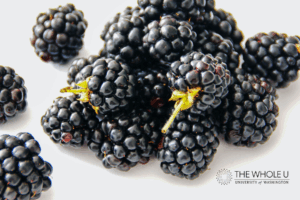
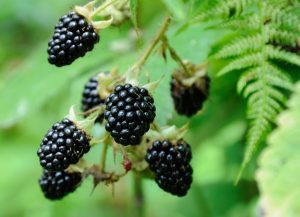
Blackberries

Scientific Name: Rubus

Origins: This berry is known all over the world, but is very popular in the Pacific Northwest. The berry and plant are commonly used by Native Americans in the Pacific Northwest as a food and medicinal plant.

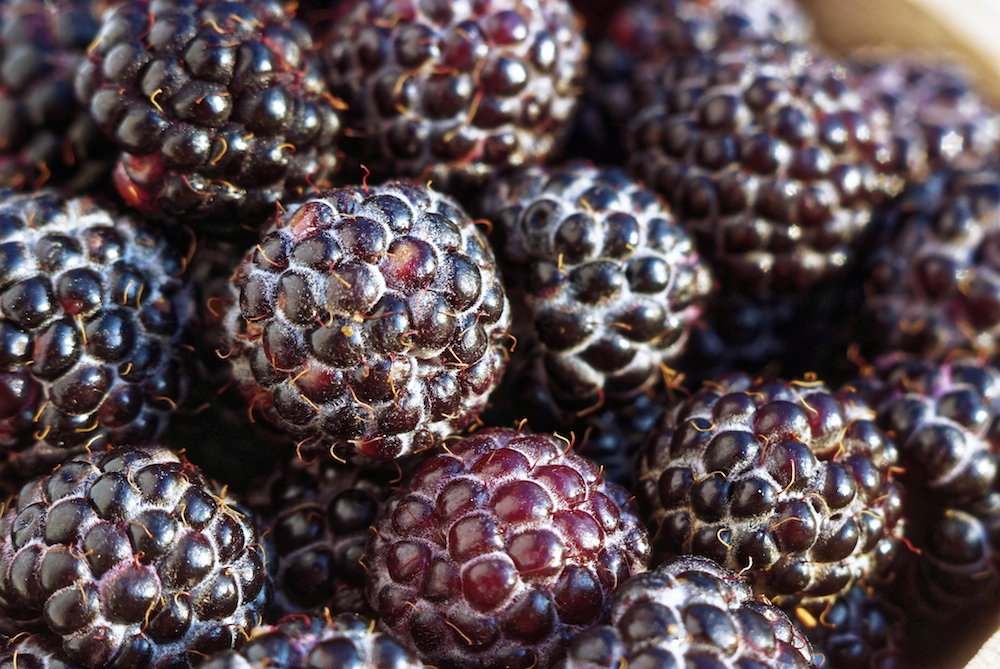
Color and shape: Black when mature; red and green when they are still growing. They are bumpy in shape (Beware of thorns on the plant).

Taste: Very sweet when ripe; sour when unripe.

Where to Find Them: These berries can be found in backyards and along roadsides across the country. Plants grows well in the sun and large patches are known as brambles. Highly invasive Himalayan and evergreen blackberry varieties are non-native European species that are highly invasive and difficult to control. Originally introduced for fruit production, they are now naturalized and widespread throughout the Pacific Northwest and are easy to spot by their large, vigorous, thicket-forming growth and sharp spines covering the stems.

Peak Season: July through September.

Great in: Jams, jellies, pies, and cobblers, or just eaten as-is.

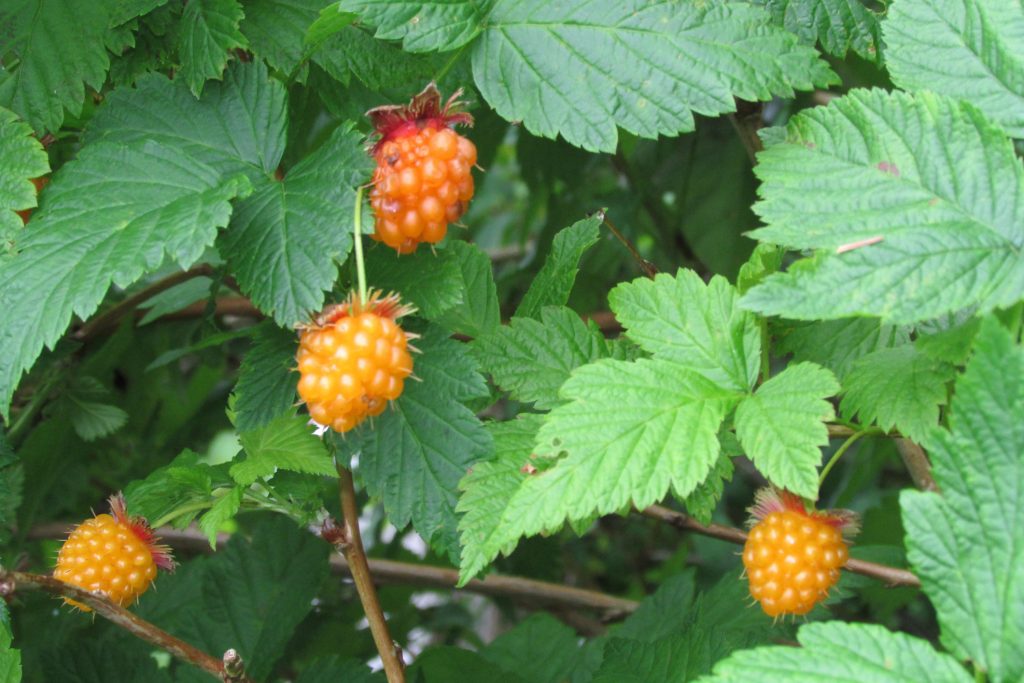
Salmonberries

Scientific Name: Rubus spectabilis

Origins: Native to the West coast of North America, salmonberries are traditionally eaten with salmon or salmon roe by Native Americans in the Pacific Northwest.

Color and shape: Mature berries are most commonly a yellow-orange. Younger berries may appear red. Berries are bumpy in shape, much like blackberries (Beware of the thorns on the plant).

Taste: Mildly sweet to neutral taste.

Where to Find Them: The plant prefers moist, shady areas with a bit of sun and can commonly be found near creeks.

Peak Season: Salmonberries are best from early May to late July.

Great when: Eaten as-is.

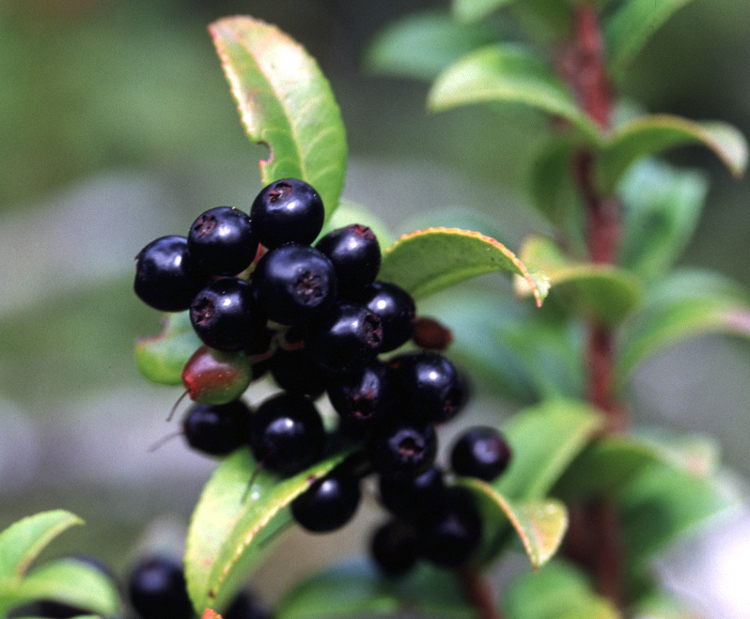
Huckleberries

Evergreen variety

Scientific Name: Vaccinium ovatum

Origins: Native Americans in the Pacific Northwest are fond of this berry, often traveling long distances to gather them—eating them fresh or drying them into cakes.

Color and Shape: Mostly black but can appear bluish or purple, Huckleberries are smooth and round.

Taste: Sweet to tart taste.

Where to Find Them: This shrub thrives mostly in the shade with some sun. It is common to find plants sprouting out of or near downed trees or stumps.

Peak Season: The plant is an evergreen shrub, but produces berries in the summer.

Great in: Jams, pies, cobblers, ice creams, or eaten as-is.

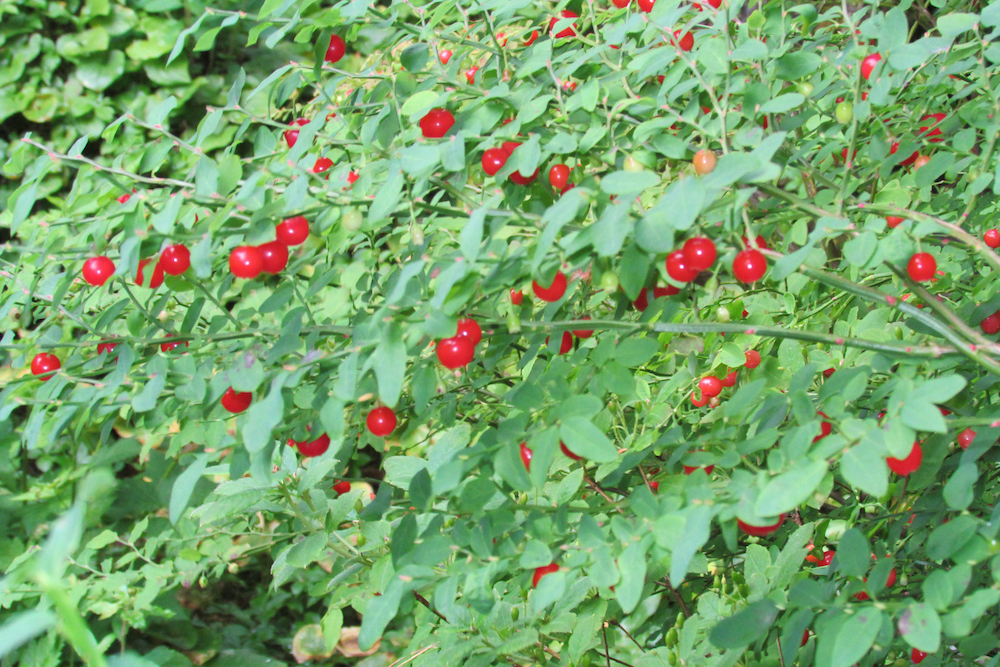
Red variety

Scientific Name: Vaccinium parvifolium

Origins: Native Americans in the Pacific Northwest eat this berry throughout the year—both fresh and dried, often using it as fish bait due to its resemblance to a salmon egg.

Color and shape: Pinkish red berries. They are smooth and round.

Taste: Sweet to tart taste.

Where to Find Them: Similar to its relative the Evergreen Huckleberry, the Red Huckleberry can be found in moist, shady areas, often growing out of or near downed tree trunks or stumps.

Peak Season: Summer

Great In: Jams, jelly, pie, cobbler. Or eaten as-is.

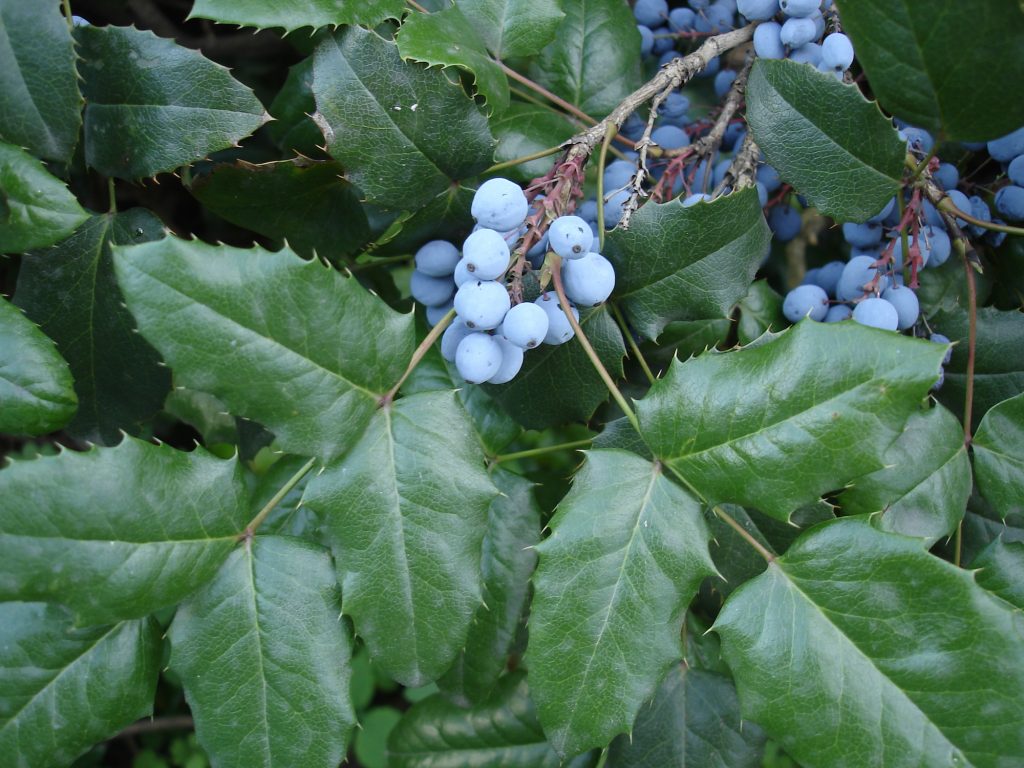
Oregon Grape

Scientific Name: Mahonia nervosa

Origin: Native Americans in the Pacific Northwest have long eaten this berry, but often mix it with sweeter berries to better its flavor. These berries are also used for dye and medicinal purposes.

Color and shape: Blue/purple. They look and taste nothing like a grape. They are small, smooth, round, or slightly egg-shaped.

Taste: Slightly sour.

Where to Find Them: There are two types of Oregon Grape: the Tall Oregon Grape and the Low Oregon Grape. The Low can be found in relatively moist, open forests while the Tall can handle both dry open areas and moist shady areas. Native to western North America, it can be found from the Rocky Mountains all the way to the Pacific Coast.

Peak Season: The plant blooms in spring and produces berries in the summer.

Great in: Jelly or eaten as-is.

Caution: Consume in moderation, as these berries can be toxic in excess.

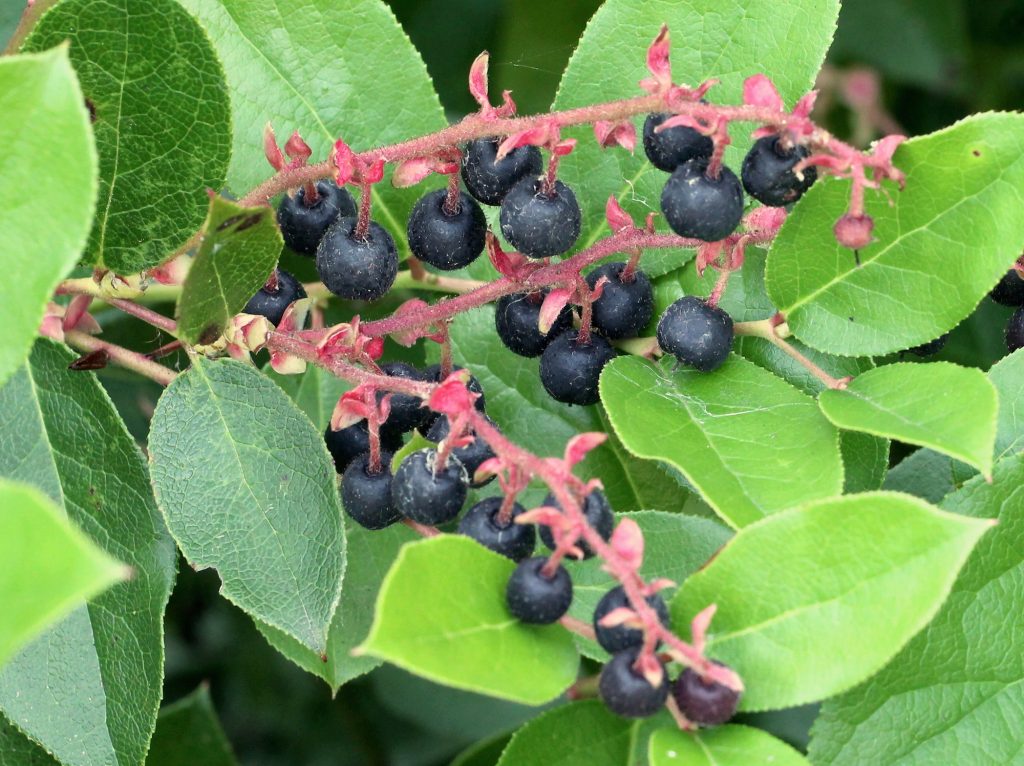
Salal Berries

Scientific Name: Gaultheria shallon

Origin: Eaten by Native Americans of the Pacific Northwest in combination with Oregon Grapes to sweeten them, Salal berries are often dried into cakes.

Color and shape: Dark blue, these berries are smooth and oval shaped.

Taste: Sweet with a mealy texture.

Where to Find Them: Salal plants grow anywhere in a variety of climates. They can do well in moist and shady areas and also in partial sun.

Peak Season: August through September.

Great In: Jam and pies.

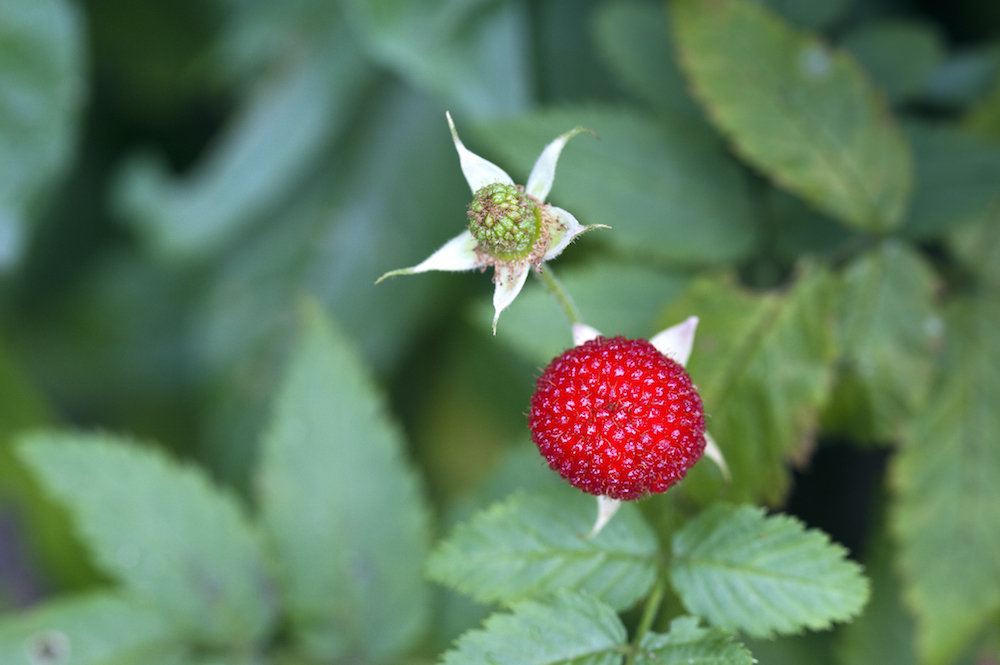
Thimbleberry

Scientific Name: Rubus parviflorus

Origins: This plant ranges from Alaska down the west coast to north Mexico.

Color and Shape: Bright red when ripe, these berries resemble raspberries. The berries’ hollow shape gives them a resemblance to a thimble, although this plant has no prickles like its cousins. Expect a tart flavor when eaten.

Where to Find Them: Found along roadsides and the edges of clearings, it can be one of the first plants to grow after a fire or clear cut. They prefer shady, moist, and cool areas.

Peak Season: July through August

Great In: Eaten as-is, or in jam.

Black Raspberries

Scientific Name: Rubus leucodermis

Origins: Also known as the Whitebark Raspberry, this plant’s range stretches from the Pacific Northwest to north Mexico.

Color and Shape: Similar in shape to a raspberry, unripe berries range in color from red to dark purple, growing darker as they ripen. A way to tell these berries apart from a regular blackberry is the core: blackberries have a white core, whereas a black raspberry is hollow in the middle like a regular raspberry. Black raspberries tend to be more “fuzzy” like raspberries instead of more smooth like blackberries.

Where to Find Them: Usually found in areas of sun to light shade in fields or wooded hills.

Peak Season: June to September

Great In: Eaten as-is.

Common Toxic Berries of the Northwest

Holly Berries

Scientific Name: Ilex aquifolium

Origin: There are many varieties of Holly plant across the world, but one that’s commonly found in the Pacific Northwest is English Holly. Originally native to the British Isles (often used as a decorative shrub in gardens and popular during the Christmas holidays), this evergreen plant is an aggressively invasive species to the West Coast and is found in abundance across Washington stretching all the way to California.

Color and Shape: Bright red, round berries. The leaves are identifiably spiny.

Where to Find Them: This plant thrives in both sun and shade, growing into large thickets choking out native plant life.

Peak Season: The plant is evergreen and the berries ripen in winter.

Caution: Toxic to both humans and pets.

Can Be Confused With: Oregon grape as their leaves are similar.

Bittersweet Nightshade

Scientific Name: Solanum dulcamara

Origin: Originally from Europe.

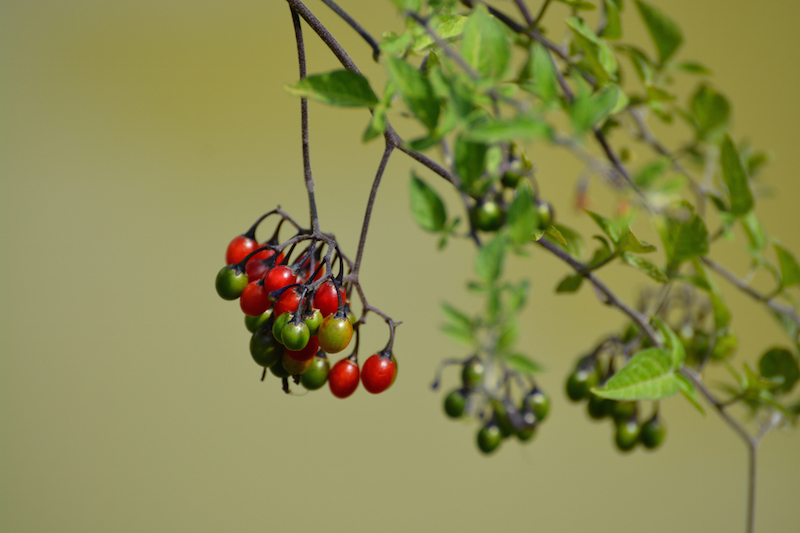
Color and Shape: Small, smooth, oval-shaped red berries, but can also be shades of green and orange when ripening.

Where to Find Them: Found mostly on the edge of empty fields, by roadsides, in backyards, and by streams due to its love of moist, shady areas.

Peak Season: These berries ripen in autumn.

Caution: Toxic to both humans and animals.

Can Be Confused With: Red huckleberry due to similar color and size.

Red Baneberry

Scientific Name: Actaea rubra

Origin: This plant is native to North America and can be found across the Pacific Northwest region.

Color and Shape: Shiny, red, and round, these berries often have a small black spot at the bottom of berry—a surefire sign to not consume it!

Where to Find Them: This plant is found most commonly in moist, shady areas, but can be found in dry slopes.

Peak Season: Berries ripen in July.

Caution: The plant is poisonous, but its berries are most toxic. Toxic to humans, it is also avoided by other types of wildlife.

Can Be Confused With: Red Huckleberry- similar in shape, color, and size.

As you enjoy the summer months here in the Pacific Northwest, be on the lookout for these berries in your outdoor adventures. Always remember, if you are not sure what the berry is, best to look it up first or avoid it altogether. Happy hiking!

Campus is your playground: find movement and mindfulness right outside your office door

The University of Washington is one of the most beautiful educational settings on earth, a sublime marriage of eclectic architecture and verdant landscape.

That landscape certainly provides an inspiring platform for learning. But it also serves up myriad great places to exercise — both body and soul.

UW Botanical Gardens

The relative quiet and dependably sunny skies of summer quarter make it the perfect time to explore the many spots on campus conducive to movement or mindfulness. And every little bit counts.

“Summer is an amazing time to get outside for exercise or your physical activity ‘snack,’” says Dr. Jonathan Drezner, MD, director of the UW Medicine Center for Sports Cardiology and team physician for the Washington Huskies, Seattle Seahawks and OL Reign. “Our beautiful UW campus offers many areas to walk, jog, climb, swim and explore!”

Join us on a wellness tour of the UW as we count some of the ways that campus can be your playground.

Prime movers

We should first introduce one of the principal protagonists of any story on campus wellness: UW Recreation, which serves faculty, staff and retirees as well as current students of all three UW campuses.

UW Rec manages multiple-use sports fields, courts and facilities, organizes a litany of intramural leagues and tournaments, coordinates club sports, hosts wilderness adventures — even rents outdoor equipment.

“UW Recreation offers a multitude of options for recreation, fitness, wellness and fun,” says Katie Beth, associate director for facilities and operations at UW Recreation. “Rent a boat at the Waterfront Activities Center to paddle on Union Bay, hit a bucket of balls at the Golf Range, play soccer, flag football, ultimate, tennis, sand volleyball or basketball on the outdoor fields and courts, go bouldering at the outdoor Husky Rock, rent outdoor equipment from the Gear Garage and the Waterfront Activities Center, join an Intramural team to play a sport with friends, or join a Rec Club team to play either recreationally or competitively, and go on a trip with the UWild Adventures program.”

We’ll unpack more of this later. But before we venture outside, let’s explore…

The great indoors

UW Recreation manages the IMA (or Intramural Activities Building) on the Seattle campus, a deluxe athletic club available at deeply discounted cost for those of us fortunate enough to be associated with the UW (plus our plus-ones).

The IMA

It would take an entire article to list the entire catalog of fitness and wellness and activities and resources on offer. In short, the IMA has legions of cardio and strength-training machines, a calendar full of classes on fitnessmindfulness and yogasports skills and martial arts available with a Rec Class Pass. There’s indoor climbing and boulderinglap swimming and pickup basketball, volleyball, badminton and pickleball, plus roller skating, archery or log rolling on certain Friday nights. You can run/walk laps around an indoor track-with-a-view, work with a personal trainer, get a nutrition consultation or enjoy a massage.

UW Bothell is served by the Activities and Recreation Center (ARC), an indoor fitness center and outdoor sports & recreation complex offering cardio and strength equipment and wellness classes, outdoor skills classes and group adventures, plus and a wide range of intramural sports (open to faculty and staff, too).

UW Tacoma features the onsite University YMCA Student Center — which is open to faculty and staff with a YMCA membership (joining fee is waived). The University Y offers a variety of fitness and recreation services, cardio and strength equipment, a basketball court, a track, a climbing wall, reflection room, daily fitness classes — even a piano for those who like to tinkle the ivories.

Games people play

UW Recreation is your portal to a wide range of sports that revolve around a ball (or other roundish object). Game play happens inside the IMA, in its warren of basketball, racquetball, squash and badminton courts, and outside the IMA, among the nearby network of tennis and sand volleyball courts and athletic play fields.

UW Recreation play fields

Across the E-1 and E-18 parking lots lies the UW Golf Range, an on-campus chance to work on your stroke while exorcising the day’s frustrations at the business end of a driver. Farther east on Clark Rd., find another patch of utilitarian grass and turf play fields.

These facilities are home to Intramural Sports (also run by UW Recreation). And they are not just for students. Intramurals are also open to UW employees and plus-ones with a UW Rec membership. You can participate in single-gender or co-ed leagues and tournaments. And the list of sports is extensive, including flag football, volleyball, sand volleyball, basketball, inner-tube basketball, pickleball, kickball, dodgeball, wiffleball, spikeball, softball, soccer, futsal, ultimate, tennis, table tennis, badminton, cornhole, Kan Jam and something called water battleship.

There’s even a recreational division just for faculty, staff and grad students engaging in flag football, basketball, soccer, softball and volleyball. Don’t have a team for any of the leagues? You can sign up as a free agent.

Feeling more ambitious? UW employees are also eligible to participate in any of 40 Rec Clubs, which transcend the traditional ball sports to encompass aikido, archery, climbing, equestrian, ice hockey, rowing, running, skiing and wrestling, to name just a few.

Exploring on foot or by wheel

The UW’s sprawling Seattle campus is the hub of a chain linking multiple magical park lands managed by both the University and the City of Seattle — all intersected by the venerable Burke-Gilman Trail, a converted rail line that winds through campus on its 19-mile route from Ballard to Kenmore at the top of Lake Washington.

This all adds up to miles and miles of idyllic trails — both earthen and paved — radiating from campus on which to run, walk, bike, scoot, skate or scamper to your heart’s delight.

Traveling eastward, spy a bald eagle, heron, Anna’s hummingbird or solitary sandpiper amid the restored wetlands and shoreline of the UW’s Union Bay Natural Area, one Seattle’s finest birding sites.

Union Bay Natural Area

While passing through this eastern outpost of the UW Botanical Gardens, see what’s in season at the UW Farm, survey the lovely landscaping of the Center for Urban Horticulture, and commune with the resident turtles and ducks along the zigzagging boardwalk through Yesler Swamp. Extend your jaunt via the Burke-Gilman a few miles further to the play fields, meadows and wetlands of sprawling Magnuson Park, on the site of a decommissioned naval base along the shores of Lake Washington.

Across the Montlake Bridge to the southeast of campus, loop through brushy Foster Island (when the trail is passable) and on to the charming hillocks and meandering paths of the Washington Park Arboretum — another of the UW Botanical Gardens — to experience a diverse collection of horticulture in an Edenic setting. Want even more green? Continue uphill to via the fairy-tale fern gully of Interlaken Park all the way Volunteer Park and its iconic red brick water tower, whose commanding view is accessible to all who are willing to ascend its corkscrewing staircase. Consider returning to campus via Montlake Playfield, through its hidden underpass trail that bypasses much of the 520 construction mayhem, and maybe buzz by sunny Fritz Hedges Waterway Park, the city’s newest, on Portage Bay.
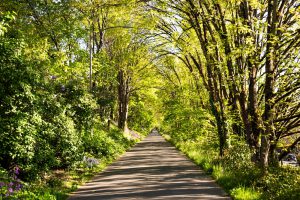
The Burke-Gilman Trail

To the north, the Burke-Gilman will take you to the lush valley linking Cowen and Ravenna Parks, where you can follow parallel creek paths a few miles toward Green Lake, Seattle’s social and fitness epicenter, and the undulating paths, popular playfields and prominent zoological gardens of Woodland Park.

Find fine stretches of trail, too, in and around the forested campus of UW Bothell. Explore the sprawling wetlands bisected by the North Creek Trail (home to the famous nightly congregation of crows), which connects to the Sammamish River Trail all the way to Redmond and the Burke-Gilman south to Seattle.

And while UW Tacoma’s urban campus is situated in the historic heart of the City of Destiny, it not far from the arboreal splendor of Wright Park and the string of shoreline parks leading north to Point Defiance Park, the lovely peninsula in Commencement Bay encompassing forest, meadow, gardens and beaches—plus a zooaquarium and historic Fort Nisqually.

Climbing higher

For those seeking great heights — and the effort to reach them — the UW has some intriguing options.

Venerable Husky Rock

Climbers clamber up the artificial monoliths of Husky Rock, which was constructed near the Montlake Cut and historic ASUW Shell House in the 1970s to give adventurous students a safer alternative to scaling the walls of university buildings. Its leaning towers and variety of route types and difficulties draw experts and novices alike. Climbing is free, subject to weather and at your own risk. And mind the goose poop.

Or perhaps a more controlled environment is more your vibe? UW Recreation operates the Crags Climbing Center, three stories of manufactured rock faces rising up the IMA that offer scrambling and roped climbing for all levels. Even if you’d never consider climbing, check out the view balcony beside the running trail for a bird’s-eye view of the vertical action below.

Want to test your mettle on the region’s natural crags? Sign up for a UWild Adventures climbing outing or join the UW Climbing Team.
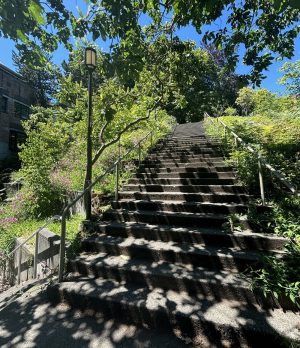
Campus stairs climbing Wahkiakum Lane

For those seeking a less-technical vertical workout, the UW’s central campus is surrounded by open-air stairways — especially on the vertiginous slope that climbs from the E parking lots off Montlake Boulevard and Husky Athletics facilities. The longest route climbs over 200 steps from the E-18 lot via Whatcom Lane through the maze-y hidden staircase from Padelford parking lot to reach the summit on Stevens Way. The steepest route climbs over 175 steps from the middle Montlake footbridge via Wahkiakum Lane to nearly the same high point next to Padelford Hall. Just north of campus, a shaded set of stairways climbs 230 steps along NE 52nd St., taking you past a charming cluster of historic shingled Craftsman cottages hidden perched like treehouses on the steeply forested slope.

You can also raise your heart rate by scaling the Grand Staircase that bisects UW Tacoma and the stairs that follow the slope beside Discovery Hall at UW Bothell.

And, for bite-sized bursts of exercise throughout your day, don’t count out your building’s internal stairways. Always a healthy alternative to the elevator. At the pinnacle of the U District, some committed UW Tower dwellers make a daily habit of hoofing up the building’s 22 stories.

Water sports

Framed by miles of shoreline, the UW campus lands are also a paradise for enthusiasts of human-powered water sports.

Be the captain of your own (borrowed) vessel at the Waterfront Activities Center (WAC), nestled on the shores of Union Bay. The WAC rents kayaks and canoes by the hour from spring through fall. You can also rent kayaks and paddleboards at Agua Verde Paddle Club (and cap your adventure with a taco and tropical beverage).

Boating at the WAC

UW employees can learn to sail with the student-run Washington Yacht Club, which operates a fleet of dinghies, catamarans, daysailers, keelboats and windsurfers.

Want to row like the “Boys in the Boat?” Join the Union Bay Rowing Club (UBRC), the UW’s sub-varsity place to learn sweep rowing and sculling. Just across the University Bridge, you’ll find programs for beginners and experts alike at the Pocock Rowing Club, named after Washington’s legendary boat-builder and rowing philosopher George Yeomans Pocock.

Or maybe you’d rather be in the water than on it. You can learn to swim, get in your laps or take an aqua fitness class in the new and daylighted IMA pool. For more adventurous plungers, there are many unsanctioned places to take a dip off various docks and shorelines that wrap around south campus and the UW Botanical Gardens. Just don’t expect any lifeguards. You will find lifeguards — in season — patrolling established beaches at Magnuson Park and Green Lake, among a vast network of King County beaches.

Moments of mindfulness

Sometimes you want to raise your heartbeat. Others, you want to lower it. Tucked here and there amid the everyday hustle of a major university system are countless spots to escape the throngs and take in a moment to reflect, meditate or center yourself.

The Silent Reading Room of the UW Bothell Library offers a vaulted window on the arboreal world outside. Also restorative is a stroll through the century-old Uplands forest, the Chase House Orchard or the North Creek Wetland.

An urban village, UW Tacoma is just a short walk from the green space of Wright Park and the contemplative pedestrian Bridge of Glass, with its thousands of colorful Chihuly works, in the Museum District (or try the Chihuly Room of the UWT Library).

Grieg Garden

UW’s Seattle campus is graced with such untrodden treasures as Sylvan Grove, the pastoral home of the UW’s iconic Ionic columns, the hidden sanctuary of Grieg Garden near the HUB and, just outside its natural green walls, the curiosity of an artistic — and quite inviting — red swing.

Take a seat on a bench or plop down on the lush grass of the Liberal Arts Quad, Denny Yard or Parrington Lawn, which can transform into veritable fortresses of solitude when the usual hustling human highways slow down on summer days.

Further afield, find a shady respite from summer heat in the Yesler Swamp. Escape the madding crowds in any of the Washington Park Arboretum’s exquisite 230 acres (The Japanese GardenRhododendron GlenWoodland Garden and the cathedral-quiet Pinetum are a few favorites).

On a fine day, contemplate the ducks paddling across Drumheller Fountain, the breathtaking view down Rainier Vista, the Grove and meadow on Montlake Cut just behind the UW Medical Center or the aromatics of the UW Medicinal Garden.

Sylvan Grove and the UW Columns

On a foul day, take scenic cover in PACCAR Hall’s Hogan Terrace overlooking Denny Yard or embark on a botanical tour of the world in the UW Biology Greenhouse (open to the public for free Thursday afternoons).

Whatever the day, you can always find peace and quiet in a network of prayer and meditation spaces located across all three campuses and UW Medicine system.

Contemplate the planet’s rotation at the mesmerizing Foucault pendulum in the Physics Building. Gaze to the heavens inside the James Turrell Skyspace: Light Reign, in the Henry Art Gallery.

And no list of meditative spaces would be complete without the many muffled nooks and quiet crannies across the UW Libraries system. The most iconic, of course, is grand Reading Room in Suzzallo Library, where the gothic hush is often described as downright Hogwartsian.

Practice sun safety this summer

A women hiker in a pink top and green backpack applies sunscreen to her face.

It is finally summertime in the PNW! And while it can be tempting to bask in our too-fleeting season of sun… it’s also important to protect your skin from the harmful radiation emitted by our brilliant local star.

Too much exposure to the sun can cause skin cancer, which is the most common form of cancer in the United States. The American Academy of Dermatology estimates that one in five Americans will develop skin cancer in their lifetime. Rates of its deadliest form, melanoma, have risen steadily over the past three decades; an estimated 200,000 new cases are diagnosed each year in the U.S.

A few years ago, one of those cases was Dr. Lindsay Gunnell, chief resident in the UW Department of Dermatology and Fred Hutchinson Cancer Center. After being diagnosed with melanoma while practicing family medicine at Swedish Health Services, she was inspired to begin researching skin oncology. This led to her current residency with UW Medicine.

We asked Dr. Gunnell to share her expertise on practicing sun safety to prevent skin problems down the road.

Lindsay Gunnell, MD

TWU: Why and how does sunlight damage our skin?

Lindsay Gunnell: Ultraviolet (UV) light penetrates below the surface layer of our skin and injures skin by directly damaging DNA. This triggers stem cells to divide and attempt to repair the damage, but that is an imperfect process. This damage accumulates over time leading to skin cancer and aging.

How much exposure leads to skin cancers?

Both intermittent burning — blistering sunburns are highest risk — and low levels of long-term exposure to UV light cause DNA damage. Tanning is a damage response and is not protective. Since it is impossible to predict how much UV damage will create any given skin cancer in a person, it is important to always use sun protection.

What is your advice for effective sun protection?

Sun protection should be a combination of seeking shade, wearing a hat, sunglasses and clothing, and applying sunscreen. Since every strategy has its own drawbacks, it’s best to layer them whenever possible. You should avoid being out in full sun during peak hours (10 a.m. to 4 p.m.). And check the UV Index on your phone’s weather app. Sun exposure is best avoided when the UV Index is higher than 6, indicating a high risk of harm from unprotected sun exposure.

When sun avoidance is impossible, quality clothing is the next best sun protection. This includes wearing a wide-brimmed hat, UV-blocking sunglasses and protective clothing. Darker colors and tighter weaves offer better protection. For example, a white cotton T-shirt has a UPF (like SPF but for clothing) rating of 9 while a gray cotton T-shirt has a UPF of 98! Wearing UPF-rated clothing gives the best security.

Beyond clothing, hat and sunglasses, you should apply sunscreen every day on all exposed surfaces of skin. There are many types of sunscreen, but the best sunscreen is one that you will actually wear!

What’s the proper way to apply sunscreen?

Ideally, sunscreen should be applied 20 minutes prior to sun exposure for both chemical and mineral formulations. This is because it takes a few minutes for sunscreen to settle into an even layer over the skin after application. A “shot glass” worth of sunscreen is needed to protect your entire body. More practically, one teaspoon of sunscreen will cover your face, ears, neck and the backs of your hands, the parts of our bodies most often exposed. Sunscreens spread best when warmed in the hands prior to application.

You do need to reapply sunscreen every two hours at a minimum — or every hour if you are swimming or sweating heavily. For chemical formulations, this is in part because many UV filters degrade over time in UV light. Mineral formulations tend to rub off inadvertently as you move, touch your face, etc.

Is any sunscreen really “waterproof?”

No. All sunscreen will wear off over time and with exposure to water and sweat. The American Academy of Dermatology recommends choosing water-resistant formulas, however, which are formulated to help sweat and water bead and run off, maintaining protection for short periods of time. When swimming or exercising, it’s best to go with sunscreen rated “water resistant 80 minutes).

Are spray sunscreens as effective as creams? 

Spray sunscreens are less effective than creams because people tend to get poor coverage overall when using a spray. In addition, inhaling mineral sunscreens (zinc oxide/titanium dioxide) may pose a risk to the lungs so these sunscreens should not be used in spray formulation.

A mother applies sunscreen lotion to a young girl's face at the beach

Is sunscreen harmful?

There is a myth going around social media platforms such as TikTok that wearing sunscreen is more harmful to our health than sun exposure is. This is simply not true. We have many decades of data on sunscreen safety in humans that have proven there is no harm from regular sunscreen use. Not protecting your skin, however, has been widely proven to cause skin cancer.

If you prefer to avoid chemical sunscreens, you can choose mineral formulations (such as zinc oxide/titanium dioxide) which do not get absorbed and carry the seal of approval from the FDA as GRASE (generally recognized as safe and effective).

Isn’t the sun a valuable source of vitamin D? What are safer ways of getting it? 

UVB leads to Vitamin D synthesis, but there is not a safe level exposure from the sun or indoor tanning devices that allows for maximum vitamin D synthesis without increasing skin cancer risk. Due to this, it is recommended that people get Vitamin D from the diet. If this is not possible, supplements may be needed.

Does taking vitamin A or other supplements protect the skin from sun damage? 

Vitamin A plays no role in protecting from sun damage although topical vitamin A (retinoids) and oral Vitamin A (isotretinoin, aka Accutane) can increase sun sensitivity. A diet high in fruits and vegetables contains a Vitamin A precursor — beta carotene — which acts as an antioxidant in the body but does not play a role in sun protection.

Studies show that one oral supplement, Polypodium leucotomos (Commercial name: Fernblock®) may provide some photoprotection, but it is not clear how much. That said, the safety data is encouraging, so certain patients may benefit from taking this.

Do only people with light-colored skin need to take precautions, or do darker complexions need protection, too?

Everyone needs sun protection — regardless of skin tone! UV damage occurs in all skin tones and can lead to cancer and aging. People with more pigment in their skin do have lower rates of skin cancer in general but higher relative rates of melanoma in unusual sites such as under the nails or in the eye. People with darker skin tones also have higher rates of irregular brown pigmentation caused by UV damage such as melasma. Sun protection can play a big role in treating and preventing this.

Does getting a “base tan” provide protection?

A tan is not a good form of sun protection, it is a sign of skin damage. A tan is the body’s feeble attempt to churn out pigment after damage has been done, but it is equivalent to about an SPF of 2, far below what is needed to actually protect our DNA from damage.

Do freckles provide protection?

Freckles are a genetic response to sun damage, typically in very light skin tones. Similar to a tan, they are not protective and are actually a sign that the skin has already had UV damage. Freckles are small, flat brown spots that only develop in sun-exposed areas, which is different from moles, which are not related to sun-exposure.

Are tanning beds safer than natural sunlight?

No. Tanning beds use the same harmful UV light that comes from the sun. Indoor tanning can increase the risk of developing the two most common types of skin cancer: squamous cell carcinoma by 58% and basal cell carcinoma by 24%. Using tanning beds before age 20 can increase your chances of developing melanoma by 47%, and the risk increases with each use.

Aren’t we somewhat protected in the PNW by our northern latitude and cloud cover?

This is false! Washington’s rate of skin cancer has increased over the past decade, with new melanoma cases here far outpacing the national average. Our cool and cloudy climate should not lead to a false sense of security. While clouds do block some UV light, they are far better at blocking visible light. Roughly 80% of UV rays penetrate cloud cover. You can definitely get sunburned on a cloudy day. So, it’s a good idea to check the UV index before going out. If the UV index is greater than 2, you should practice sun protection.

What is the biggest myth you encounter about sun care? 

The biggest myth I see is that people do not think they need to wear sunscreen every day. However, studies looking at groups of people who used sunscreen at their discretion only when they felt they needed it and compared to groups required to wear sunscreen daily showed that those who wore it only when they thought they needed it had twice the rate of melanoma! We are poor judges of when sun protection is needed. It is best to use sun protection every day, even if you think you might not be exposed.

How to recognize skin cancers

According to Dr. Gunnell, melanoma, the most dangerous form of skin cancer, can arise in any area of skin, nail or “wet skin” (such as the mouth, vagina or anus). It typically presents as a brown or black area that is changing. Dermatologists use the ABCDEs to teach what to look for:

  • Asymmetry – a non-uniform shape.
  • Borders – appear irregular or scalloped.
  • Colors – two or more shades or colors.
  • Diameter – greater than 0.6 cm (about the size of a pencil eraser).
  • Evolution – size, shape and appearance that changes over time.

Non-melanoma skin cancers (such as basal cell or squamous cell) typically present as pink bumps that are painful and bleed or get crusty.

The bottom line: anything on your skin that is growing, painful or bleeding should be checked out by a board-certified dermatologist.

The truth about drinking water

We all know just how essential water is for the body. We can’t survive more than a few days without water! Water plays a key role in maintaining normal body temperature, shuttling nutrients throughout the body, lubricating joints, ridding the body of waste, and much more. There’s no doubt how important water is, but there are many myths about how powerful it really is.

Can drinking more water keep skin looking young? And is ice water the secret weapon to weight loss?

We’ve rounded up some of the most popular assumptions made about water, and debunked whether each is FACT or FICTION. See how many you get right!

Drinking water results in more trips to the bathroom.

Healthy adults will get rid of the same amount of fluid that they consume in order to keep a healthy balance in the body. When you drink water, a system involving the kidneys, various hormones, and the brain sense the rise in fluid in the body. Then the system works together to restore that healthy balance by getting rid of the excess fluid by making and excreting more urine. Drinking water also helps with easing constipation and facilitating bowel movements. So, drinking more water will result in more trips to the bathroom!

Verdict: Fact (under normal conditions)

Drinking water before taking a bath helps lower blood pressure.

Drinking a glass of water will trigger the same pathways mentioned above and your blood pressure will not be affected because it is under the tight control of various hormones. If you are severely dehydrated and your blood pressure drops below the normal level, that system of hormones will cause you to feel thirsty. In the case of dehydration, drinking water will actually help increase blood pressure to a normal level.

If you are looking for ways to lower blood pressure, cutting back on salt intake and bumping up your physical activity level are great steps to take.

Verdict: Myth

Everyone should drink eight glasses of water a day.

Dehydration is a serious issue that can cause cramping, loss of mental focus, and an increased risk of heat stroke. The Institute of Medicine recommends that men drink 13 cups of fluid a day and women drink 9 cups to stay adequately hydrated.  Even though the recommendation is a good starting point, in actuality how much fluid your body needs depends on a lot of factors. For example, your need for water increases with hot weather, sickness, and vigorous exercise. Women who are pregnant or breastfeeding are also recommended to consume more fluids.

Keep in mind that “fluids” come not just from water, but also from soups and other beverages like milk, tea, and coffee. Foods such as watermelon, cucumbers, and tomatoes contain fluid too!

So, how can you tell whether you’re drinking enough water? By how frequently you are thirsty along with the color and smell of your urine.  If you are drinking enough water, you should rarely feel thirsty and your urine should be colorless or a pale yellow without a strong smell.

Verdict: Myth

Being well hydrated will protect the face from wrinkles.

Skin is made up of about 30% water and dehydration causes skin to turn dry and flaky. Wrinkles form easier on dry skin because it is less elastic and resilient than skin that is well hydrated. For those who are regularly dehydrated, drinking more water can improve skin hydration and slow down early formation of wrinkles. But for those who drink enough water, adequate skin hydration is not enough to prevent wrinkles completely because wrinkles form mainly as the result of a combination of genetic influences, sun exposure, and damage from the environment (such as pollutants).

Verdict: Mostly myth

Drinking ice cold water helps to lose weight.

Drinking a glass of water before you eat fills you up a bit, and that sensation of fullness may cause you to eat less. Dehydration also revs up your appetite, which can lead to consumption of excess calories. So drinking enough water is essential to weight loss efforts. But does the temperature of water matter?

When you drink a cup of ice water, you burn about eight more calories than downing a cup of room temperature water because your body will work to raise the temperature of the ice water to normal body temperature. Let’s say you drink 10 cups of ice water today, which means that you would have burned about 80 extra calories.  Those 80 calories can be easily gained back by eating one stick of string cheese, one hard-boiled egg, or one medium chocolate-chip cookie! Drinking cold water makes such a small dent in the calorie balance that it will not help you lose weight if your eating and exercise pattern stay the same.

Instead of focusing on the temperature of the water, tried-and-true ways of weight loss involve changes in physical activity and eating. Incorporating more exercise into your life to build lean muscle will help you to burn more calories, even at rest. In terms of diet, a good place to start is modeling your meals after USDA’s MyPlate, which involves making half your plate fruits and vegetables, a quarter of the plate a starch (preferably whole grain), and the other quarter a lean protein along with a serving of low-fat dairy on the side. If you would like help and accountability with weight loss, a registered dietitian will be able to personalize a plan that is just right for you!

Verdict: Myth

Drinking a glass of water before bed prevents heart attacks and strokes.

The American Heart Association, Centers for Disease Control and Prevention (CDC), along with other national health organizations, recommend several ways of decreasing your risk of a heart attack or stroke. These recommendations include keeping a healthy weight, staying physically active, eating healthy, managing stress, and refraining from smoking. Drinking a glass of water before bed is not on the list. If you have to wake up in the middle of the night and go to the bathroom, Dr. Rosenfeld noted that this actually heightens your risk of heart attack and stroke because your sleep cycle is interrupted. Not getting enough sleep is linked to higher stress levels, increase in appetite, and cravings for high-fat, high-sugar foods  none of which are good for heart health and stroke prevention!

Verdict: Myth

So here you are! All these myths (except one) have now been busted. Water is clearly beneficial for you, and is essential for everyday life. But as you can see, not all claims about water are true.

Budget friendly vacation ideas in Washington State

This article was provided by our partners at BECU.

If you live in Washington and want to enjoy a break without breaking the bank, consider taking a summer vacation a little closer to home. Here are some ideas from our partners at BECU to help you save while exploring your own backyard.

While scrolling through Instagram pictures of tropical resorts, luxury lake homes and international excursions, you might think everyone is taking high-dollar vacations this summer.

But the prospect of spending thousands of dollars on a summertime getaway can be disheartening if you’re trying to save money and pay off debt. Even though travel costs have decreased since last year, airfare, hotel and care rentals can add up.

The good news is, if you live in Washington, you’re surrounded by great opportunities to explore and have fun. Here are some ideas to help you control costs in four main vacation spending categories: entertainment and activities, food, lodging and transportation.

Entertainment and Activities

One way to control costs on your vacation is by being selective about your entertainment choices. Here are some ideas.

Go Hiking

Enjoy trails ranging from easy to expert in Washington’s diverse geography. Trail access is typically free, but you may need to pay for parking and park entrance fees. Some trails in backcountry and wilderness areas require paid permits, and access may be limited through a permit lottery. Check the requirements before you get to the trailhead. If you’re new to hiking, learn how to stay safe before you go.

Washington offers thousands of hiking trails for any activity, skill level or season.

Visit Snoqualmie Falls

If you like waterfalls, this stop is for you. Plus, it’s free and viewing areas are ADA accessible. According to the Snoqualmie website the falls are more than twice as tall as Niagara Falls and the second-most visited natural landmark in Washington after Mount Rainier. After you visit the falls, you can head into town for local ice cream at Snoqualmie Ice Cream (temporarily located at 8125 Falls Ave.), or local beer at Snoqualmie Falls Brewery.

A visit to Snoqualmie Falls is free. You can choose an easy stroll to the top viewpoint, or, if you have more energy, take the trail to the bottom and back.

Play at the Beach

With more than 3,000 miles of outer coastline, Washington provides lots of opportunities to play at the beach. You could try surfing at Westport, exploring tide pools at Rialto Beach or clamming at Illahee State Park. (Clamming requires a license from the Washington Department of Fish and Wildlife, and you’ll need to check the health status of beaches with the Washington Department of Health.)

Enjoy beaches along the Pacific Ocean, Puget Sound, lakes and rivers across Washington

Visit a Lighthouse

With so much coastline, Washington also is a lighthouse fan’s dream with 30 lighthouse sites. One example: View the Cape Flattery Lighthouse from the rugged northwestern-most point of the lower 48 states. Be sure to stop at the Makah Indian Reservation to buy a recreation permit before you go, or buy and print a permit from the Makah website.

Lighthouses dot Washington’s shorelines. Some still have active lenses and you can go inside some for tours.

Go for a Scenic Drive

If you’re looking for a great view and have gas money as part of your vacation budget, Washington has some spectacular options. Here are a few favorites:

Mount Baker Highway, or Highway 542, winds east from Bellingham through Whatcom County, ending at an elevation of 5,140 at Artist Point, with stunning views of Mt. Baker and Mt. Shuksan. If you’re coming from the south, consider taking Chuckanut Drive to Bellingham.

Olympic Peninsula Loop on U.S. Highway 101 is a 300-mile route around the perimeter of Olympic National Park. Drive the whole loop or pick sections to see rainforests, Pacific Ocean beaches and lakes. Highway 101 is also the road to Forks, made famous by the “Twilight” movie series.

Highway 14 along the Columbia River Gorge is the Washington counterpart to the popular I-84 route on the Oregon side of the gorge. You’ll be treated to views of the Columbia River and Mount Hood, see the top windsurfing spots in the world, and you can visit a Stonehenge replica, built as a World War I memorial, at Maryhill.

A Stonehenge replica, built as a World War I memorial, is one of the scenic stops along Highway 14.

Take a drive to Paradise in Mt. Rainier National Park for breathtaking views.

Tour a Bunker

During World War II, military forts were built along the Strait of Juan de Fuca to defend Puget Sound. You can visit many of these sites, whether you’re interested in learning some history, or you like the spooky factor of walking around old bunkers.

Many locations require a Discover Pass or other paid parking permit. Here are some of the bunkers you can visit:

  • Camp Hayden in Port Angeles.
  • Fort Worden in Port Townsend.
  • Fort Casey on Whidbey Island.
  • Fort Ebey on Whidbey Island.
  • Fort Flagler on Marrowstone Island.
  • Fort Ward on Bainbridge Island.

Food

Whether you stay in a hotel, camp in a tent or crash with friends, meals can be one of the most expensive parts of any travel plan. Here are some ideas to control food costs:

Make Your Own Meals

If you pack your groceries (or buy them when you get to your destination) and limit yourself to one restaurant meal per day, you can reduce your food expenses and treat yourself to some truly delicious dining experiences.

Pack Your Meal as Part of the Fun

Pack your meals to make eating part of your outdoor experience. Whether you’re hiking, road-tripping, beachcombing or visiting a park, plan to enjoy your surroundings while you take in a meal. Bonus: You don’t have to take a break from your activity to go find a restaurant.

Prepare Local Food

The diversity of Washington’s geography supports a wide variety of food. Here are a few suggestions for places to pick up local food that you can take back to your kitchen and prepare:

Crabbing in the Puget Sound makes the perfect meal for seafood lovers. Licenses are required for this activity.

Shop at local farmers markets for the fresh produce and regional specialties.

Lodging

Lodging can be another big chunk of vacation expenses.

Staying with friends and family can be fun — and economical. If you take your friends out for a meal or two to repay their kindness, you’ll still spend less than the cost of a hotel stay.

But what if you don’t know anyone who lives in your vacation destination or just prefer not to stay with friends? Here are a few money-saving options.

Go Camping

Washington is home to beautiful camping options, offering an array of mountain, rainforest, desert, beach, lake and river locations.

If you’re a new camper and starting from scratch, getting geared up can be an investment. You’ll want to build savings goals into your budget for purchases like a tent, sleeping bag, sleeping pad, stove and cooler. But once you have your setup, you’ll have plenty of options for low-cost accommodations.

Camping can be a low-cost lodging option that gives you a chance to connect with nature and unplug.

Here are some examples:

Washington State Parks campsites cost $12 for a primitive campsite, up to $56 for a full-utility campsite.

National Parks campsites costs vary by park and by campsiteOlympic National Park, for example, costs $15 to $24 for a campground spot. Some National Parks also have entrance fees. For example, Olympic National Park charges $30 for a standard non-commercial vehicle with up to 15 passengers.

Washington Department of Natural Resources manages 80 campgrounds in the state. Campsites are free, but they are first come, first served, and you do need to have a Discover Pass.

If you’re not quite ready for tent camping, you can spend a little more for a “glamping” experience in a yurt or cabin, but be aware: Some cabin rentals can rival the cost of a hotel stay.

Sort by Hotel Price

If you don’t already have your heart set on a destination and you just want to get away for a few days, consider choosing your vacation spot based on the price of lodging.

Go to a hotel or vacation rental website, enter your vacation dates and sort by price. For example, a search on Booking.com for three-star accommodations in Washington for a week in July, flexible dates and two adults returned 1,217 properties. The lowest price was $310 for a hotel in Yakima, including breakfast — so maybe a winery tour is in your future.

Transportation

Transportation costs — including flights, rental cars, gas and ride services — can add up.

Even though airfare is the lowest it’s been in three years, according to Hopper, you can cut out a big chunk of your vacation expenses by finding fun and relaxation closer to home.

U.S. domestic flights still average $265 per round trip, and international travel prices are much higher.

Here are some transportation suggestions to get you to your local vacation spot and enjoy the sights once you’ve reached your destination.

Take Local Public Transit

Many Washington cities and counties offer bus services and other types of public transportation.

King County Metro is the largest local public transportation agency in the region, serving Seattle and all the surrounding cities and unincorporated areas of King County. An adult single-ride fare is $2.75 and a regional day pass is up to $6.

You can even take the bus to popular hikes along I-90 near North Bend using Metro’s Trailhead Direct service. No gas or parking money required.

Other fun and affordable public transit options include Seattle’s South Lake Union Streetcar and Seattle Center Monorail and Sound Transit’s Link light rail.

Ride the Ferry

In addition to being a great option for getting you to and from a destination, ferries can be an affordable alternative to water tours and cruises.

Riding a ferry can be an affordable way to get your vacation destination or just get out on the water.

Washington State Ferries are a division of the Washington State Department of Transportation and an extension of the state highway system. Ferry routes (PDF) connect passengers to locations throughout the Puget Sound and the San Juan Islands.

Prices vary, but as an example, from Seattle, an adult can walk on the ferry to Bainbridge Island for $10.25. The ride back to the city is free. If you decide to drive on the ferry with an adult passenger and two kids under the age of 18, you’ll pay $33.45. That’s a pretty good deal, considering you aren’t paying for airfare.

If you’re planning to travel to Port Townsend or the San Juan Islands, you can save yourself a long wait during busy travel times by making a reservation.

Find Activity-Based Transportation

If your vacation involves a specific activity, like hiking, mountain biking, wine tasting or brewery tours, check if shuttle services are available.

Here are some examples:

Little Hopper provides shuttle service for craft brewery and winery tours in Yakima Valley.

Visit Walla Walla’s website has a list of wine tours and transportation options.

Olympic Hiking Co. Trailhead Shuttle offers transportation to backpackers who want to leave a car at one end of their point-to-point trip through Olympic National Park.

Talking Rocks Outdoor Company, based in Enumclaw, specializes in trailhead shuttle service to the South Cascades.

Enjoy a winery tour and explore vineyards in Washington.

While on vacation, sip and learn the history of popular Washington wines.

Resources

Figuring out where to go and what to do can be overwhelming. Here are a few suggestions to get you started:

Local newspaper entertainment guides: The Seattle Times, for example, has an event and entertainment guide called “The Ticket,” and The Stranger has “EverOut.”

Tourism bureaus and organizations: State of Washington TourismVisit SeattleVisit Spokane and Yakima Valley Tourism are examples.

Bargain-based listings: Greater Seattle on the Cheap has a whole website dedicated to low-cost fun.

Your local library: Public libraries are great places to find free entertainment, festivals, classes, art and history.


This article was written by Katie J. Skipper, BECU Community Content Manager. Katie manages the BECU Blog and writes about personal finance topics including credit cards, budgeting, debt management, loans, taxes, home improvement, inflation, fraud and scams. She also writes about race, gender and social equity, and features the stories and expertise of BECU employees and community members. A former journalist, she has reported for daily newspapers in Washington and Montana, including The Daily (Everett) HeraldGreat Falls (Montana) Tribune and The Bellingham Herald, covering a range of topics including government, law and justice, and the environment.

Thank you to BECU for sponsoring The Whole U!

Getting involved in ecological restoration

Volunteers to plant trees

Celebrated forest ecologist and UW Professor Emeritus Jerry Franklin once thought he’d been grabbed by Sasquatch while conducting research in Gifford Pinchot National Forest in southwest Washington.

It turned out to be a mature Douglas fir shedding 1,000 pounds of its bark. Professor Franklin, a longtime steward of old growth forests and advocate for ecological restoration, has yet to meet Sasquatch. But for those hoping to, engaging in ecological restoration projects in the forests of the Pacific Northwest is a great place to start.

Ecological restoration is a process of active intervention in the recovery of damaged or destroyed ecosystems – the damage often being a result of human activity like over-farming, pollution, and natural resource depletion such as logging and mining.

Once the ecosystem is restored and thriving, ongoing stewardship of the ecosystem is necessary to nourish marine and animal life, reduce carbon emissions, and sustain our cultures, communities, and economies.

Watch: What is ecosystem restoration?

Restoration ecology, meanwhile, is the scientific study supporting the practice of ecological restoration. The Restoration Ecology Network, part of the UW Botanical Gardens in the School of Environmental and Forest Sciences, is a center for ecological restoration and conservation providing opportunities for UW students to conduct research on and gain experience with local restoration projects.

On every continent and in every ocean

The United Nations General Assembly declared 2021-2030 as the Decade on Ecosystem Restoration, a universal call for the prevention of degradation and revival of earth’s ecosystems – from forests and grasslands to oceans and peatlands – for the benefit of people and nature.

The UN program envisions restoration work not as isolated projects but as a coordinated, worldwide movement to revive and strengthen the diverse ecosystems upon which all life on Earth relies.

Restoration is not a substitute for conservation

Ecologists stress the importance of conservation efforts to sustain biodiversity and prepare for the ongoing effects of climate change, pollution, and unsustainable exploitation of limited natural resources.

Facilitating the revitalization of a damaged ecosystem is only one component, however, of conserving and maintaining Earth’s ecosystems.

Small actions can have a big impact

Ecological recovery work might be as unassuming as pulling invasive blackberry bushes or other weeds, planting seeds or seedlings, or collecting native seeds. In the Pacific Northwest, an area known for trailblazing ecological restoration initiatives and with diverse and relatively healthy native ecosystems, there are any number of opportunities to engage with restoration projects.

Take action: Volunteer, donate or advocate

Your support of UWCFD-member nonprofits as a donor, volunteer or advocate demonstrates your commitment to creating and stewarding thriving and resilient ecosystems in your own communities and across the state. Consider setting up payroll deduction or making a one-time gift through the UWCFD to any of the following organizations doing ecological restoration work in Washington.

What impact can volunteers make?

Read about the years-long restoration of the Pratt Lake Trail near Snoqualmie Pass, where Washington Trails Association (WTA) has been hosting annual work parties and Backcountry Response Teams since 2016 as a part of their Lost Trails Found campaign. WTA hosts a variety of other volunteer restoration opportunities as well, including trail work parties (families welcome!), weeklong volunteer vacations and youth volunteer vacations.

UW Botanic Gardens’ Rare Care program offers volunteer projects across the state working to conserve Washington’s native and rare plants. Volunteers gather data, manage the rare seed vault, collect seeds and support outreach events or other special projects.

Forterra works for healthy ecosystems and resilient communities across Washington. Summer and fall restoration projects need volunteers to help with removing invasive plants, clearing trails and more. Forterra also offers year-long volunteer forest steward opportunities.

Forterra partner Green Redmond Partnership is building a sustainable network of healthy urban green spaces, with the next volunteer work party scheduled for September 25 at Smith Woods.

Tilth Alliance, a food equity collective based in Wallingford, encourages volunteers to learn by doing working alongside their staff at community learning gardens and the Rainier Beach Urban Farm and Wetlands – Seattle’s largest urban farm. Depending on the time of year, projects may include weeding, harvesting food for local food banks, preparing beds for planting, or caring for natural areas. They also offer group work parties. No experience necessary, and gloves and tools provided.

Puget Soundkeeper Alliance works to meaningfully decrease pollutants reaching Puget Sound through monitoring, citizen enforcement and pollution prevention. The Alliance invites volunteers to participate in the 2021 Seattle Summer Cleanup Series through August, conducting marine debris cleanup on the water in canoes or kayaks on land near our many shorelines.

Learn more

Green City Partnerships engage community volunteers to help restore and maintain our urban green spaces while strengthening community and creating a culture of environmental stewardship across our region.

The Urban Forestry Commission of the City of Seattle advises the City Council on policy and regulations governing the protection, management, and conservation of trees and vegetation in the City of Seattle.

The Society for Ecological Restoration UW Chapter brings together UW students with a common interest in the practice of ecological restoration and a common goal of restoring and sustaining the biodiversity of the UW campus.

The Veterans’ Ecological Trades Collective exists to support veterans and allies in acquiring skills that launch or refine careers in Conservation, Agriculture, Forestry and Ecological Design. The organization provides educational programs and outdoor work parties tackling projects like noxious weed removal, trail clearing, and small farm construction.

The UN Development Program’s Learning for Nature initiative is offering a free self-paced course on Ecosystem Restoration. Though intended for policymakers, the course is open to anyone interested.