Skip to content

UW Fitness Day Community Coaches Corner

In the lead-up to UW Fitness Day, we are spotlighting the incredible fitness community coaches and studio partners who will be bringing the energy to Husky Stadium and our campuses.

UW Fitness Day is more than a workout. It is a chance to move, connect and experience the energy of being a Husky in a whole new way.

Step onto the turf with The Whole U

There is nothing quite like the energy of stepping onto the field at Husky Stadium or gathering at our regional campus hubs alongside hundreds of your colleagues. With music pumping, the sun shining and a massive community of Huskies moving together, UW Fitness Day is a tradition unlike any other. Whether you are looking to learn a new movement style, or simply take a joyous mental health break away from your desk, this event will leave you feeling recharged and inspired.

Sign up today to secure your spot!

Meet our community coaches

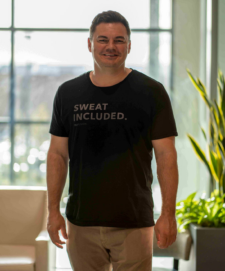
Dave Johnson

TruFusion

Dave focuses on building strength, confidence, and real-world fitness for all levels through HIIT Circuit and Tru Strength. With over 25 years in the fitness industry, his goal is to create a challenging and supportive environment where everyone can succeed. For Dave, movement is about building strength, relieving stress, and creating energy to show up for yourself every day.

His advice for UW Fitness Day? “You don’t have to be ‘in shape’ or have it all figured out, just show up ready to go. Bring the energy, and we’ll handle the rest!”

UW TruFusion discount: Get 50% off the first month of unlimited access, or a special $119 monthly rate for those 25 and under.

‎ Jade Tabares

Jade Pilates Method & The Sweat Studios

‎ Specializing in Pilates and functional mobility, Jade has been instructing for nearly 15 years and is passionate about helping people move their bodies. She loves the energizing and inspiring environment of UW Fitness Day when everyone comes together.

Jade wants to remind participants to: “Choose yourself. Choose to love. Choose to make yourself feel good and feel proud of yourself!”

UW Sweat Studio discount: 10% off any package or membership.

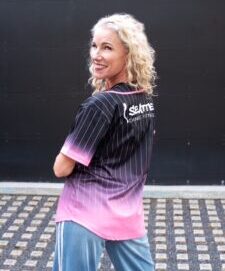
Jess Gleason

Seattle Dance Fitness

A proud UW alum with a BA in Dance, Jess believes movement is most powerful when it builds connection, confidence, and community. Through her Cardio Dance Party, she creates welcoming spaces where people of all backgrounds can move freely and express themselves. Jess says movement is her way of connecting to music, people, and herself.

Her message to participants: “You don’t have to be a dancer to dance with me and my team. Just bring your energy and we’ll create a lil joy together!”

‎UW’s Seattle Dance Fitness discount: 10% off any class pass.

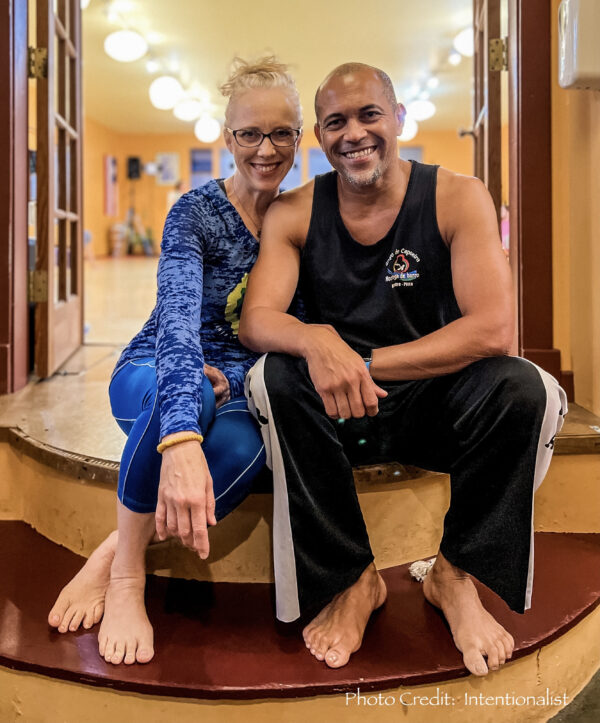
Daniel Nery dos Santos & Aileen Panke

Brasil in Motion

Daniel and Aileen bring the vibrant energy of Afro-Brazilian cultural heritage to UW Fitness Day. Their award-winning organization focuses on a balanced body, mind, and spirit through Brazilian dance, Zumba, and Capoeira. They are committed to creating an inclusive community and building cross-cultural bridges. For Daniel and Aileen, movement transforms, heals, and unites us.

Their reminder for the day is simple: “Dance is for EVERYBODY!!!”

UW’s Basil in Motion discount: 10% off all classes.


Summer Bourn

The Grinning Yogi

A fellow Husky, Summer discovered The Grinning Yogi as a UW student in 2016 and now specializes in Vinyasa flow. Drawing heavily on her background in dance, she creates fluid, intentional sequences that inspire movement and mindfulness. Summer advocates for movement as a lifelong journey rather than a temporary fix to chase an aesthetic.

Her hype message: “I am SO excited to move with you! My practice is all about a warm, playful energy where we use music to shape the mood and deepen the flow.”

‎UW’s Grinning Yogi discount: 10% off any renewing membership, plus a special $39 first-month offer.

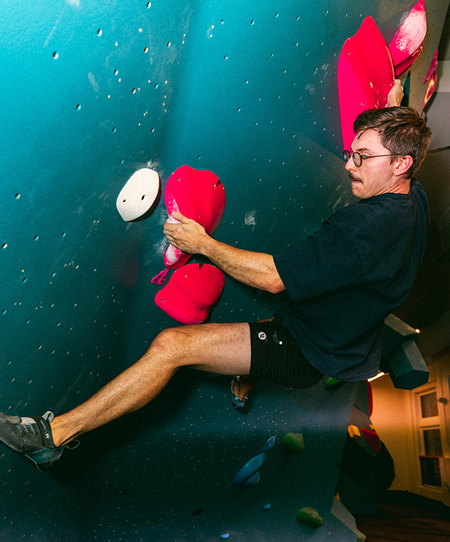
Alex Tyler

Seattle Bouldering Project 

Alex has been coaching rock climbing for five years, focusing on cultivating a positive environment for athletes. To Alex, movement is highly analytical, intentional, and joyful—a form of vertical problem-solving.

Excited to represent a gym just steps from campus, Alex says: “Be strong, try hard, do your best, breathe.”

‎UW’s Seattle Bouldering Project discount: Discounted annual membership and waived initiation fees on monthly memberships (valid at all locations).

Dilara Tuysuz

Equinox

Dilara focuses on strength, functional movement, and injury prevention. Drawing from clinical training and hands-on experience, she enjoys helping clients move better, get stronger, and feel confident in their bodies. For Dilara, movement is a powerful way to boost energy and relieve stress.

Her message to participants: “Bring your energy, your smile, and get ready to move! Let’s have fun, challenge ourselves, and make this an unforgettable day!”

UW’s Equinox discount: Waived invitation fees and preferred membership rates.

More than movement

UW Fitness Day is about showing up for each other. As a Husky Strong signature event, we’re proud to give back to our community, raising over $22,000 for the UW Food Pantries thus far in 2026. You can be part of it by making an optional donation through the UW Combined Fund Drive in support of Husky Strong.

Thank you to our sponsors!

UW Fitness Day is possible because of our partners BECU, TIAA, Decathlon, Husky Mobile, UW Medicine and UW Athletics!

UW Fitness Day: UW Athletics and UW Coaches Corner

In the lead-up to UW Fitness Day, we are spotlighting the coaches, student-athletes and campus partners who will be bringing the energy to Husky Stadium and UW Fitness Day across our campuses.

UW Fitness Day is more than a workout. It is a chance to move, connect and experience the energy of being a Husky in a whole new way.

Sign up today to secure your spot!

Train with the Huskies

What makes UW Fitness Day especially unique is the opportunity to be coached by UW Athletics coaches alongside a number of current student-athletes. These coaches and players will lead multiple fitness stations throughout the event bringing their expertise, energy and competitive spirit directly to participants. Whether it’s agility drills inspired by soccer, strength work influenced by football, or coordination and mobility from gymnastics, each station offers a fun and engaging way to experience how these athletes train.

Participants can explore more about these programs by visiting their official pages: 

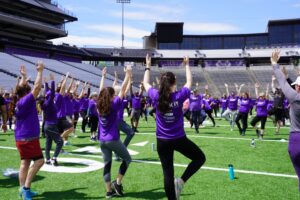
UW Fitness Day participants stand on one leg with hands in air

Powered by campus partners

UW Fitness Day is made possible through collaboration across campus. UW Recreation will be on the field leading a dedicated fitness station and helping participants connect to ways to stay active year-round. Jeff Palmer and the UW Rec team are known for creating inclusive, accessible programs through the IMA and across campus, supporting thousands of students, faculty and staff in building lifelong movement habits.

Behind the scenes, Lauren Updyke is helping bring this vision to life. With a strong background in fitness, exercise physiology, and wellness programming, she has helped lay the groundwork for an event like UW Fitness Day to thrive ensuring it is inclusive, energizing, and accessible for all. 

The Whole U fitness day

Kick off the energy early

Start your Husky Strong weekend at Dawgs After Dark, UW Football’s Spring Ball game on  Friday, May 1 at 6:30 p.m. Free tickets available (up to 12 per person). Then bring that energy with you to UW Fitness Day!

More than movement

UW Fitness Day is about showing up for each other. As a Husky Strong signature event, we’re proud to give back to our community, raising over $22,000 for the UW Food Pantries thus far in 2026. You can be part of it by making an optional donation through the UW Combined Fund Drive in support of Husky Strong.

Thank you to our sponsors!

UW Fitness Day is possible because of our partners BECU, TIAA, Decathlon, Husky Mobile, UW Medicine and UW Athletics!

UW Sounders Pride Night with QFSA

Join UW faculty, staff, families, and allies for a special night of connection and celebration at Seattle Sounders Pride Night on Saturday, August 16.

Hosted by the University of Washington Queer Faculty and Staff Association (QFSA), this group outing is an opportunity to come together in a fun, inclusive environment and show support for the LGBTQ+ community.

Event details

Seattle Sounders Pride Night Match
Date: Saturday, August 16
Location: Lumen Field, Seattle
Group seating: Section 126

Queer Faculty and Staff Association will coordinate group seating for UW attendees in Section 126, making it easy to connect with colleagues, friends, and community members throughout the match.

What to expect

  • A welcoming, community-centered experience for UW faculty, staff, families, and allies
  • Group seating with other UW attendees in Section 126
  • Nearby access to family and gender-neutral restrooms
  • A stadium environment that supports individuals using the restroom that aligns with their gender identity
  • Event security in place, with additional details to be shared closer to the event

Ticket information

  • $51.02 per ticket (includes service fees)

How to participate

If you’re interested in attending, tickets can be purchased at the following link:

About QFSA

The University of Washington Queer Faculty and Staff Association (QFSA) supports LGBTQ+ employees and allies by fostering community, advocacy, and connection across UW.

Questions?

For additional information, please reach out to Queer Faculty and Staff Association organizers James Fesalbon, Alan Glavez, and Nick Stelzner, (jfesal@uw.edu, aagalvez@uw.edu, & nrcs@uw.edu

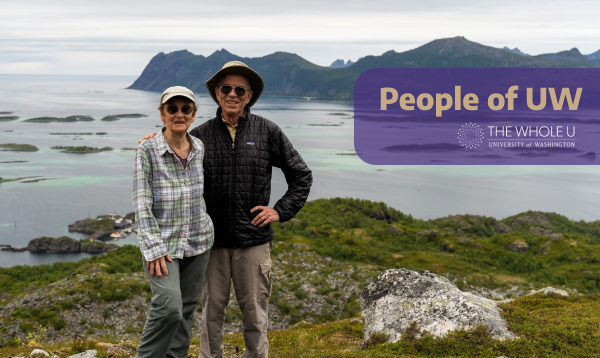
People of UW: Merrill and Bertil Hille

Distinguished emeritus professors Merrill and Bertil Hille are partners in wellness and paragons of active — even adventurous — aging

Like many retired couples of a certain age, Bertil and Merrill Hille log their engagements in an old-fashioned paper calendar. Theirs would look pretty unremarkable, actually, if not for the sprawling range of scribbled triangles that blankets much of its orderly grid like crowded peaks on a topographic map. 

“Each of these triangles is a mountain hike,” explains Bertil, an emeritus professor in the UW Department of Physiology and Biophysics. “This one is Grand Park. This is Fremont Lookout. And Coldwater Lake. Alta Vista. Cowlitz Divide. Sunrise Rim. Summerland.” 

This litany of alpine ascents would test the quads of the sturdiest young body. The Hilles are in their mid-80s. 

“Our son and his wife were visiting,” explains Merrill, a professor emerita of zoology at the UW. “So, it’s a bit full.” 

She’s speaking of this past July’s schedule, of course. But she might as well be describing the life that she and Bertil have made together: full. 

While remaining intellectually active after long and distinguished careers devoted to research, writing and teaching in the life sciences, Merrill and Bertil have continued to feed a lifelong wanderlust in retirement. Amplified it, really.

They train diligently for the hiking and snowshoeing adventures across the Pacific Northwest and around the world that pack their calendar. Recent travels have found them hiking across northern Norway, circumnavigating Mont Blanc, visiting Machu Picchu and trekking in the Italian Dolomites. 

These trails they have traversed serve as a neat metaphor for their lives and careers, which have been, by turn, linear and meandering, straightforward and challenging, serving obstacles to negotiate and detours to explore. And though their trails diverge at times, they always come back together. 

Paths first cross 

Merrill and Bertil Hille have been together for more than 60 years, long enough to finish each other’s sentences and edit each other’s stories (a biproduct, perhaps, of lifetimes working inside the peer-review system). 

Both grew up with esteemed “faculty fathers.” Merrill’s was a professor of mechanical engineering at Cornell and Bertil’s was professor of mathematics at Yale. 

Encouraged by his academic-minded parents, Bertil Hille cultivated an early love of science, from soaking up fascinating conversations among his parents’ scholarly friends to high school summers interning in a biology lab to daily hikes up Yale’s famed Science Hill and summer field studies at Woods Hole Oceanic Institute as an undergrad. “For me, it was an almost linear progression,” he says. 

Merrill Burr’s path was more roundabout. She became fascinated by the study of embryology — how organisms develop — as a chemistry undergraduate at Cornell. And she became equally fascinated by the wild places of the Pacific Northwest when she tagged along a Boeing consulting project with her father one summer. 

She preceded Bertil as a graduate fellow at New York’s Rockefeller University in the early 1960s. They met on a group camping trip organized by her roommate, the only other woman in the program. “At the time,” Merrill says,” women weren’t well accepted in science.” 

The star-crossed scholars fell quickly in love and married in 1964. After completing their doctoral work (and Merrill’s postdoctoral stint at NYU deciphering the genetic code with Nobel laureate Severo Ochoa), they spent a year at Cambridge University in England. There, Merrill studied the development of chick bones with Dame Honor B. Fell of the Strangeways Research Laboratory. And Bertil worked with Sir Alan Hodgkin, the Nobel Prize-winning biophysicist. 

Into the west 

The newlyweds returned to the U.S. with their firstborn son in tow and a second on the way. Bertil’s mentors arranged for meetings discussing faculty posts at Harvard and Duke. Honoring Merrill’s love of the West, he also visited universities up the Pacific coast from UC San Diego to Simon Fraser. The most fateful stop was at the University of Washington. 

“At the time,” Bertil says, “Seattle was known as the place you would have to stop in if you were traveling to Alaska or Japan. Academically, it did not have a lot of known appeal.” 

What the UW did have was a small cohort of kindred scholars, a vigorous graduate program and advanced scientific computing facilities. 

For Merrill, it had one more big selling point: location, location, location. “We came here because I wanted to be in the mountains,” she admits. 

“I knew that Merrill really wanted to be in Seattle,” Bertil confirms. “I assumed that in five years we would move back home. But it turned out to be just the right place for both of us.” 

They arrived in 1968. Bertil launched straight into an illustrious tenure at the UW School of Medicine, continuing the pioneering research he had begun at Rockefeller on cell signaling by ion channels. Merrill’s faculty career, on the other hand, began fitfully as a part-time postdoc in the zoology lab of Arthur Whiteley. 

While frustrating, Merrill’s early underemployment allowed her to play a central role in creating one of the jewels of Seattle’s public parks. 

A detour to the Burke-Gilman Trail 

During their early years in Seattle, the Hilles lived in a small house beside the Seattle, Lake Shore & Eastern Railway that had connected downtown Seattle to Woodinville since 1887. “The kids loved it,” Merrill recalls. “They would run to the window every time a train went by.” 

What she didn’t love, however, was having to lead her young children across a neighboring railroad overpass to access Matthews Beach and Lake Washington. “There was no railing,” she recalls, “So we made the kids walk between the rails so they wouldn’t fall over the edge.” 

When the Burlington Northern Railroad made its final coal run and decided to abandon the route in 1971, Merrill and a group of neighbors formed a committee to advocate for turning the railway into a paved public path for cyclists, walkers, runners and strollers along 12 scenic miles of lakeshore. They named their committee and the trail they got built after an influential judge named Thomas Burke and a financier named Daniel Gilman who were central to the rail line being built in the late 1800s. 

This neighborhood plan needed city-wide attention. So, with the guidance of then-Mayor Wes Uhlman — a powerful ally — Merrill spent the summer of 1971 organizing a massive “hike-in” to build public support for the trail. On September 12, more than 2,000 Seattleites processed southward from Kenmore’s Log Boom Park and northward from Seattle’s old coal gasification plant (now Gasworks Park) to converge at Matthews Beach for a rally. 

The event was a great success. But there was still much work to be done by the Burke-Gilman committee and civic leadership to negotiate a property deal with Burlington Northern, to convince residents along the route that a public trail would not invite criminal activity or lower property values, to grow support across the city and to establish alliances with environmental and recreation organizations. 

On August 19, 1978, the first 12.1 miles of the Burke-Gilman Trail opened to the public. 

A blockbuster discovery 

During Merrill’s detour into civic advocacy, Bertil was able to focus on his pioneering scientific research on ion channels that he had begun with grad school in parallel with colleague Clay Armstrong. Ion channels allow the passage of electrically charged particles to conduct the body’s basic biological processes, from excitation and signaling to secretion and absorption. 

In 1984, culminating many years of work, Bertil published the first of three editions of “Ionic Channels of Excitable Membranes.” 

The insightful, accessible book earned him worldwide notoriety and a passel of awards and honors. Among them, the Albert Lasker Award for Basic Medical Research and the Gairdner Foundation International Award, and election into the National Academy of Sciences, National Academy of Medicine and American Academy of Arts and Sciences. 

Most gratifying, Bertil says, is seeing the impact of this work over time. “Ionic Channels” created the foundation for expansive development and discovery to come. Since the book’s debut, there have been more than 400,000 papers on ion channels to date.  

Understanding ion channels has been pivotal to the development of local anesthetics, pain blockers, pharmaceuticals and medical therapies for heart disease and a multitude of other conditions. 

“I had the good fortune of being there in the beginning and starting an idea that has become very important to medicine and basic science,” Bertil says. 

Though he became renowned as an author more than a working scientist, he subsequently branched off into many new directions in biophysics, publishing more than 250 papers in his career. 

Merrill’s path 

On the other side of Bertil’s rocket-ship success, Merrill progressed more slowly up the academic chain at the UW, despite her impressive curriculum vitae. 

As a part-timer in the Whiteley lab, she initially studied sea urchin embryos, and specifically how a fertilized egg makes its first proteins. This led to an interest in how cells migrate around an embryo to develop an organism’s features and functions. 

It took the better part of a decade to achieve full-time faculty status and another to get her own lab. In the 1990s, Merrill began studying embryonic cell development in zebrafish, moving from invertebrates to vertebrates. “And vertebrates are considered relevant,” she says. “All the mechanisms I studied in zebrafish are the same as in us.” 

Merrill was resilient and resourceful. With her lab chronically underfunded, she employed an army of undergrads to help with the work. This resulted in papers with a curious multitude of young authors, many of whom were building credentials for their own graduate science or medical degree studies. “What a great opportunity it was for them,” Bertil remarks. 

During these years, Merrill also made good on her dream of climbing. She joined the Mountaineers Club while sons Erik and Trygve were in high school. And, over time, she summitted every major peak of the Pacific Northwest and many others, often alongside her equally venturesome sons. 

Globe trekkers 

Merrill shares her love of the outdoors with Bertil, too. Over their many decades together, they have spent countless memorable weekends day hiking, backpacking, skiing or snowshoeing in the local mountains.  

They have enjoyed many adventures around the globe, too. Together or apart, they have explored Mexico, Brazil, Colombia, Argentina and Peru. England, France, Italy, Germany. South Africa, Kenya, Malawi and Madagascar. Japan and Mongolia. Leningrad (before the fall of the Soviet Empire). 

They have floated down the Amazon, slogged the Pantanal wetlands of Brazil and trekked around the Torres del Paine and Tierra del Fuego in Argentina and Chile. They traversed the northern tundra of Norway in rubber boots (when Merrill was six-months pregnant with their first child). And they sailed to Antarctica (for their 50th wedding anniversary). 

Only the island of Borneo — where they outlasted Merrill’s durian-induced stomach bug, the swelting jungle and legions of parasites to ascend 13,400-foot Mount Kinabalu — draws mixed reviews.  

“Borneo is a place where you acquire lots of leeches,” Bertil reports. “I would avoid it.” 

“I thought that was a good trip,” Merrill counters, sending them both into laughter. 

Seize every day 

In a biographic article he wrote on making a life in the life sciences, Bertil wrote of striving to live the ancient Greek ideal of a balanced mind and body. 

They did that during their faculty years and have continued in their recent retirement. In their emeritus role, they stay intellectually active, avidly reading and writing and remaining engaged in the scholarly lives of former students and colleagues. 

They also stay physically active, as a hedge against the inevitable declines that come as the years advance — and because it just feels good to move.

“The New York Times Magazine recently had a special issue on retirement,” Bertil says. “One of the tips was that you should enjoy the things you can do and not regret the things you can’t do anymore.” 

“But I am regretting them,” Merrill says, with a laugh. 

Yes, they have had to give up skiing and backpacking. But they walk and garden for hours every day, Merrill tending to fruits and vegetable plots while Bertil landscapes the slope behind their home of 25 years that tumbles down to a familiar trail. “He’s remodeling the Burke-Gilman below here,” Merrill jokes. 

They often watch the activity along the trail with great pride. “It’s the only park that I’m happy the more people are there,” Merrill adds. 

But movement is much more than a spectator sport to them. The Hilles continue embarking on active adventures every year. The tour of Mont Blanc covered 100 miles of alpine walking. The refugio-to-refugio hike across the Dolomites was a multiday ramble. 

But most often they hike (or snowshoe) in the familiar mountains that first called them to this verdant corner of America. They have a cabin up in Greenwater, near Mount Rainier, that serves as an advanced base camp for endless explorations. “Before we retired, we hiked on weekends,” Bertil says. “But now, we’re free to go any time. We just keep going.” 

To keep fit for these everyday adventures, the Hilles religiously attend — and provide great inspiration at — The Whole U’s Virtual Weight Training Class with Lauren Updyke every Tuesday and Thursday morning. Well, most every Tuesday and Thursday. 

“If we’re missing from Lauren’s class,” Bertil says, “it’s because there’s a triangle on our calendar that day.” 

Huskies Take the Stairs: 2026 Stair Climb Challenge Recap

student on stairwell on UW Tacoma campus

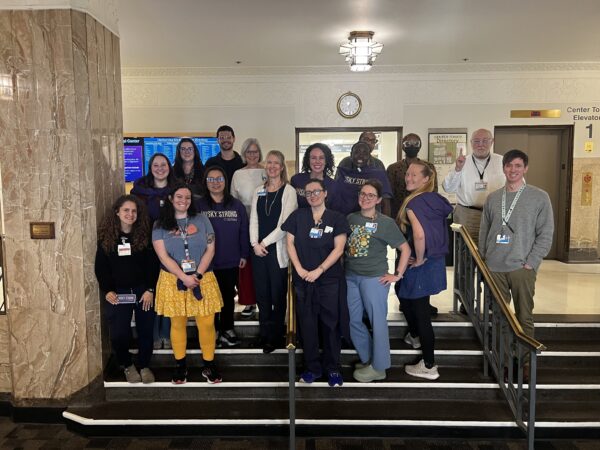
On Tuesday, March 10, UW and UW Medicine employees stepped up for a day of movement, friendly competition and community during the 2026 UW Stair Climb Challenge. Across campuses, just over 500 participants traded elevators for stairwells and found creative ways to move throughout the day.

Together, we climbed an incredible 223,523 total stairs, showing that small actions throughout the day can add up to a powerful collective impact.

And the campus claiming bragging rights this year?

Congratulations to UW Tacoma! (This is UW Tacoma’s second win this winter, after claiming first place in the Husky Strong Winter Games!)

To keep the competition fair across campuses of different sizes, results were averaged based on number of participants who submitted stairs.

The one-day challenge invited faculty, staff and colleagues across UW’s campuses, hospitals and remote locations to participate in whatever way worked best for their body and environment. Whether climbing stairwells, walking hills or converting distance traveled using mobility devices, the goal was simple: move together for well-being.

Power stairwells and community climbs

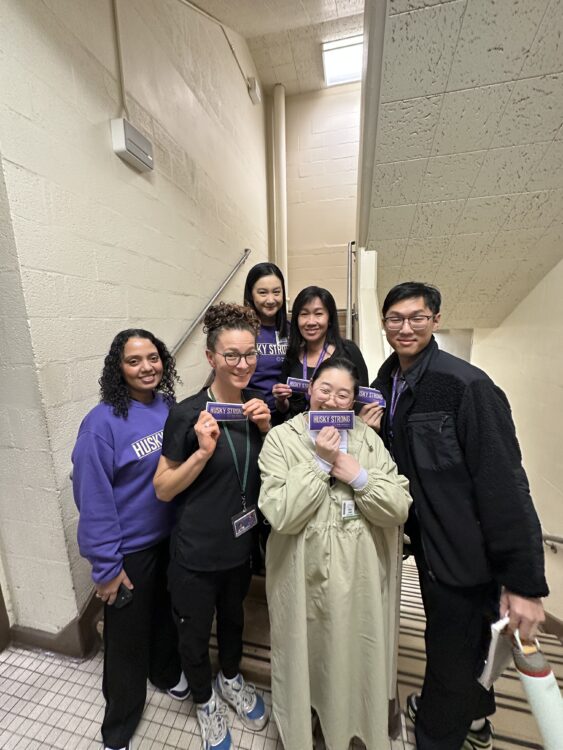
In addition to climbing throughout the day, participants gathered at “power stairwells” across UW for a boost of encouragement from colleagues and leaders.

Seattle campus: Climbing together outdoors

On the Seattle campus, The Whole U team hosted a community climb starting outside Hall Health Center. Participants gathered midday and climbed together down toward the E18 lot before making their way back up. The outdoor route offered fresh air, movement and a chance to connect with colleagues while tackling the hill together.

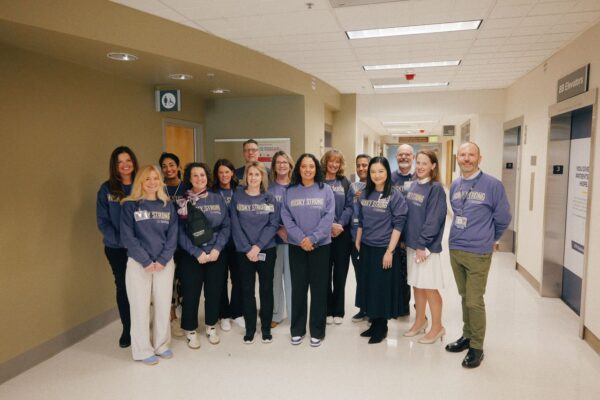
Harborview Medical Center: A 12-floor team climb

At Harborview Medical Center, a large group gathered in the Center Tower stairwell for a spirited climb led by Chief Nursing Officer Keri Nasenbeny, Interim Assistant Vice President for Human Resources Pranika Laing and Bonnie J. Decker,

HMC Infection Preventionist. Together with colleagues from across Harborview, participants climbed to the 12th floor of the center tower, turning the stairwell into a moment of shared energy and encouragement.

UW Medical Center: Leadership cheering participants on

At UW Medical Center, the challenge brought visible enthusiasm throughout the halls. CEO Jita Pandya Buno and the entire UWMC executive leadership team gathered in the stairwell areas to cheer on participants as they climbed between floors. The encouragement helped create a fun, supportive atmosphere for staff taking on the challenge during busy workdays.

Participant spotlight: Discovering a passion for stair climbing

For some members of the UW community, stair climbing has become more than a one-day challenge.

Leah Davidson, who works in the UW Tower, shared that her love for stair climbing began during a past Whole U challenge several years ago that encouraged participants to “climb Mount Rainier” through cumulative steps.

That challenge sparked a lasting habit.

Today, Leah regularly climbs outdoor stair routes around Seattle, including the Howe Street Stairs and Blaine Street stairs near Eastlake, often completing 3,000 stairs in a workout along with strength exercises like squats, lunges and push-ups.

“Stair climbing got me through COVID with my mental and physical health intact,” she shared. “Whenever the weather looks iffy and I’m dragging my feet, I remind myself that I have never regretted going once I’m finished.”

Leah says the challenge helped her discover a workout she truly enjoys, and the views from Seattle’s staircases are an added bonus.

Stories like Leah’s show how small challenges can spark long-term habits that support both physical and mental well-being.

Climbing for a cause

For some members of the UW community, stair climbing is about more than movement, it’s also about supporting important causes.

One of those Huskies is Kevin Jones from UW Medical Center – Northwest, who is preparing to take on the Columbia Tower Big Climb this month to support the Leukemia & Lymphoma Society. Read Kevin’s story and why he’s stepping up for a cure.

Thank you to our participants and The Whole U sponsors

Whether you climbed a single flight or dozens throughout the day, every step contributed to the collective momentum of this challenge.

Thank you to everyone who participated and helped bring energy to stairwells across UW. Congratulations again to UW Tacoma for taking the 2026 title!

And of course, thank you to BECU for sponsoring The Whole U!

How to navigate winter darkness

Happy girl with a red scarf on the winter background

As the light shifts to lower intensity and the weather begins to ebb and flow, we are invited to more skillfully engage with daily life. In the past, human beings were much more attuned to the rhythm and patterns of the natural world, whereas today, while we are still affected by these same natural currents, we tend to be more insulated from what is actually going on. When that is so, it tends to have negative consequences around mood, energy, and overall wellbeing.

The good news is that humans are resilient, adaptable, and—with the right plan in place—can navigate and see clearly through even in the darkest of storms. To stay the course during these next months of winter, consider exploring the following techniques. Don’t worry about engaging them all at once. Pick one or two and notice what shifts. After that, stick with these or start to add one more. Baby steps, lots of compassion, and if you fall off track no big deal, simply begin again.

Move your body

Move your body at least four times a week for 30 to 45 minutes (including some weight training). This will provide more reduced inflammation, lowered blood pressure, increased metabolism & blood circulation, better sexual vitality, enhanced sleep, and increased executive functionality in the brain.

Eat less sugar, more whole foods

Reduce sugar consumption and refined/processed foods. If you do need something sweet, try including more sweet spices in your cooking (cinnamon, cardamom, nutmeg, cloves), sweet veggies (carrots, sweet potatoes/yams, cooked onions, parsnips, etc.), and higher quality sugars (dates, coconut nectar, maple syrup, raw honey), but still in moderation.

Get enough protein

Ensure you are consuming enough protein (from any and all sources that work with your personal nutrition choices, such as fermented soy, legumes, nuts/seeds, low mercury fish, and grass fed animal sources), which means you are also getting ample essential amino acids. Low mood, fatigue, and sleep disruption can correlate to lack of high-quality protein.

Omega 3’s are key

Consume enough omega 3’s from real, whole food sources (try clean non-toxic fish in order to get a broader spectrum of nutrients). If you are vegan, you can use a marine algae omega 3’s which is the only vegetarian source that provides both Eicosapentaenoic acid (EPA) and docosahexaenoic acid (DHA)—together, the backbone of omega 3’s health-giving benefits.

Prioritize winding down

Carve out time to wind down, get enough high-quality sleep, connect with family and friends, and enact self-care rituals for stress reduction (make soup, read a book, walk in nature, walk your legs up the wall, breathe deeply for three minutes, or host a potluck).

Check the chemicals in your life

Do a chemical toxicity inventory of your life (What is off-gassing? What chemicals are you putting on your skin?). Download Thinking Dirty app and scan barcodes of your household products.

Focus on fiber and good gut health

Take care of your gut health by remembering to consume probiotics and prebiotic/fermentable fiber foods such as garlic, leeks, onions, scallions, shallots, artichoke, Jerusalem artichoke, asparagus, bamboo shoot, beets, burdock root, savoy cabbage, cassava, cauliflower, celery, chicory and dandelion root, daikon, fennel bulb, collards, dandelion, kale, mustard, spinach, jicama, mushrooms, okra, butternut squash, sweet potato and yam.

Light makes right

Engage in light therapy to stave off seasonal affective disorder (SAD). Thought to be caused by the effect of reduced natural daylight on brain chemicals that regulate our sleep patterns and mood, SAD can be addressed by exposure to high intensity white fluorescent light (10,000 lux) for approximately 30 minutes a day.

UW’s first NMDP match: Alana Geylani’s life-saving gift

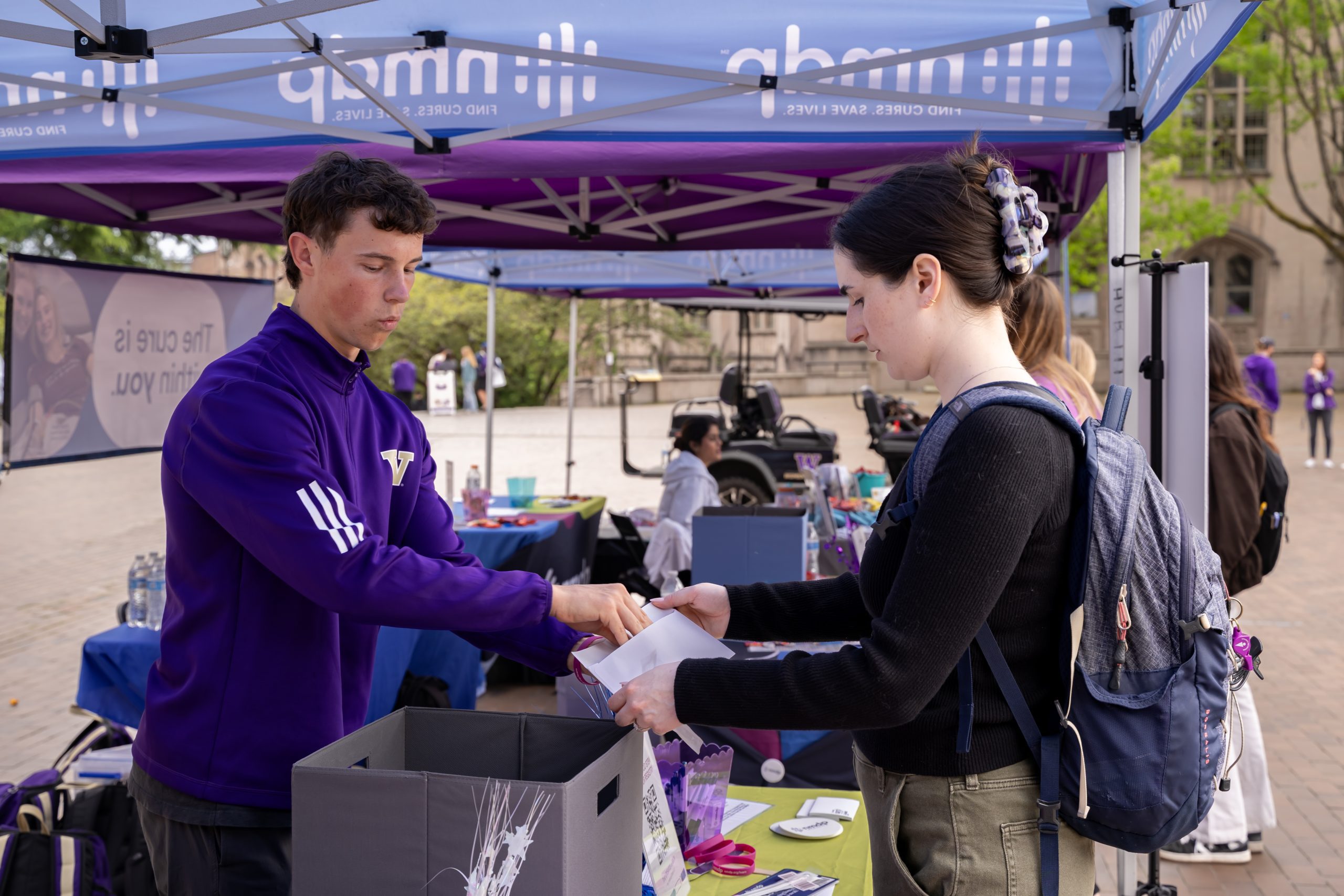
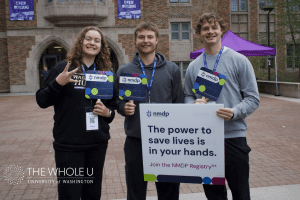
For the past six years, The Whole U has partnered with NMDP (formerly Be The Match) and UW Athletics to host Get in the Game, an annual event encouraging Huskies to join the registry of potential bone marrow and blood stem cell donors. More than 2,000 UW students, staff and faculty have stepped forward over the years, swabbing their cheeks in Red Square and signing up with the hope of one day being called to save a life. 

Alexes Harris and Ed Taylor attend Get in the Game.

This year, that hope became reality. UW has its first confirmed match: sophomore Alana Geylani, who is donating her blood stem cells to help a patient in need. 

A pre-sciences UW student with growing interest in the field of public health, the match couldn’t be more perfect.

Inspiration & First Steps

Alana’s journey began in a class discussion during her freshman year. In her sociology course, Professor Alexes Harris shared her own story of how a bone marrow donation saved her life and gave her the chance to watch her daughter graduate. 

“I tell my students every year that signing up for the registry is one of the simplest, yet most powerful, acts you can do for another person,” said Harris.

“To see Alana take that message to heart and now step forward as UW’s first match—it’s truly inspiring.” 

In that same classroom, Harris also asked students to think critically about health disparities in cancer treatment, especially for people of color. She posed the question: Why are so many underrepresented populations missing from the registry, and what does that mean for patients seeking a match?

Hear more from Alexes Harris in a local King 5 segment:

Getting the Call

For Alana, who was already thinking about her own mother thousands of miles away, the discussion struck a personal chord. She left class determined to take action, and not long after, she signed up on Red Square. 

At the end of July, Alana’s phone rang with unexpected news. She was a near-perfect match for a patient. “At first, I thought it was spam,” Alana admitted with a laugh. “But once I heard the voicemail, I called back right away. I was nervous and speechless, but the moment I learned that I could save someone’s life, I knew I had to do it.” Her decision to say yes came naturally. With a growing passion for public health, Alana saw this as an extraordinary opportunity to make a difference. 

Alana was especially moved by just how close of a match she was. “Knowing my genetic match was nearly identical made the experience feel deeply personal—almost like it was meant to be. Something in me kept saying this was exactly what I needed to do.”

Although privacy rules mean she cannot share details about her recipient’s identity, Alana emphasizes that this person, and their story, remains at the heart of her journey.

Alana during her donation appointment.

Donation Process

Since then, Alana has been busy with clinic visits, phone calls and learning the step-by-step process of donating blood stem cells. She was surprised to learn about the care and logistics involved, from volunteer couriers hand-carrying donations to the strong support system NMDP provides to donors and families.

“They’ve helped with everything—explaining each detail, supporting me emotionally, even helping my cousin travel to be by my side,” Alana shared.

Personal Reflection

For Alana, this experience has only deepened her interest in public health and her appreciation for the power of human connection. 

“Knowing that a part of me could make such a big difference in someone’s life fills me with gratitude and pride,” she said. “Something in my mind just told me this was what I was meant to do.” 

A Message to Others

Alana hopes her story will inspire others at UW to join the registry. 

“Whoever’s out there debating on whether or not to sign up—just think about how impactful this small decision can be,” she said. “It’s a chance to give hope and maybe even a second chance at life.” 

A Wellness Perspective

 “This moment is such a powerful reminder that wellness is not just about physical health, but about connection, purpose, and giving of ourselves,” said Lauren Updyke, Executive Director of Employee Experience and UWHR Chief of Wellness.

“Alana’s generosity shows us that each of us has the ability to make a life-changing impact, and it inspires our whole UW community to consider how we can show up for one another.” 

UW Athletics and Community Support

From the beginning of this partnership, UW Athletics has played a central role in championing the cause. The mission has been especially inspiring to the UW Women’s Soccer team, who shows up in large numbers each year to the Get in the Game event. 

“Alana’s courage and selflessness reflect the very best of our Husky family,” said Head Women’s Soccer Coach Nicole Van Dyke.

“For all of us in UW Athletics, being part of this journey with NMDP and The Whole U fills us with such joy and gratitude. Moments like this remind us what service and community truly mean. We are forever thankful to Alana and to Dr. Harris, whose powerful story continues to inspire our community, and we hope Alana’s example encourages more Huskies to join the registry for a chance to save a life.” 

Nicole Van Dyke and the UW Soccer coaching team at the Get in the Game event.

As UW celebrates its first confirmed match through Get in the Game, the impact of this partnership is clear: every swab is a chance to save a life. And now, thanks to Alana, one patient’s story continues. 

You Can Join Too

Our UW NMDP student organization will be co-hosting an event in Red Square on October 22 and 23 from 10 a.m. to 3 p.m. each day. Stop by the event and follow along with UW NMDP on Instagram. 

UW student athletes and volunteers spread the word.

Get Involved Today

To register, visit join.nmdp.org/UW
or Text UWSAVES to 61474

Special thanks to TIAA for Sponsoring The Whole U and Get in the Game.

Staying safe for fall and winter hiking

As an avid hiker and backpacker, I have experienced the PNW in all its weather elements. I am the Chair of the Mountaineers Foothills Branch Backpacking Committee, Co-Creator and Administrator for a beginning hiking series called GoHike, and an urban walk leader. My emphasis on safety is a priority. I help participants gain confidence, practice leave no trace principles and foster a space for belonging. I welcome all levels of physical abilities and create a community of outdoor enthusiasts who take care of one another on the trails.

The wintry weather is here, and safety essentials are necessary on our trails. We need options for the wet, cold, and snowy trails to recreate on. Snow fans rejoice this time of year because snowshoeing, skiing and snowboarding opportunities abound. But what about the rest of us who just want to get on the trails and hike? While it can be exciting to hike in snow, see animal tracks, and be in awe of frozen waterfalls, lakes and experience the moody, misty wonders of our PNW trails, additional safety measures are essential.

Fortunately, with a little knowledge, prep, and awareness, hiking safely in the colder months is possible.

What can I do to prepare?

Be aware of the conditions of the roads and trails before you go.

Bring a map – dI cannot emphasize how important a map is and knowing how to use it! Check out the smartphone apps Gaia or All Trails to download maps to use offline while hiking. Both have affordable subscription rates. Paper maps are also available at local outdoor retailers. Remember, phones can die, so bring your battery pack and a paper map as a backup.

Know before you go! Check out Washington Trails Association for current trip reports, weather forecasts, current conditions, and parking passes required at trailheads.

Captured by Christina Buckman

What are the essentials for hiking during the fall/winter?

1. Always bring the 10 essentials, regardless of the season!

  • Headlamp/sun protection/first aid/knife/fire starter/shelter (emergency bivy)/extra food, water, and clothes.
  • Consider hiking poles: They help with joint impact and balance.

2. Reduced visibility is often the case in the colder hiking season. Know the forecast, and prepare for it to change.

3. Best practice is to not go alone, but if you do, tell someone where you will be, and when you expect to be back. Providing GPS coordinates of the trailhead you start at is an immense help should you need someone to help in an emergency. GPS coordinates can be obtained on Google Maps by clicking on the location of the trailhead. Copy and paste in the message you send to your emergency contact.

4.Be aware of hypothermia and the signs that could mean trouble.
Never wear cotton. A hiking cardinal rule! If it gets wet in our climate, it will not dry and can cause hypothermia to set in fast. Wear wool or synthetic layers and have extras just in case.

5. Proper footwear.
Unless you are snowshoeing, on skis or boards, hiking on trails may sometimes require strap-on micro-spikes or Yaktrax. They are inexpensive and will give you the added confidence on trails that may be icy or snowy. Make sure to have hiking boots that have good traction and are waterproof, to keep your feet from getting wet. Dry feet are happy feet!

Captured by Christina Buckman

What are other resources for information on hiking and other outdoor adventures?

My go-to is Washington Trails Association– Not only does it have the most comprehensive trail database with search components to cater to your needs, but timely articles, current trip reports and opportunities to give back. We owe a great deal of thanks to those diligent WTA volunteers who spend time on the trail keeping it safe for us.

The Mountaineers – With a myriad of courses, clinics and seminars spanning a variety of activities, the options are endless, and you know you will be well cared for with expert leaders. Scholarships available for memberships and courses.

REI Expert Advice

REI Uncommon Path: Blog

Where can I get inspired?

Instagram can be a great resource for inspiration, without having to read long articles or blog posts. Check out the IG handles I follow below for diversity, inclusivity, body positive profiles, helpful tips, and travel pics for inspiration.

  • Her PNW Life – community of adventurous women in the PNW
  • Issaquah Alps Trails Club – Dedicated to engaging the public to preserve, protect & promote the land, wildlife, and trails.
  • The Mountaineers – Nonprofit, volunteer-led org working to inspire a lifetime of outdoor adventures.
  • Brown Girl Outdoor World – Black, Indigenous and Anti-racist POC 2SLGBTQ+ in the outdoors
  • She Colors Nature
  • Unlikely Hikers – Body liberation and anti-racism outdoors
  • Women Who Hike – Empowering women who hike on and off the trail.

Captured by Christina Buckman

How can I build community?

Having a sense of belonging and community as outdoor enthusiasts is essential, and incredibly rewarding. I highly encourage you to research options where you can meet new people, to learn from and be inspired by one another. My volunteer work with the Mountaineers has been and continues to be, the greatest source of my inspiration. The best part is making lifelong friendships and connections. We are fortunate to live in a state surrounded by water and mountains. Get out there, be safe, have fun, and hike on!


Christina Buckman (she/her) is a UW Alumni and works as an Academic HR Business Partner on the Bothell Campus. As an employee of the University for 11 years, she is proud to be a Husky. As an avid hiker and backpacker, she is a mentor and leader with the Mountaineers, where she focuses on safety, inclusivity, body positive mentorship and makes sure everyone feels a sense of belonging as she shares her passion for the outdoors.


Unlocking personalities: Understanding yourself and others

Have you ever wondered why people think, feel, and behave so differently from one another? 

 In an enlightening webinar titled “Unlocking Personalities,” Dr. Michael Johnson, the Boeing Company Endowed Professor of Business Management, explored how understanding the Big Five personality model can help us better comprehend our own and others’ behavioral patterns.   

The Big Five Personality Dimensions

From Dr. Michael Johnson’s ” Unlocking Personalities: Understanding the Big Five Model” webinar presentation, University of Washington, 2024

Openness to Experience

  • Core Traits: Creative, curious, and receptive to change 
  • Workplace Impact: Excel in roles requiring innovation and creativity 
  • Career Implications: Strong tendency toward artistic and scientific fields 
  • Professional Development: Best suited for roles involving innovation and strategic thinking

Conscientiousness

  • Core Traits: Organized, reliable, and achievement-oriented 
  • Workplace Impact: Strongest predictor of overall job performance 
  • Career Implications: Lower rates of workplace deviance, higher task completion 
  • Professional Development: Excels in roles requiring attention to detail and reliability

Extraversion

  • Core Traits: Sociable, assertive, and energetic 
  • Workplace Impact: Enhanced performance in sales and management roles 
  • Career Implications: Natural tendency toward leadership positions 
  • Professional Development: Thrives in roles requiring interpersonal engagement

Agreeableness

  • Core Traits: Warm, cooperative, and sympathetic 
  • Workplace Impact: Higher levels of organizational citizenship behavior 
  • Career Implications: Strong team collaboration and support capabilities 
  • Professional Development: Best suited for roles requiring interpersonal harmony

Neuroticism (Emotional Stability)

  • Core Traits: Tendency toward emotional variability and stress sensitivity 
  • Workplace Impact: Influences stress management and pressure handling 
  • Career Implications: Affects decision-making under pressure 
  • Professional Development: Benefits from roles with structured support systems 

Using the Big Five Model for Personal and Professional Development

Understanding your Big Five personality profile offers more than just self-insight – it provides a framework for personal growth, professional development, and building better relationships with others.  

Personal Growth 

Self-awareness: Recognizing one’s standing on the Big Five dimensions can lead to greater self-awareness. For example, if you know you are low in conscientiousness, you can focus on developing strategies to improve organization and reliability. Similarly, if you score high in neuroticism, you can work on stress management and emotional regulation techniques. 

Managing Strengths and Weaknesses: Each trait has potential strengths and weaknesses. High scores in a particular trait might lead to beneficial outcomes in certain situations and less so in others. For example, while high extraversion can benefit networking, it might also lead to overstimulation and the need for solitude for some people. Knowing these potential downsides enables you to manage and adapt your behavior effectively. 

Targeted Development: By understanding your personality profile, you can target specific areas for personal development. For example, those low in openness can consciously work on being more receptive to new experiences and ideas. Individuals can consciously work on their behavior and personality, such as becoming warmer or more assertive. 

Interpersonal Relationships  

Understanding Others: Awareness of the Big Five model can help you understand how others think and act. For example, if you interact with someone low in agreeableness, knowing they may “tell it like it is” can help you avoid taking their directness as a personal attack.  

Team Composition: Knowledge of personality traits is helpful in team composition and role assignment. Understanding that agreeable individuals are more likely to engage in organizational citizenship behaviors can help build teams. Placing an individual high in openness in a role that requires innovation can foster creativity.  

Effective Communication: The Big Five can affect communication styles. For instance, extroverts tend to be talkative and assertive, while introverts might prefer to communicate in writing or one-on-one settings. Recognizing these differences can lead to more effective interpersonal communication. 

Leadership: Extraversion strongly correlates with leadership emergence, and those high in this trait tend to be assertive and energetic. On the other hand, high neuroticism can negatively affect leadership effectiveness. Understanding these connections can help you recognize and develop your leadership skills and styles.  

Relationship Dynamics: Agreeableness is linked to increased organizational citizenship behaviors, and agreeable people are warm, cooperative, and sympathetic. However, very high agreeableness can sometimes be seen as naive. Effective interpersonal relations require a balance of agreeableness and assertiveness. Interpersonal traits such as extraversion and agreeableness are linked to cooperation, sensitivity, warmth, and social coordination behaviors. 

UW Resources for Personal Growth and Professional Development

Understanding personality traits is valuable, but putting this knowledge into practice often requires support and guidance. The University of Washington offers two key resources to help you on this journey. The Washington State Employee Assistance Program (WA EAP) provides PEBB-eligible employees and their household members with confidential support, including solution-focused counseling services. You can access up to 3 sessions per concern and use this benefit multiple times throughout the year as different challenges arise. 

For additional support in specific areas of life, UW WorkLife offers valuable resources for managing both personal and professional challenges. Whether you’re seeking guidance on workplace relationships, looking for work-life balance strategies, or needing support for caregiving responsibilities, these programs provide the practical tools and information you need to thrive both at work and in your personal life. All services are confidential and designed to support your overall well-being. 

If you missed the live webinar or would like to review the content, a recording is available on The Whole U’s YouTube:

Looking Forward

Dr. Johnson recommended completing a free Big Five assessment at bigfive-test.com for those interested in learning more about their personality profile. He also suggested further reading, including “Me, Myself, and Us: The Science of Personality and the Art of Well-Being.” by B.R. Little and “Quiet: The Power of Introverts in a World that Can’t Stop Talking.” by Susan Cain. 

Spend wisely for the holidays with tips from BECU

The holiday season is a time for joy, connection, and generosity, but it doesn’t have to be a time for financial stress. Our partners at BECU have shared some practical tips to help you navigate holiday spending while staying on budget.

From creating a detailed holiday budget to finding creative gift ideas, these insights can help you make the most of your resources while spreading holiday cheer. Below are BECU’s top tips for budget-friendly holiday spending:

1. Assess Your Savings

Take a close look at your essential expenses and determine how much you can allocate for holiday spending.

2. Review Your Debt and Credit

Before using credit cards, evaluate your current debt and consider how much you can reasonably afford to repay. Set spending limits—and stick to them.

3. Make a Gift List

List everyone you’re planning to shop for and estimate your spending for each person. Compare the total with your budget and adjust as needed.

4. Give Experiences Instead of Physical Gifts

Create lasting memories with experience-based gifts, like a snowshoeing trip or a paint-and-sip class. You can also explore DIY gift options, but remember to factor in the cost of materials.

Gift cards can be a budget-friendly option, keeping costs predictable. This year, BECU is offering discounted pre-paid cards in partnership with Black Friday promotions.

5. Consider Gift Cards

Another great way to combat inflation is with gift cards. They can keep the cost of gifts down by staying true to the budget, and you won’t have to worry about taxes or shopping around for the best price; it’s a win-win on both sides.

6. Plan for Travel Costs

If you’re traveling, account for expenses like transportation, accommodations, and activities. Plan ahead to avoid surprises.

7. Budget for Last-Minute Gifts

Set aside funds for unexpected expenses, like an unplanned holiday party or last-minute guest. If unused, roll this amount into next year’s holiday budget.

8. Search for the Best Prices

Use tools like CouponCabin, RetailMeNot, and SlickDeals to find deals and promo codes. Compare prices to ensure you’re getting the best value.

9. Factor in Costs for DIY Gifts

While homemade gifts can save money, they come with material costs and take time. Budget for these expenses.

10. Include Charitable Giving

If you plan to donate this season, include charitable contributions in your holiday budget. Consider incorporating donations into your year-round financial plan.

11. Watch Out for Scams

Stay vigilant against phishing scams and copycat websites that could compromise your personal information.

Plan for Next Year

Once the holidays are over, start preparing for next year. Open a separate savings account or envelope, and contribute to it monthly to build your holiday budget gradually.

These tips are shared by BECU and are intended for general financial education. For personalized advice, consult a qualified financial professional.

How to find new hobbies and foster creativity

In the ever-lasting quest for a balanced life, making space for hobbies, passions and creativity can be a pivotal key in finding our equilibrium. Our hobbies are an important way to express our creativity and to explore who we are. They can also bring challenges, a sense of accomplishment, and an opportunity to connect with others. In fact, creativity is central to human activity and thought. It has been the driving force for all innovation throughout human history.

But with the energetic drain of our daily responsibilities, it is easy to neglect space for creativity and hobbies. We need this space in order to thrive. If we are looking to change our lives and find joy in the moments between the monotonous day-to-day responsibilities, putting effort into a new hobby might be just the thing for you. As the saying goes, “You are never too old and it is never too late.”

Start by following your feelings

It can be hard to find a new hobby if you have not already invested years into one, especially as an adult. Where can one start? One of the first steps into exploring new hobbies and passions is to follow your feelings! Listen to yourself, your reactions to activities you are already doing, and bring awareness to your feelings during your experiences. Try asking yourself these questions as you explore:

  • Where do you find joy?
  • Where do you find peace?
  • What do you value?
  • What are you interested in?
  • What are some activities that you currently do that allow you to seem to lose track of time?
  • Take some time to reflect (maybe even start a journal) and ask yourself these questions. As you take the time to answer these questions, take this as an opportunity to explore and get to know yourself better!

Revisit your inner-child

It’s been said that the child-versions of ourselves are the most authentic version of ourselves. As you dive deeper into your self-exploration, ask yourself what you enjoyed as a child. Revisit these experiences and see how you feel. Were you always playing outside? Try exploring a hobby that will take you out in nature. Did you enjoy being active and playing sports? Try joining a team sport. Were books in quiet corners more of your thing? You might find joy in a book club or with a writing group. As you take this journey to your hobbies, you may find a path leading you to your most authentic self.

Create a space for creativity

Once you’ve found a hobby you are interested in, create space. Literally and figuratively. Set a dedicated time in your week to immerse yourself completely in this your hobby. Most of us have been taught that when it comes to time, productivity is what matters most. As a result, we’ve structured our lives around work rather than play. But with a little thought, you should be able to find more time in your schedule to do the things you love.

If you are taking up a new hobby that can be done from your home, set up a dedicated space. A workshop, music room, art space, etc… You’ll find that having this space already set up and committed to your craft will help you stay consistent in your practice. Think of this like a meditation. You won’t be able to experience the full joy and wonder of your craft unless you stay committed to the practice.

Patience and Process, Not Productivity

Your hobby is not about producing or presenting something for others. This is your craft. Your practice.  Allow yourself to get lost in the highs and lows of immersing yourself in a practice, without the attachment to leave something behind. Try to put aside the strange pressure we feel to “prove” ourselves and simply do to do. Create to create, then, watch yourself grow along the process.

Looking for somewhere to start?

See if the following free, creative classes with The Whole U interest you. You may strike a new passion! Follow along on YouTube.

History of Japanese Origami Workshop with Guided Creation

Origami is the art of paper folding and a traditional Japanese culture. This workshop will introduce the background of the origami culture and also give guided instruction in creating origami. In the first half, the presenters will talk about several topics: the history of origami, its symbolism of peace, applications in science and industry, and other benefits. In the second half, the presenters will show some examples and give guided instructions for those wishing to try it themselves.

Art Series with Miha Sarani 

Do you have an appreciation for the arts? This virtual workshop series with Mihai Sarani explores:

Learn more about various forms of art and have fun trying something new with UW alum Miha Sarani, visual artist, art historian, and art educator. These workshops are appropriate for all ages.

Intuitive Painting Workshop with Studio Life 

Join Studio Life and instructor Lotte Goede for a time of spontaneous painting by tapping into our creative intuition. No experience necessary! You will quiet the minds, connect within and paint from intuition. This workshop is about creative exploration and freedom – a process of letting go and joyful discovery in a non-judgmental space.

There are no mistakes here. You’ll be transforming your canvas with every layer, which in turn will inspire your next step.

Watercolor Painting Class with Sarah Simon of TheMintGardener 

Join Studio Life and watercolor expert Sarah Simon of The Mint Gardener for a watercolor painting workshop. During this 90-minute workshop, Sarah will share how she has been able to expand her creativity through watercolor painting and starting her business The Mint Gardener. Sarah will then instruct a leaves and florals watercolor painting workshop.

All levels are welcome!


Wherever you are in your creative journey, The Whole U is here to help you stay on track with your goals and connect you to exciting, new opportunities. Share with us what forms of creativity you love or have found in the last year in the comments below!

Password phishing scams: How to avoid them

Learn how you can protect yourself from the fake alerts and emotional plays scammers use to steal your passwords with this thorough guide from our partners at BECU.


 Takeaways: Common phishing tactics and how to avoid them

  • Password phishing is when scammers posing as legitimate organizations contact you (usually about a fake urgent problem), to steal your passwords and access to your accounts.
  • Common password phishing tactics include messages about fake password resets, fake package delivery issues, fake prizes, fake fraud alerts and fake charities during real disasters.
  • Phishing is a widespread problem and can lead to a loss of access to bank and personal accounts, fraudulent credit card charges, and fake social media posts.
  • Some ways to protect your money and identity include using a password manager, choosing a password that is at least 15 characters, employing hard-to-guess security questions and enrolling in multi-factor authentication.

What are password phishing scams and how do they work?

Password phishing involves scammers using any method of communication — often about a fake urgent problem that seems to require your immediate attention — to steal passwords to your banking, credit card, health care or entertainment accounts, or trick you into giving your passwords away.

Scammers often pose as people or organizations you’ve interacted with or that sound official, such as businesses, government organizations and trusted service providers. They might contact you through emails, phone calls, voicemails, text messages or social media with an offer that sounds too good to pass up, or a threat to discontinue a service you rely on if you don’t respond right away.

The scammers’ message often contains a link. This link prompts you to enter your username, password or authentication code, or it will launch malicious software giving scammers access to your login information.

Scammers then use this information in a few ways:

  • Stealing money from your bank or credit union account.
  • Stealing your personal or corporate files and photos.
  • Making fake social media posts to scam others.
  • Impersonating you by email or in other ways to target your family and friends for scams.

If scammers contact you by phone, they often try to convince you to give them account information, authentication codes or credit card details. If your credit card is involved, the scammer might run up charges on your card.


Common password phishing scams and tips to protect yourself

Here are a few common methods scammers use to steal your personal information and some tips to help you protect yourself.

Fake password resets

Fake password reset messages are when a scammer calls you or sends a phishing email or text telling you that you must reset your password or provide information to verify your account. The messages often pretend to come from big brands such as Microsoft, or social media platforms like Facebook.

These types of attacks aren’t new, but they continue to be common because they are so successful.

In one scam, business executives were targeted with phishing emails that appeared to be from Office 365. The emails said the account passwords were set to expire. Users unknowingly entered their login credentials, which hackers could sell and use to send out more phishing emails.

How to protect yourself:

  • Never give passwords or authentication codes to callers.
  • Only reset your password if you initiated the reset. Companies typically won’t email you links to reset your password without you requesting it.
  • When in doubt about a password reset, go directly to the website, not through the email or text link, and reset your password there.
  • Look carefully at the email address of the sender. Make sure it’s spelled correctly. Hover your mouse over the email to make sure the address that pops up is the same as the address you see in the sender field.

Fake package tracking alerts (text or email)

In this type of phishing or smishing (SMS phishing) scam, attackers send email or text alerts claiming to have tracking information about a package, or that a package is waiting to be delivered.

The scammers say they will provide the package information after you enter personal information or make a payment. Usually, the message tries to lure you into disclosing your username and password, or credit card number.

In other cases, the scammers will try to convince you to click on a link that installs malware.

The U.S. Postal Service Office of Inspector General alerted postal service customers in which scammers sent phishing messages claiming to have postal tracking information about packages. FedEx and UPS have also cautioned their customers about these scams.

How to protect yourself:

  • Watch out for this type of scam as the holiday shopping and shipping season approaches.
  • Verify links in text and email messages match the web address of the package carrier service.
  • If you’re not sure about a messenger or sender, don’t click any link sent to you. Instead, open a new browser window, log in directly to the website and enter your tracking number there.

Fake rebates and prizes

Prizes, refunds and rebates can be hard to resist. In one type of phishing attack, scammers send phony text messages. These messages offer to send you money if you click a link where you’ll be prompted to log in or enter your banking information.

These messages might tell you the offer is for a limited time only, creating a sense of urgency.

A few fake prize scams have pretended to be from Hulu, Verizon and AT&T.

How to protect yourself:

  • Assume that if a prize is too good to be true, it probably is.
  • Pause for a moment, especially if you have to “act now” to get money deposited into your account. Most reputable companies give plenty of time to communicate a special offer or discount, and they won’t ask you to log in and provide your account number.
  • Look closely at links before you click on them. Make sure there are no spelling errors, and the links match the company website.
  • When in doubt, go straight to the website and see if the special offer or contest is advertised there.

Fraud alert phishing attacks

In a fraud alert phishing scam, scammers impersonate financial institutions or credit card companies with text alerts about fake fraud attempts. These types of scams play on the fear of exactly what the scammers are trying to do: Gain illegal access to your accounts and drain your funds.

Scammers have targeted BECU members with this type of phishing scam.

How to protect yourself:

  • Never provide your online banking user ID or password. A legitimate credit union or bank won’t ask for this information via text, email or by phone.
  • Don’t click links in text messages to respond to a fraud alert. Financial institutions won’t ask you to log in from a text.
  • Contact your financial institution about any fraud alerts or threats to your account using a legitimate phone number that you look up on their official website or on your debit or credit card, or contact them through your online account.

Disaster phishing attacks

Scammers prey on vulnerable people during widely publicized hard times, posing as government agencies and fake charities during natural disasters and other crises.

Following catastrophic flooding in Texas, scammers posed as government employees and charities to steal money and personal information. Others have demanded money in exchange for information about missing loved ones.

Don’t take the bait. These are attempts to gain access to your personal information.

How to protect yourself:

  • Check websites such as Charity Watch and GuideStar to verify any charitable organizations.
  • Beware of messages that prompt you to apply for insurance or tax benefits. For stimulus payments and tax credits, the first step, if you’re eligible, is to file your taxes. Don’t respond to email or text messages soliciting donations.

Unsecured public Wi-Fi

Heading to the local coffee shop to get a little work done on your laptop seems convenient, but if you’re using an unsecured WiFi network, you’re leaving yourself vulnerable.

Scammers can intercept data as it moves between your computer and the wireless network, which is called a “man-in-the-middle” attack. If they manage to intercept your user name or password over an unencrypted channel, they might use that information to target you with phishing attempts, use your account to send phishing messages to others, or gain access to your accounts directly.

How to protect yourself:

  • Never enter banking passwords or sensitive information over unencrypted public Wi-Fi.
  • Disconnect your Bluetooth if you’re not using it.
  • Don’t shop online on an unsecured network. Attackers can potentially intercept your login credentials for the site you’re shopping on and access your payment information.
  • Use a VPN (virtual private network) to create a secure connection through an unsecured, public Wi-Fi.

4 Tips to protect against password scams

Although attackers are finding new and creative ways to steal your personal data, there are a few steps you can take to improve your overall security online.

1. Use a password manager

Using a password manager that generates random passwords can simplify the task and likely do a better job of keeping your accounts safe than you can on your own.

PCMag has reviews of password managers in several categories.

If you decide to manage your passwords without a service, be sure to create strong passwords and change them frequently. Never use the same password on multiple accounts; if it’s compromised in one account, all of your accounts become vulnerable.

2. Choose a longer password

The safest passwords are at least 15 characters long, according to the latest guidance by the National Institute of Standards and Technology.

The more characters you have, the harder it is to guess. In fact, it would take a modern laptop more than 500 years to work through all the possible combinations of a 15-character password, according to NIST.

If you’re concerned about remembering a long password, consider using a passphrase — combining several real words together.

You can include numbers and special characters to make the password harder to guess, a long password is a higher priority than a complex one, according to the latest NIST recommendations.

Only respond to password change messages if you initiated them. Remember that legitimate organizations won’t send you texts or emails, and they won’t call you to ask you for this information.

If someone calls you asking for the authentication code you just received to help you log in, don’t give it to them. It’s likely a scammer who has intercepted your data.

3. Use hard-to-guess security questions

As a secondary layer of protection, many websites require you to choose security questions and answers.

WIRED magazine calls security questions “problematic” and a “weak link” because the answers are too easy for scammers to guess.

If you are required to rely on security questions, choose questions that can’t be easily answered by a Google search.

If you’re having trouble finding a security question that doesn’t have an easy-to-discover answer, WIRED recommends against answering the security question honestly.

4. Use multi-factor authentication

Multi-factor authentication is a security feature that requires you to verify your identity at least two different ways when you login to an account. Often, you’ll enter your user name and password, then the website or app will send you a unique security code by text message, email or phone call.

This is an important added layer of security, but like all security measures, it’s still subject to hacks and scams. For example, scammers might use bots to convince you to give them your authentication code so they can access your accounts.

How To protect yourself:

  • Only enter codes for accounts you are actively trying to access.
  • Consider it a red flag if you receive a message or a call asking for your code to resolve a problem, especially if there is a sense of urgency.
  • Don’t click any links in the message.
  • Use contact information you have saved, or look it up yourself, to reach out to the organization and check your accounts.

Portrait of Katie J. Skipper

Katie J. Skipper(She, Her, Hers)
BECU Community Content Manager
Katie manages the BECU Blog and writes about personal finance topics including credit cards, budgeting, debt management, loans, taxes, home improvement, inflation, fraud and scams. She also writes about race, gender and social equity, and features the stories and expertise of BECU employees and community members.

A former journalist, she has reported for daily newspapers in Washington and Montana, including The Daily (Everett) HeraldGreat Falls (Montana) Tribune and The Bellingham Herald, covering a range of topics including government, law and justice, and the environment.


Thank you to BECU for sponsoring The Whole U!