Skip to content

How to navigate winter darkness

Happy girl with a red scarf on the winter background

As the light shifts to lower intensity and the weather begins to ebb and flow, we are invited to more skillfully engage with daily life. In the past, human beings were much more attuned to the rhythm and patterns of the natural world, whereas today, while we are still affected by these same natural currents, we tend to be more insulated from what is actually going on. When that is so, it tends to have negative consequences around mood, energy, and overall wellbeing.

The good news is that humans are resilient, adaptable, and—with the right plan in place—can navigate and see clearly through even in the darkest of storms. To stay the course during these next months of winter, consider exploring the following techniques. Don’t worry about engaging them all at once. Pick one or two and notice what shifts. After that, stick with these or start to add one more. Baby steps, lots of compassion, and if you fall off track no big deal, simply begin again.

Move your body

Move your body at least four times a week for 30 to 45 minutes (including some weight training). This will provide more reduced inflammation, lowered blood pressure, increased metabolism & blood circulation, better sexual vitality, enhanced sleep, and increased executive functionality in the brain.

Eat less sugar, more whole foods

Reduce sugar consumption and refined/processed foods. If you do need something sweet, try including more sweet spices in your cooking (cinnamon, cardamom, nutmeg, cloves), sweet veggies (carrots, sweet potatoes/yams, cooked onions, parsnips, etc.), and higher quality sugars (dates, coconut nectar, maple syrup, raw honey), but still in moderation.

Get enough protein

Ensure you are consuming enough protein (from any and all sources that work with your personal nutrition choices, such as fermented soy, legumes, nuts/seeds, low mercury fish, and grass fed animal sources), which means you are also getting ample essential amino acids. Low mood, fatigue, and sleep disruption can correlate to lack of high-quality protein.

Omega 3’s are key

Consume enough omega 3’s from real, whole food sources (try clean non-toxic fish in order to get a broader spectrum of nutrients). If you are vegan, you can use a marine algae omega 3’s which is the only vegetarian source that provides both Eicosapentaenoic acid (EPA) and docosahexaenoic acid (DHA)—together, the backbone of omega 3’s health-giving benefits.

Prioritize winding down

Carve out time to wind down, get enough high-quality sleep, connect with family and friends, and enact self-care rituals for stress reduction (make soup, read a book, walk in nature, walk your legs up the wall, breathe deeply for three minutes, or host a potluck).

Check the chemicals in your life

Do a chemical toxicity inventory of your life (What is off-gassing? What chemicals are you putting on your skin?). Download Thinking Dirty app and scan barcodes of your household products.

Focus on fiber and good gut health

Take care of your gut health by remembering to consume probiotics and prebiotic/fermentable fiber foods such as garlic, leeks, onions, scallions, shallots, artichoke, Jerusalem artichoke, asparagus, bamboo shoot, beets, burdock root, savoy cabbage, cassava, cauliflower, celery, chicory and dandelion root, daikon, fennel bulb, collards, dandelion, kale, mustard, spinach, jicama, mushrooms, okra, butternut squash, sweet potato and yam.

Light makes right

Engage in light therapy to stave off seasonal affective disorder (SAD). Thought to be caused by the effect of reduced natural daylight on brain chemicals that regulate our sleep patterns and mood, SAD can be addressed by exposure to high intensity white fluorescent light (10,000 lux) for approximately 30 minutes a day.

5 reasons to visit the dentist

We all know we’re supposed to visit the dentist every six months, but it can easily drop off the to-do list. Add in a global pandemic, and not surprisingly many of us have fallen behind in our regular visits.

Making the time to see a dentist is an important way to take care of yourself. To motivate you to get back into the dentist chair, here are our top 5 reasons it really IS important to visit the dentist, courtesy of the expert faculty dentists at the UW Dentistry Faculty Dental Practice at the UW Campus Dental Center.

Keep small problems, from becoming big problems.

There’s a lot going on in your mouth that you can’t necessarily see.  A bit of decay between your teeth, tartar hiding just below your gum line, an impacted wisdom tooth.  Regular visits ensure small problems are monitored and addressed, rather than becoming larger issues later. A small, early cavity might be treated without drilling and filling, and treating gum disease now will help prevent future tooth loss. That’s something to smile about!

Oral health care is closely related to general health.

Time and time again, poor oral health is correlated with poor outcomes related to several general health conditions.  We know improving your oral health makes you a healthier person overall.  In addition, serious oral problems like cancers are detected by dentists, and early detection ensures the best prognosis and least invasive treatment.

Maintain a high quality of life.

If you’re in pain or simply uncomfortable or embarrassed with your smile, your quality of life suffers. Regular dental visits help safeguard your ability to smile, speak, and eat, by addressing issues of function or aesthetics, while ensuring healthy teeth and gums stay that way. 

Enjoy your food.

It’s difficult to enjoy the food and drinks you love when something in your mouth hurts. Instead of limiting what you eat, chewing food on one side of your mouth, or some other behavior that avoids pain, talk to your dentist!  Common issues like heat and cold sensitivity and general tooth pain can easily be addressed.  Dentists can treat these common conditions and get you back to enjoying the food you love.

Preventative care saves you money.

If your health isn’t enough of a reason to make your oral health a priority, consider the financial benefit.  Regular preventative care and other dental treatment is likely covered by your insurance and seeing your provider regularly means potential problems will be detected early.  By catching issues early, you’ll avoid more costly and invasive treatments later. More money in your pocket!

Looking for a dentist?  The UW Dentistry Faculty Dental Practice is close and on campus. Schedule an appointment with our expert dentists at 206-685-8258 or uwdentists@uw.edu.

Communicating respectfully with people of all gender expressions

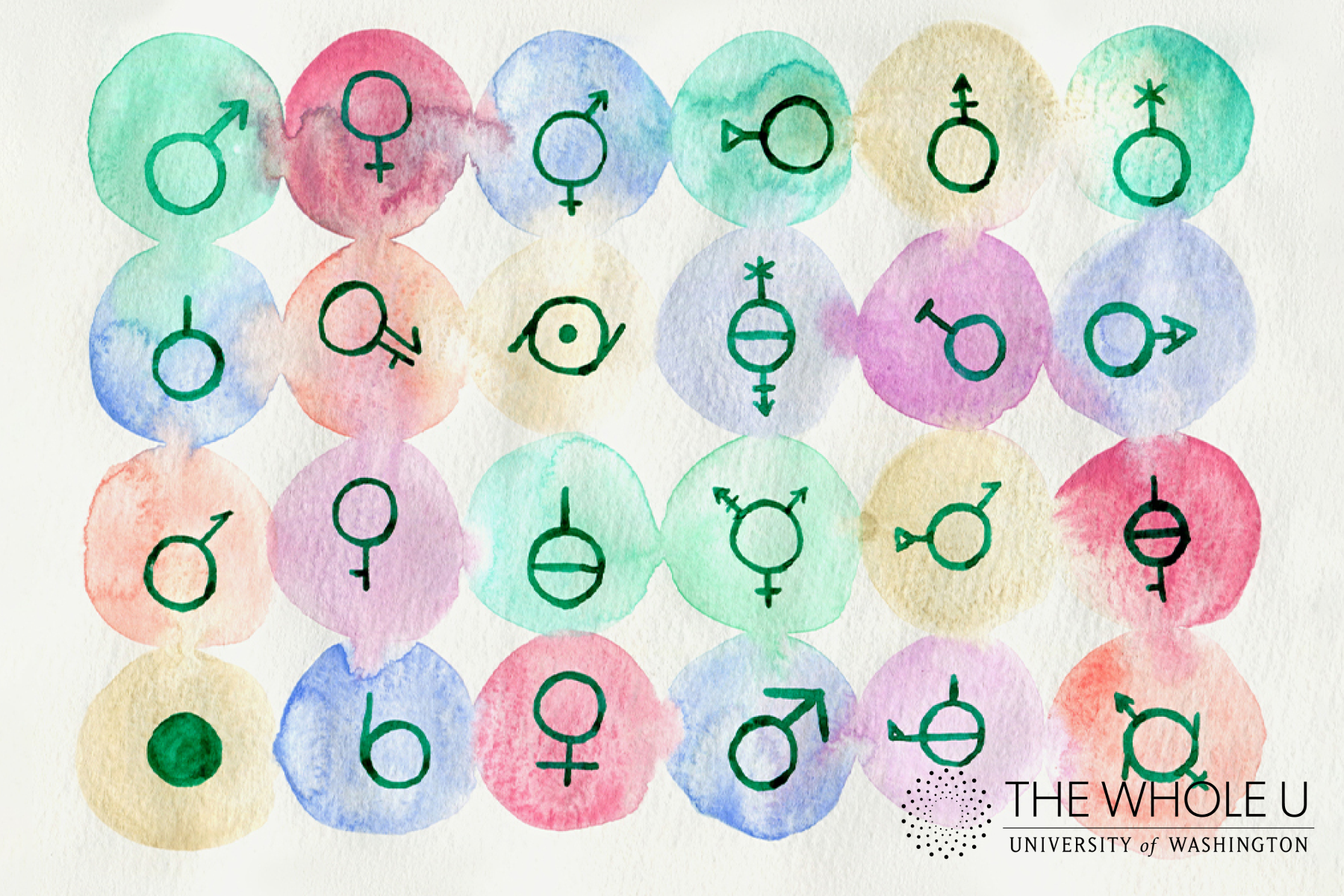
Gender diversity has existed throughout time and across cultures. However, in many western cultures we have been socialized to treat gender as binary, only recognizing men and women.

In this context, understanding what gender-inclusive language is and how to use it can be confusing: it’s not typically something we learn in school, it’s constantly evolving, and people’s preferences for defining their identity can vary widely and change over time.

Nonetheless, to create a more inclusive society, we should aspire toward language use that is respectful of all gender identities and reduce our use of gendered language when it isn’t necessary.

And, like any new habit, particularly one that rejects cisnormativity (the assumption that each person’s gender identity fits the binary and corresponds to the sex they were assigned at birth), incorporating inclusive language takes time and practice.

Language, whether spoken or written, is the primary filter through which most of us perceive and experience the world, and it deeply affects how we relate to and understand one another. The words that we use to describe others are often unintentionally rooted in implicit cultural biases, including biases that privilege the gender binary.

Moreover, according to the LGBTQ+ resource center at the University of Wisconsin, all of the professional associations for psychology and psychiatry in the U.S. acknowledge that inclusive language dramatically reduces experiences of depression, social anxiety, suicidal ideation, and other negative mental health factors among LGBTQ+ youth and adults.

“Being non-binary for me means existing in a world that was not built for me,” said Lauren Lichty (they/them), associate professor in the School of Interdisciplinary Arts & Sciences at UW Bothell and co-chair of the UW Faculty Council on Gender Equity and Justice.

“It means experiencing chronic misgendering, in my professional and personal life,” they continued. “Every time I enter a room, I wonder what experience I’ll have related to my identity and brace myself for misgendering. I hope someday that is no longer true. The energy it takes to decide when to correct people and when to accept misgendering- it’s exhausting and alienating.”

“However, when people get my pronouns right, or when they get it wrong and then quickly correct themselves, it’s like being washed over with warmth. I can breathe easier and feel a shift in my sense of worth and belonging.”

Understanding terms

It is easy to inadvertently confuse the terms gender with sex or sexual orientation. Gender is the cultural expression of being masculine, feminine, or any combination or absence of those concepts. Sex is the set of biological markers present at birth, including genitals, reproductive organs and chromosomes. Sexual orientation refers to which genders a person is physically, emotionally or romantically attracted to.

There are several common terms that people often use when discussing gender, as defined by the National Council of Teachers of English:

  • Gender identity: an individual’s feeling about, relationship with, and understanding of gender as it pertains to their sense of self. An individual’s gender identity may or may not be related to the sex that individual was assigned at birth.
  • Gender expression: external presentation of one’s gender identity, often through behavior, clothing, haircut, or voice, which may or may not conform to socially defined behaviors and characteristics.
  • Gender binary: a conceptual framework that defines gender as consisting solely of two categories (termed “woman” and “man”) that are biologically based (“female” and “male”) and unchangeable, and that misrepresents human biological variation and denies the existence of nonbinary variations of gender.
  • Cisgender: of or relating to a person whose gender identity corresponds with the sex they were assigned at birth.
  • Transgender: of or relating to a person whose gender identity differs from the sex they were assigned at birth. This umbrella term may refer to someone whose gender identity is woman or man, or to someone whose gender identity is nonbinary.
  • Nonbinary: of or relating to a person who does not identify, or identify solely, as either a woman or a man. More specifically:
    • Gender fluid: of or relating to individuals whose identity shifts among genders. This term overlaps with terms such as genderqueer and bigender, implying movement among gender identities and/or presentations.
    • Agender: of or relating to a person who does not identify with any gender, or who identifies as neutral or genderless.

What’s up with pronouns?

Pronouns, which are words that refer to people by replacing proper nouns like names, are getting a lot of attention these days. Some pronouns are commonly associated with a specific gender category (e.g., he for men and she for women) and some pronouns are not (e.g., they/them/theirs). You might also hear less common gender neutral pronouns such as zie/zim/zir, sie/sie/hir and per/per/pers.

Pronouns specifically refer to the person you are talking about. Each person gets to determine which pronouns are right for them. For some people those may stay the same their entire life. For other people they may change over time, by day, or depending on the setting they are in. Just like you can’t know someone’s name without asking them, you can’t know their pronouns either.

Often, the easiest way to ask for someone’s pronouns is to share your own pronouns first. You can just say “Hi, my name is Nicole, and my pronouns are she/her/hers. What are your name and pronouns?”

In English we have two words to refer to people that are used as both singular and plural: you and they. There was a period in history where people tried to make “they” plural only, but in recent years they has been officially recognized as correct by the Associated Press, principally in the singular. In fact, you probably already use it in everyday speech, as in “I had a 10 a.m. meeting with a client but they had to cancel.”

It’s okay to not know; it’s okay to mess up. What we need is not perfection, but instead a commitment to participate in a culture where we choose humility, care, and compassion, and where we keep trying to do right by each other.
-Lauren Lichty

Pronouns are a part of everyday conversation, and using them correctly is a way to affirm and respect identity in your interactions that has a direct impact on people’s well-being and sense of belonging.

On the other hand, repeatedly using the wrong pronouns to address or refer to someone is known as a microaggression. When someone is addressed or referred to by the wrong pronoun—particularly intentionally—it can make them feel disrespected, invalidated or alienated.

“The ask here isn’t for people to understand every nuance of the trans and non-binary experience,” Lichty said. “If you struggle to relate to why pronouns matter, that’s okay! Consider shifting your perspective. You don’t need to understand my needs in order to treat me with dignity.”

Slipped up on someone’s pronoun? Don’t worry. If it just happened, say something like “Sorry, I meant (insert pronoun)” and leave it at that. And do this even if the person is not present but others are.

In addition to conversation, you also need to pay attention to gendered language in writing, especially in policies and other organizational documents. At UW, the Rules Office began removing gendered language from policy documents on a rolling basis five years ago, and the Faculty Senate is currently reviewing legislation to remove the remaining approximately 80 instances of gender-exclusionary language in the Faculty Code.

Learn more about the rationale and principles for revising policy language.

Practicing inclusive language

There are many adjustments you can make to your everyday spoken and written language use that will allow your friends, colleagues and relatives of all gender identities to feel included, welcome and safe.

First, avoid making assumptions about gender identity: Most of us have been socialized to attribute gender to people based on how they look, act, or the name they use. Often this happens unconsciously. So our first task is to work on noticing when we are assuming gender. Once we notice, we can gently adjust our thought process by reminding ourselves we can’t know someone’s gender by looking at them.

Practice shifting  your thoughts and speech to use gender neutral language until you know how someone would like to be addressed. And remember, it takes time for these changes to become a habit.

Refrain from defaulting to “-man” in descriptors, using postal worker for postman, sales person for salesman, firefighter for fireman and so on.

To avoid erasing women and nonbinary people from the conversation, try these gender-neutral expressions:

  • Humankind instead of mankind
  • Members of Congress instead of congressmen
  • Councilperson instead of councilman/councilwoman
  • First-year student, frosh, or the British term “fresher” instead of freshman
  • Machine-made, synthetic, or artificial instead of man-made
  • Parent or pibling instead of mother/father
  • Child instead of son/daughter and kiddo instead of boy/girl
  • Sibling instead of sister/brother, Nibling instead of niece/nephew
  • Partner, significant other, or spouse instead of girlfriend/boyfriend or wife/husband
  • Server instead of waiter/waitress, flight attendant instead of stewardess

Referring to a group? Use folks, folx, people, everybody, everyone, colleagues, y’all, friends, or attendees instead of ladies and gentlemen or you guys.

Inclusive acronyms for the range of minoritized sexual and gender identities include LGBTQ+ and LGBTQIA+. It’s OK to use either, but in writing, keep usage accurate to the source.

Proceed with caution

Deadnames—referring to a transgender or non-binary person by a name they used prior to transitioning, such as their birth name, is called deadnaming. If you knew the person by their deadname, it can take some practice to consistently use their new name, but endeavoring to do so acknowledges and affirms their identity.

Like misgendering, intentional deadnaming is a microaggression.

“Preferred” pronouns: While pronouns aren’t the same thing as someone’s gender identity, the way we talk about pronouns can send messages about the ways we think about gender. The word “preferred” suggests that gender identity is a choice and a preference. It also may suggest that it is okay to use pronouns other than the ones a person shares because it’s “just a preference.” Each person gets to select the pronouns they want used, and we need to use them correctly.

Tranny/trannie/transsexual/shemale are derogatory and have been used as slurs, although some transgender people choose to use them. Only use these terms if you are asked to do so.

Transgendered suggests that being transgender is something that is done to change a person or that a transition is required. Use transgender instead.

Two-Spirit (2S) refers to a term intentionally introduced by Indigenous people in 1990 to educate nonindigenous people about the many different sexual and gender identities that fall under the Two-Spirit “umbrella” of each North American native nation’s beliefs. It is not appropriate for cisgender and/or nonindigenous people to use the term.

Additional resources

Practice sun safety this summer

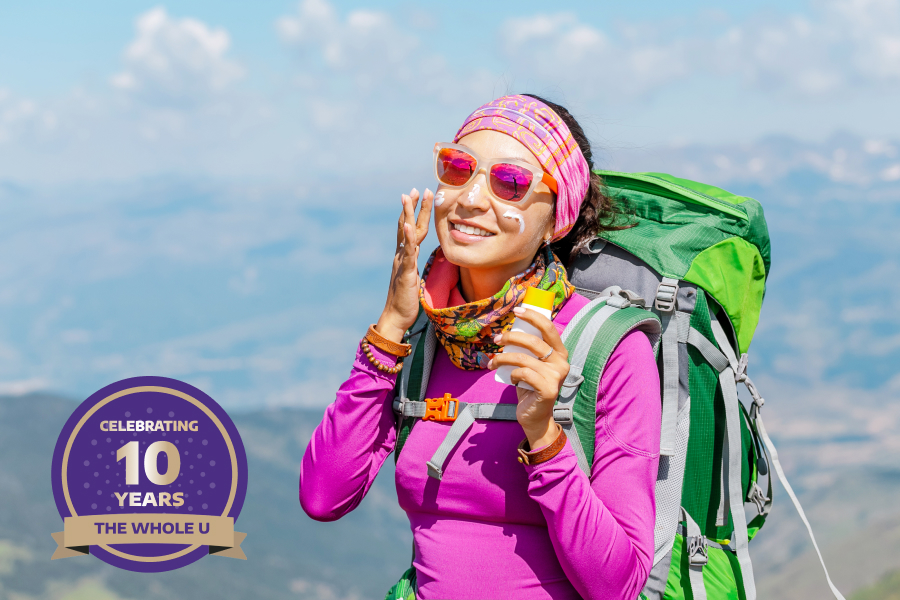
A women hiker in a pink top and green backpack applies sunscreen to her face.

It is finally summertime in the PNW! And while it can be tempting to bask in our too-fleeting season of sun… it’s also important to protect your skin from the harmful radiation emitted by our brilliant local star.

Too much exposure to the sun can cause skin cancer, which is the most common form of cancer in the United States. The American Academy of Dermatology estimates that one in five Americans will develop skin cancer in their lifetime. Rates of its deadliest form, melanoma, have risen steadily over the past three decades; an estimated 200,000 new cases are diagnosed each year in the U.S.

A few years ago, one of those cases was Dr. Lindsay Gunnell, chief resident in the UW Department of Dermatology and Fred Hutchinson Cancer Center. After being diagnosed with melanoma while practicing family medicine at Swedish Health Services, she was inspired to begin researching skin oncology. This led to her current residency with UW Medicine.

We asked Dr. Gunnell to share her expertise on practicing sun safety to prevent skin problems down the road.

Lindsay Gunnell, MD

TWU: Why and how does sunlight damage our skin?

Lindsay Gunnell: Ultraviolet (UV) light penetrates below the surface layer of our skin and injures skin by directly damaging DNA. This triggers stem cells to divide and attempt to repair the damage, but that is an imperfect process. This damage accumulates over time leading to skin cancer and aging.

How much exposure leads to skin cancers?

Both intermittent burning — blistering sunburns are highest risk — and low levels of long-term exposure to UV light cause DNA damage. Tanning is a damage response and is not protective. Since it is impossible to predict how much UV damage will create any given skin cancer in a person, it is important to always use sun protection.

What is your advice for effective sun protection?

Sun protection should be a combination of seeking shade, wearing a hat, sunglasses and clothing, and applying sunscreen. Since every strategy has its own drawbacks, it’s best to layer them whenever possible. You should avoid being out in full sun during peak hours (10 a.m. to 4 p.m.). And check the UV Index on your phone’s weather app. Sun exposure is best avoided when the UV Index is higher than 6, indicating a high risk of harm from unprotected sun exposure.

When sun avoidance is impossible, quality clothing is the next best sun protection. This includes wearing a wide-brimmed hat, UV-blocking sunglasses and protective clothing. Darker colors and tighter weaves offer better protection. For example, a white cotton T-shirt has a UPF (like SPF but for clothing) rating of 9 while a gray cotton T-shirt has a UPF of 98! Wearing UPF-rated clothing gives the best security.

Beyond clothing, hat and sunglasses, you should apply sunscreen every day on all exposed surfaces of skin. There are many types of sunscreen, but the best sunscreen is one that you will actually wear!

What’s the proper way to apply sunscreen?

Ideally, sunscreen should be applied 20 minutes prior to sun exposure for both chemical and mineral formulations. This is because it takes a few minutes for sunscreen to settle into an even layer over the skin after application. A “shot glass” worth of sunscreen is needed to protect your entire body. More practically, one teaspoon of sunscreen will cover your face, ears, neck and the backs of your hands, the parts of our bodies most often exposed. Sunscreens spread best when warmed in the hands prior to application.

You do need to reapply sunscreen every two hours at a minimum — or every hour if you are swimming or sweating heavily. For chemical formulations, this is in part because many UV filters degrade over time in UV light. Mineral formulations tend to rub off inadvertently as you move, touch your face, etc.

Is any sunscreen really “waterproof?”

No. All sunscreen will wear off over time and with exposure to water and sweat. The American Academy of Dermatology recommends choosing water-resistant formulas, however, which are formulated to help sweat and water bead and run off, maintaining protection for short periods of time. When swimming or exercising, it’s best to go with sunscreen rated “water resistant 80 minutes).

Are spray sunscreens as effective as creams? 

Spray sunscreens are less effective than creams because people tend to get poor coverage overall when using a spray. In addition, inhaling mineral sunscreens (zinc oxide/titanium dioxide) may pose a risk to the lungs so these sunscreens should not be used in spray formulation.

A mother applies sunscreen lotion to a young girl's face at the beach

Is sunscreen harmful?

There is a myth going around social media platforms such as TikTok that wearing sunscreen is more harmful to our health than sun exposure is. This is simply not true. We have many decades of data on sunscreen safety in humans that have proven there is no harm from regular sunscreen use. Not protecting your skin, however, has been widely proven to cause skin cancer.

If you prefer to avoid chemical sunscreens, you can choose mineral formulations (such as zinc oxide/titanium dioxide) which do not get absorbed and carry the seal of approval from the FDA as GRASE (generally recognized as safe and effective).

Isn’t the sun a valuable source of vitamin D? What are safer ways of getting it? 

UVB leads to Vitamin D synthesis, but there is not a safe level exposure from the sun or indoor tanning devices that allows for maximum vitamin D synthesis without increasing skin cancer risk. Due to this, it is recommended that people get Vitamin D from the diet. If this is not possible, supplements may be needed.

Does taking vitamin A or other supplements protect the skin from sun damage? 

Vitamin A plays no role in protecting from sun damage although topical vitamin A (retinoids) and oral Vitamin A (isotretinoin, aka Accutane) can increase sun sensitivity. A diet high in fruits and vegetables contains a Vitamin A precursor — beta carotene — which acts as an antioxidant in the body but does not play a role in sun protection.

Studies show that one oral supplement, Polypodium leucotomos (Commercial name: Fernblock®) may provide some photoprotection, but it is not clear how much. That said, the safety data is encouraging, so certain patients may benefit from taking this.

Do only people with light-colored skin need to take precautions, or do darker complexions need protection, too?

Everyone needs sun protection — regardless of skin tone! UV damage occurs in all skin tones and can lead to cancer and aging. People with more pigment in their skin do have lower rates of skin cancer in general but higher relative rates of melanoma in unusual sites such as under the nails or in the eye. People with darker skin tones also have higher rates of irregular brown pigmentation caused by UV damage such as melasma. Sun protection can play a big role in treating and preventing this.

Does getting a “base tan” provide protection?

A tan is not a good form of sun protection, it is a sign of skin damage. A tan is the body’s feeble attempt to churn out pigment after damage has been done, but it is equivalent to about an SPF of 2, far below what is needed to actually protect our DNA from damage.

Do freckles provide protection?

Freckles are a genetic response to sun damage, typically in very light skin tones. Similar to a tan, they are not protective and are actually a sign that the skin has already had UV damage. Freckles are small, flat brown spots that only develop in sun-exposed areas, which is different from moles, which are not related to sun-exposure.

Are tanning beds safer than natural sunlight?

No. Tanning beds use the same harmful UV light that comes from the sun. Indoor tanning can increase the risk of developing the two most common types of skin cancer: squamous cell carcinoma by 58% and basal cell carcinoma by 24%. Using tanning beds before age 20 can increase your chances of developing melanoma by 47%, and the risk increases with each use.

Aren’t we somewhat protected in the PNW by our northern latitude and cloud cover?

This is false! Washington’s rate of skin cancer has increased over the past decade, with new melanoma cases here far outpacing the national average. Our cool and cloudy climate should not lead to a false sense of security. While clouds do block some UV light, they are far better at blocking visible light. Roughly 80% of UV rays penetrate cloud cover. You can definitely get sunburned on a cloudy day. So, it’s a good idea to check the UV index before going out. If the UV index is greater than 2, you should practice sun protection.

What is the biggest myth you encounter about sun care? 

The biggest myth I see is that people do not think they need to wear sunscreen every day. However, studies looking at groups of people who used sunscreen at their discretion only when they felt they needed it and compared to groups required to wear sunscreen daily showed that those who wore it only when they thought they needed it had twice the rate of melanoma! We are poor judges of when sun protection is needed. It is best to use sun protection every day, even if you think you might not be exposed.

How to recognize skin cancers

According to Dr. Gunnell, melanoma, the most dangerous form of skin cancer, can arise in any area of skin, nail or “wet skin” (such as the mouth, vagina or anus). It typically presents as a brown or black area that is changing. Dermatologists use the ABCDEs to teach what to look for:

  • Asymmetry – a non-uniform shape.
  • Borders – appear irregular or scalloped.
  • Colors – two or more shades or colors.
  • Diameter – greater than 0.6 cm (about the size of a pencil eraser).
  • Evolution – size, shape and appearance that changes over time.

Non-melanoma skin cancers (such as basal cell or squamous cell) typically present as pink bumps that are painful and bleed or get crusty.

The bottom line: anything on your skin that is growing, painful or bleeding should be checked out by a board-certified dermatologist.

Suicide prevention: Know the warning signs to save lives

September is national suicide prevention month. Suicide prevention is important every day of the year, but for the many organizations doing crucial and often unsung work all year long, September provides unique opportunities to raise awareness of risk factors, provide help for those who are struggling, and give support to those affected by the suicide of a loved one.

The impact of suicide

Suicide is a global public health issue. Worldwide, someone takes their own life approximately every 40 seconds, and one in every 100 deaths is the result of suicide.

According to statistics highlighted by the American Foundation for Suicide Prevention, suicide is the 10th leading cause of death in the U.S. And although suicide rates are actually lower for youth than middle-aged and elderly people, it is the second leading cause of death in the 15-24 age group, behind only accidents.

The National Suicide Prevention Lifeline is now the 988 Suicide and Crisis Lifeline (but the previous 1-800-273-TALK number will continue to function indefinitely).

Suicide impacts groups across all demographics – whether age, gender, race, or ethnicity – but these impacts are not uniform. Veterans and LGBTQ youth and adults have suicide rates two and three times higher than average, respectively. Overall, in 2019, the CDC notes that more than half a million people visited a hospital for injuries caused by self-harm.

There is no single cause for suicide. It is often assumed that mental health issues like depression cause suicide, but the reality is often not that simple. Many people with mental health conditions are able to successfully manage them with medication, therapy, or life changes, and not all who attempt suicide are depressed.

Mental health specialists largely agree that investing time and money in risk assessment of those who are most vulnerable, rather than in crisis care, is the most effective prevention tool at hand. For youth, that means identifying kids who are most vulnerable, helping them respond effectively to stress, and teaching them what they can do in a crisis.

Risk factors and warning signs

There is no single cause for suicide, but there are many potential risk factors and warning signs, including:

  • Mental health conditions
  • Other serious health conditions, including chronic pain
  • Prolonged stress
  • Stressful life events
  • Childhood trauma or abuse
  • Someone talking about suicide or having no reason to live
  • Isolation or withdrawal
  • Getting affairs in order, like making a will

Suicide most often occurs when stressors and health issues converge to create an experience of hopelessness and despair.

UW Forefront Suicide Prevention

Forefront Suicide Prevention is a Center of Excellence at the UW School of Social Work focused on reducing suicide by empowering individuals and communities to take sustainable action, championing systemic change, and restoring hope.

Forefront offers many programs and resources for individuals and communities to take sustainable action in preventing suicide. Signature programs include:

LEARN ™ Suicide Prevention training is achieving widespread recognition coupling life-saving skills with additional emphasis on locking and limiting access to lethal means.

Safer Homes, Suicide Aware campaign focuses on safe storage of medications and firearms, especially in communities with high suicide rates.

Education and intervention programs in schoolscolleges and universities, and consulting services to health care organizations, are delivering life-saving training and critical systems change.

Best practices for workplace suicide prevention offers tools for understanding workplace suicide and developing a workplace suicide prevention plan.


You can support the work of Forefront Suicide Prevention through the UW Foundation or the UW Combined Fund Drive with a one-time or recurring monthly gift.


What can you do?

If you feel someone you know is struggling and at risk of suicide, the good news is that there many things you can do to help:

  • Talk to them – assume that you are the only one who will act. Ask if they have considered killing themselves. Studies have shown that caring but honest conversations are appreciated and make a person less likely to attempt suicide, not more likely.
  • If you feel that a situation is life-threatening, stay with the person, call for help, and remove any lethal means that may be at hand.
  • For non-acute situations, certain factors can be protective, such as seeking mental health treatment, feeling family or community connection, and having cultural/spiritual beliefs that encourage connection and create a sense of purpose. Let the person know that you care and encourage them to seek help.

Learn more: watch these TED Talks on ending the stigma around suicide deaths.


Give through the UWCFD

Consider making a one-time gift or setting up monthly payroll deduction through the UW Combined Fund Drive to one of our member organizations actively working to fund and pursue suicide prevention research, provide support services, educate the public, and advocate for mental health and suicide prevention policies:

American Society for Suicide Prevention (charity code 0316143): a national organization with chapters in all 50 states that is dedicated to saving lives and bringing hope to those affected by suicide.

National Alliance on Mental Illness (NAMI) (charity code 0330527): is the nation’s largest grassroots mental health organization dedicated to building better lives for the millions of Americans affected by mental illness.

The Trevor Project (charity code 1479131): The Trevor Project offers life-saving, life-affirming programs and services to LGBTQ youth that create safe, accepting and inclusive environments over the phone, online and through text.

University of Washington Forefront: Innovations in Suicide Prevention (charity code 1482199) Forefront, a nonprofit based out of the UW School of Social Work, advances innovative approaches in suicide prevention.

Suicide Awareness Voices of Education (charity code 1480309): SAVE is a national non-profit that believes the suicide is preventable but often the warning signs go unnoticed. Through public awareness we can reach and treat those in trouble before it’s too late.

If you are in crisis, or are concerned for someone else who is, call or text the 988 Suicide and Crisis Lifeline. Help is available 24 hours a day.

Art for self-care and mental health


Think of something creative that you enjoy doing. Perhaps it’s dance, painting, or creating music. How do you feel when you are creating art? Some would say calm, happy, relaxed, or inspired. Art has an incredible way of connecting the world and allowing us to express ourselves. Because of these feel-good effects, art is a powerful tool for self-care and mental health.

Studies have shown that expression through art can help people with depression, anxiety, and stress. Art has also been linked to improved memory, reasoning, and resilience in aging adults.

We’re diving into the powerful impact art can have on your life. The best part is, art is something everyone can participate in. It does not prescribe to any particular set of norms and is unique to each and every one of us. So why not give it a try? It may be the best trick for health yet!

Benefits of art for mental health

Stress relief

Stress is proven to be detrimental for our physical and mental health. One of the best ways to combat stress, is to make art! Study after study has shown that drawing, doodling, coloring, and simply creating something for 20 plus minutes reduces cortisol. The best part is that previous art experience is not required to reap these benefits.

Boosts self-esteem

The consistent practice of art can build a sense of accomplishment for all ages in just 45 minutes. Creativity makes us feel good about ourselves. It validates our unique ideas and our ability to turn ideas into something physical. Taking time for your hobbies and crafts often provides a sense of self-worth and confidence in our abilities. So knit that sweater and play that piano!

Healing

Healing from trauma is a complicated process and there are many practices that can help facilitate this process. Research has proved that art can help process pain and provide a direct connection between the mind and body to help with the healing process.

Expressive therapy

Expressive arts, such as visual arts, movement, drama, music, and writing, foster deep personal growth and community development. Expressive art therapy allows users to laugh, let go, and relax, which helps decrease depression, anxiety, and stress.

Ways to practice self-care through art

Use art as a release

A common exercise to utilize art for release is to first represent things you want to let go of as words, drawings, colors, or images on a blank canvas. Then you can burn it, rip it up, cover it up with something new that inspires you, throw it away, put it in water, or destroy it in any way you please.

Respond through art

In the same way that releasing through art can help us overcome difficulties, it can also be used to cope with pain and negative feelings. Some examples include writing to a loved one that hurt you or taking photos of a place that used to hold meaning to you. It is also helpful to find a piece of art you connect with such as music, writing, or a painting, and to then utilize this inspiration to create something of your own as an emotional response. Understanding what you are trying to capture through this piece and breaking down how it makes you feel can be beneficial to this analysis.

Mindful creativity

Art doesn’t require thought, it can be a free-flowing creative process. To practice mindful art, you can simply start creating or choose a piece of art as inspiration for your own creation. Block out the other thoughts and distractions in your life and give yourself a set amount of time to make art or enjoy it.

Collage your thoughts or visions

Some people find it difficult or don’t enjoy the practice of drawing, painting, or writing but there are endless ways to practice art. You can create a collage that expresses what you’re feeling about a specific situation to process your emotions and thoughts. You may also collage a vision board to focus on the future and use photos that excite you. All you need are some magazines, newspapers, or old images around your house.

Color a feeling wheel

Leah Guzman is an art therapist who wrote a book on further practices in essential art therapy, and an exercise she champions is to develop a color feeling wheel to deal with emotions. It starts by drawing a circle then dividing it into eighths and writing one emotion in each section, then pick a color that represents that feeling and color the section in. Afterwards, pay attention to which emotions were associated with which colors, the feelings you wrote first, and how this is applicable to your everyday life.

Other practices of art

The benefits of art are extended across any medium that excites you. Consider trying different forms of art and tapping into your creative mind along the way. Here’s a list of other popular art forms to explore:

  • Doodling or scribbling
  • Coloring
  • Writing
  • Photography
  • Sculpting
  • Playing an instrument
  • Dancing
  • Fashion
  • Needlework crafts
  • Jewelry making

Are you an artist or creative? Share with us in the comments below what creative art forms bring you peace and joy!