Skip to content

Stepping Up for a Cure: Kevin Jones and the Big Climb

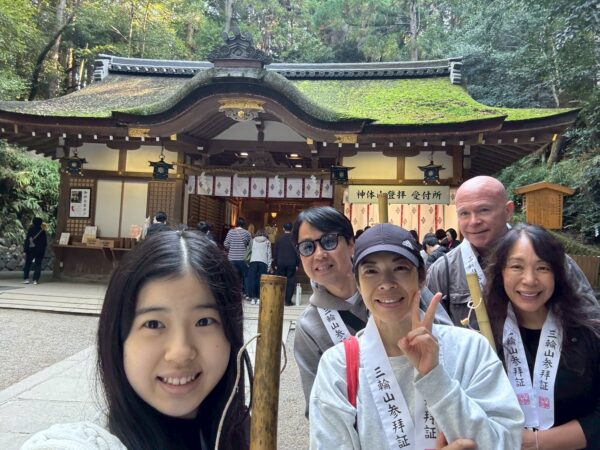
Kevin and his family in law smiling in front of a Japanese Temple.
Kevin’s sister-in-law and family and their climb to the temple at Mt. Omiwa

For over 20 years, Kevin Jones has been a dedicated member of the Seattle healthcare community at UW Medical Center – Northwest. This spring, Kevin is taking his commitment to health and healing to new heights, literally! On Sunday, March 22, Kevin and his team, “Step Up Northwest,” will conquer 69 flights of stairs at the Columbia Tower for the Big Climb, raising vital funds for the Leukemia and Lymphoma Society.

Step up with colleagues across UW
Get moving in the UW Stair Climb Challenge on Tuesday, March 10. Climb at your own pace, track your steps and be part of a campus-wide push for well-being. Sign up today for the challenge.

Motivation and the “Lightbulb” moment

For Kevin, the motivation to tackle such a massive physical challenge is deeply personal. Surrounded by the realities of cancer, his mother is currently in a medication-induced remission from multiple myeloma and breast cancer, his sister-in-law is a breast cancer survivor and he recently lost a good friend to colorectal cancer. Kevin decided to channel his emotions into something positive.

“I take the pain, frustration and fear of loss, and I attempt to turn that feeling into some type of action,” Kevin shared.

His lightbulb moment came during a family trip to Japan. After his sister-in-law’s breast cancer surgery, the family traveled to Osaka to help her recover. To celebrate her health, they walked up Mt. Omiwa to a mountaintop shrine to pray for wellness and peace.

“When we were done, I checked an exercise app on my phone, and it estimated we climbed nearly the same height as the Columbia Tower,” Kevin recalled.

“Since I had been thinking about doing this climb for a while, it was then and there that I knew I could do it!”

Career and community

Kevin’s drive is also fueled by his two decades alongside his UW Northwest colleagues.

“I feel fortunate that I have found a career and community at UWMC Northwest that consistently tries to make the world a better place.” 

“Despite all of humanity’s imperfections, my healthcare friends and family keep showing up, and they are really trying to give people a little more time and a better degree of health while in this life. At times, that in itself can be profoundly rewarding.”

The challenge and training routine

Photo of large black skyscraper building.
Photo of Colombia Tower.

Climbing 69 floors is no small feat, but Kevin takes it in stride, jokingly referring to himself as a “billy goat” who has always had the patience for climbing. His secret to success? Accessibility and kind persistence.

Kevin incorporates his training seamlessly into his workday by utilizing the fire escape stairs at the new Center for Behavioral Health on the Northwest Campus. “If you can do those seven flights of stairs ten times up, you’ve done the Big Climb!” he explained.

For colleagues intimidated by the challenge, Kevin advises starting early: “Break it down into smaller, manageable parts. Try to think of kind persistence to yourself and don’t go too hard or vigorous early in your new training routine. I love hearing music playing while climbing. I find that really helps me move.”

Train together: The UW Stair Climb Challenge

If Kevin’s story inspires you but you aren’t sure if you’re ready for the Columbia Tower just yet, The Whole U has the perfect stepping stone! Join colleagues across UW and UW Medicine for the UW Stair Climb Challenge on Tuesday, March 10.

This one-day event engages UW employees across all our campuses and worksites, encouraging you to move more, build community and for those interested, train for the Big Climb. Whether you’re in a campus building, a hospital stairwell or at home, every step counts. Take the stairs on March 10, climb at your own pace and see how your small steps add up to big health benefits.

Sign up for the UW Stair Climb Challenge here.

See more about the Big Climb:

Fundraising impact

Every step Kevin and his team take supports blood cancer research, which he views as a peaceful way to champion the medical community.

“I want to say thank you very much to our researchers for all the quiet heroism you do,” Kevin noted.

“Your hard work and diligence makes the world a better place and we’re behind you, one step at a time!

As the American author and anthropologist Zora Neale Hurston once said, ‘Research is formalized curiosity. It is a poking and prying with a purpose.'”

Community support and sponsorship

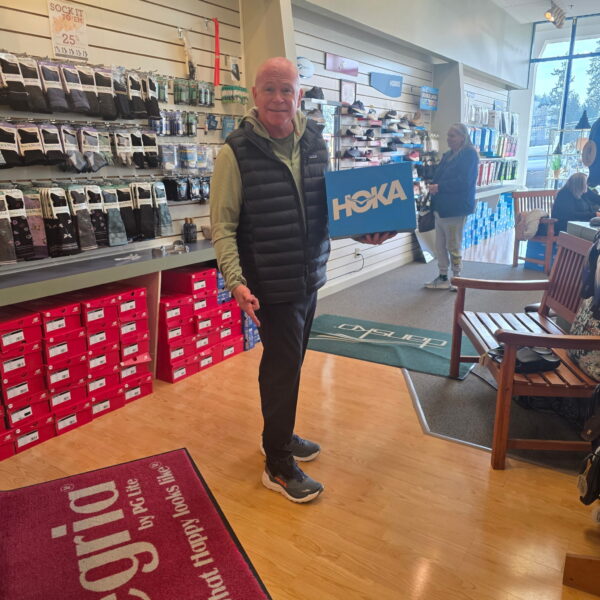
The momentum for the “Step Up Northwest” team continues to grow, bolstered by incredible community support. A special thank you to Sole Perfection for their generous offer and contribution to the team’s fundraising efforts. Additionally, Alaska Airlines is offering a free ticket raffle to anywhere they fly for the team if they raise more than $1,600.

Step up today: Two ways to get involved

1. Join the UW Stair Climb Challenge (Tuesday, March 10) Rally your coworkers and form a team to compete, connect, and climb toward better well-being.

  • Sign up here

  • Track your steps: On March 10, log your flights via our Microsoft Form to help us tally our community impact.

2. Join Kevin at the Big Climb (Sunday, March 22) Whether you want to climb the floors or skip the stairs and help fund the team’s logistics, everyone is welcome to step up to help reduce the impact cancer can have on the lives of those we love.

  • Who: Leukemia and Lymphoma Society (Team: Step Up Northwest)

  • Where: Columbia Tower at 701 5th Ave. in downtown Seattle.

  • What: Fundraising for Blood Cancer research. A $150 minimum contribution per person is required (which can be met by $50 from the participant and $100 from fundraising).

  • How: Register or donate via the LLS Big Climb Portal. (Note: Registering before Feb 22 waives the initial fee!)

  • Questions: Contact Kevin Jones at Kmj33@uw.edu, the Big Climb at bigclimb@lls.org, or call 1-(888)-557-7177.

Smartphone photography 101: A guide to stunning shots

“The best camera is the one that’s with you.” – Chase Jarvis

In today’s fast-paced world, our smartphones are more than just communication devices. They’re powerful cameras that we carry with us every day. Whether you’re capturing moments on the go or working on your creative portfolio, your smartphone is a fantastic tool for photography. In this blog, I’ll take you through the essentials of smartphone photography, with tips that will help you elevate your skills from casual snaps to professional-quality images.

About Me
Hi, I’m Sebastian Ky, a multimedia specialist with a passion for photography and digital storytelling. I’ve spent years exploring the art of visual communication, and today, I’m excited to share my knowledge of smartphone photography with you. Let’s dive in!

Understanding your smartphone camera

The first step to great smartphone photography is to familiarize yourself with your camera’s settings. Here are the three key settings you need to master:

  • Resolution: High resolution ensures your photos are crisp and detailed. Always set your camera to the highest possible resolution for the best results.
  • HDR (High Dynamic Range): This feature enhances your images by balancing the light and dark areas. Use it in scenes with high contrast, like a sunset or a backlit subject.
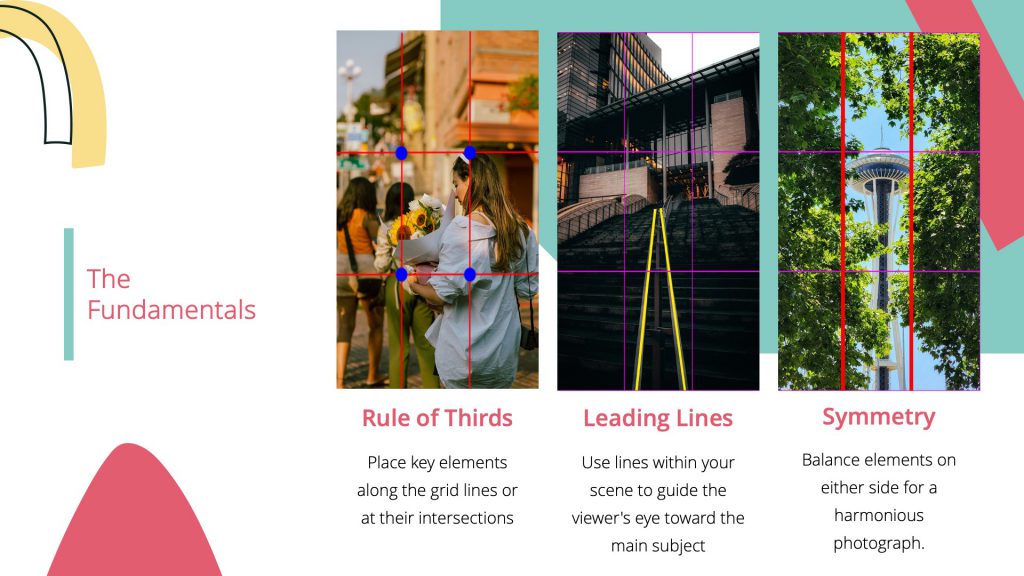
  • Gridlines: Enable gridlines to help compose your shot using the Rule of Thirds, a powerful composition tool that we’ll explore next.

Example: Imagine you’re on vacation, capturing a beautiful landscape. Turn on HDR to ensure the sky doesn’t get washed out, and use gridlines to position the horizon perfectly, enhancing the balance and aesthetic appeal of your shot.

Composition techniques: the art of framing your shot

“A good photograph is knowing where to stand.” – Ansel Adams

Composition is the backbone of any great photo. It’s about how you arrange elements in your frame to create balance and focus. Here are some essential techniques to try:

  • Rule of Thirds: Imagine your screen is divided into nine equal sections. Place your subject along these lines or their intersections for a balanced, dynamic shot.
  • Leading Lines: Use natural lines in your environment, like roads, rivers, or architectural features, to guide the viewer’s eye toward your subject.
  • Symmetry and Balance: Symmetry can create striking images, while balancing elements on either side of your frame ensures harmony.

Example: While photographing a street scene, use leading lines from a pathway or a row of buildings to naturally draw attention to your main subject, whether it’s a person or a distant landmark.

Lighting fundamentals: mastering light for stunning photos

“Where light and shadow fall on your subject—that is the essence of expression and art.” – Scott Bourne

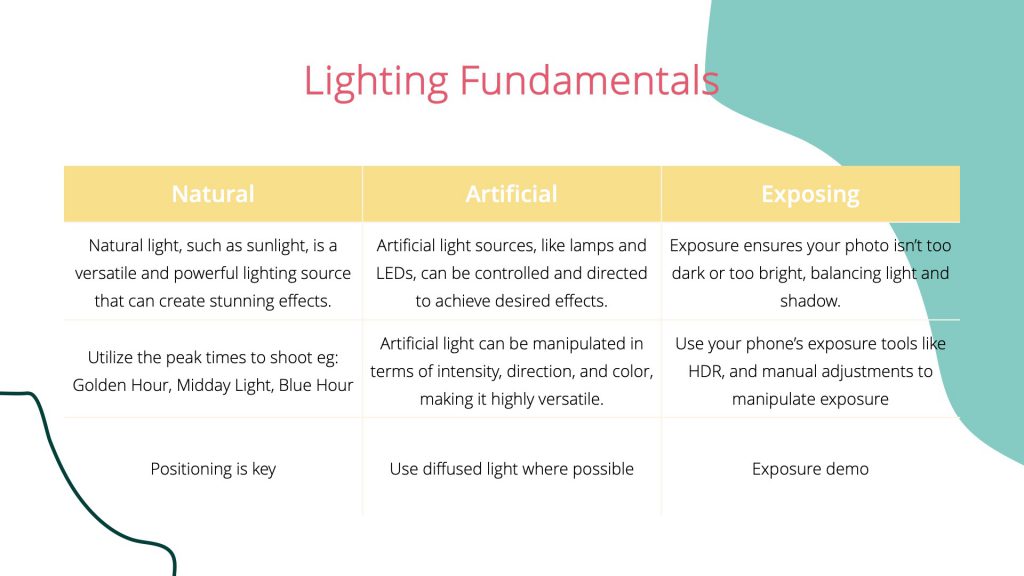
Lighting can make or break a photo. Natural light is often the most flattering, but learning to work with artificial light is also important. Here’s how to handle both:

  • Natural Light: Use the golden hour (the hour after sunrise or before sunset) for soft, warm light. The midday sun can be harsh, so look for shade or shoot with the sun behind your subject.
  • Artificial Light: Experiment with light sources like lamps or LED lights. Play with angles and intensity to create the mood you want.
  • Exposure: Adjust your camera’s exposure settings to control how light or dark your photo is. Many phones allow you to tap on the screen to manually adjust the exposure for different parts of the scene.

Example: For a portrait shot outdoors, position your subject so the light falls softly on their face, avoiding direct overhead sunlight. Indoors, use a soft lamp to add warmth and eliminate harsh shadows.

Focus and depth of field: highlighting your subject

“To me, photography is an art of observation. It’s about finding something interesting in an ordinary place.” – Elliott Erwitt

Focus and depth of field allow you to control which parts of your image are sharp and which are blurred, helping you highlight your subject:

  • Auto-Focus: Let your smartphone automatically detect the subject and adjust focus accordingly.
  • Tap to Focus: In complex scenes, tap on your subject to ensure the camera focuses on the right part of the image.
  • Portrait Mode: This mode creates a shallow depth of field effect, blurring the background and keeping your subject in sharp focus—perfect for portraits or food photography.

Example: When taking a portrait, use Portrait Mode to keep the person’s face sharp while softly blurring the background for a professional, polished look.

Editing essentials: enhancing your photos post-shoot

“You don’t take a photograph, you make it.” – Ansel Adams

Once you’ve taken your shot, editing can elevate it even further. Here are some basic adjustments to improve your photos:

  1. Adjust Exposure, Contrast, and Color Balance: Small tweaks can make your photo brighter, more vibrant, or more dramatic.
  2. Crop and Straighten: Remove distractions and ensure your photo’s horizon is level for a cleaner composition.
  3. Filters and Presets: Play around with filters to change the overall look and feel of your photo. Apps like VSCO or Lightroom offer a variety of presets that can give your images a unique style.
  4. Exporting: Export your photos in the correct format for their intended use—JPEG for everyday use, PNG for high-quality images on the web.

Example: After capturing a street market scene, brighten the exposure slightly, adjust the color to make the produce pop, and crop out unnecessary elements to draw attention to the vibrant market stalls.

Practical tips and tools: taking your photography further

To conclude, here are some practical tips for honing your smartphone photography skills:

  • Clean Your Lens: This simple step can drastically improve image quality.
  • Steady Your Shot: Use both hands or a tripod to reduce blurriness from hand movement.
  • Experiment: Don’t be afraid to try new angles, lighting setups, and editing styles. Photography is about creativity and discovery.

Download the Smartphone Photography 101 slides!
With these tips in hand, you’re well on your way to capturing stunning images with your smartphone. Whether you’re photographing family gatherings, breathtaking landscapes, or everyday moments, remember that great photography is all about seeing the world in new ways. Happy shooting!
Accessible movement: Explore the IMA’s adaptive fitness equipment

At the University of Washington, we believe that wellness is for everyone, regardless of abilityThat commitment is on display at the Intramural Activities Building (IMA), where adaptive resources for faculty, staff and students with disabilities have been significantly expanded, enhanced and are consistently being evaluated and ready to expand.

In Autumn 2023, the IMA launched a major upgrade to its adaptive fitness offerings, transforming how inclusive wellness is experienced on campus. One key improvement was the reimagining of the IMA’s designated Adaptive Space. Previously, adaptive equipment was scattered throughout the facility, making access difficult and inconsistent. Recognizing the need for centralized, clearly labeled, and easy-to-use resources, the Fitness Facility Work Team took action.

The result? A thoughtfully curated space where members of the UW community with disabilities can engage in movement and wellness comfortably, confidently, and independently.

A look inside: Accessible equipment at IMA

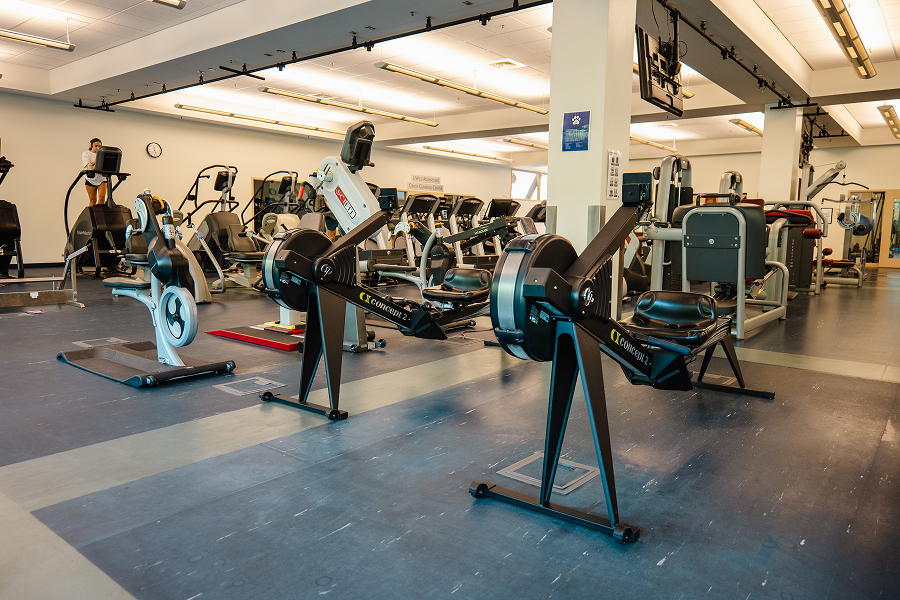
From cardiovascular training to strength-building, our Adaptive Space features high-quality, disability-accessible equipment. Adaptive equipment adjusts to individual needs, making movement more inclusive. Here’s a sample of what’s available—complete with video links featuring Rec Personal Trainers demonstrating proper use:

  • Cable Crossover Machine – Multi-functional and adjustable for a range of abilities
  • Hand Crank Machine – Upper-body cardio/strength building for those with limited lower-limb mobility
  • NuStep Machine – A favorite for total-body low-impact workouts
  • Rickshaw Machine – Designed for strengthening the upper body, especially for wheelchair users
  • Rowing Machine – Adaptable for seated or supported users
  • SciFit Machine – Ergonomically designed for inclusive upper-body conditioning
  • VitaGlide Machine – A cardio machine tailored for wheelchair accessibility
  • Active Hands Gripping Aids- Help users securely grasp weights or handles

We also have an ADA-accessible pool, featuring a zero-entry ramp (with available pool wheelchair) and a chairlift.

We hope to continue bringing in more adaptive equipment to the facility and are always looking for meaningful improvements and expansions.

Getting started: Tips for newcomers

If you’re living with a disability and unsure how to begin an active lifestyle, the IMA is here to support your journey. Here are a few steps to help you get started:

  1. Talk to your doctor or physical therapist – Get recommendations tailored to your health and mobility needs.
  2. Meet with an IMA Personal Trainer – Our experienced trainers can design a program customized to your goals and abilities.
  3. Request a Facility Tour – Staff are happy to walk you through the space and explain available resources. Email Recinfo@uw.edu to set up a tour!
  4. Plan Your Visit – Avoid peak hours (typically 4:00–8:00 p.m.) for a more relaxed experience.
  5. Explore the Pool and Group Fitness Offerings – Many options are low-impact and welcoming to all. Email Josie at Jvklay@uw.edu to learn more about our pool and accessible locker rooms!
  6. Bring a Friend – Having a workout buddy adds encouragement and fun.

The IMA’s adaptive upgrades reflect the university’s dedication to health and wellness for all.  By providing top tier spaces and expert guidance, the IMA empowers every member of the UW community to move, grow, and thrive—on their own terms.

Ready to explore? Join the IMA and discover how fitness can be adapted for you.