Skip to content

Suicide prevention: Know the warning signs to save lives

September is national suicide prevention month. Suicide prevention is important every day of the year, but for the many organizations doing crucial and often unsung work all year long, September provides unique opportunities to raise awareness of risk factors, provide help for those who are struggling, and give support to those affected by the suicide of a loved one.

The impact of suicide

Suicide is a global public health issue. Worldwide, someone takes their own life approximately every 40 seconds, and one in every 100 deaths is the result of suicide.

According to statistics highlighted by the American Foundation for Suicide Prevention, suicide is the 10th leading cause of death in the U.S. And although suicide rates are actually lower for youth than middle-aged and elderly people, it is the second leading cause of death in the 15-24 age group, behind only accidents.

The National Suicide Prevention Lifeline is now the 988 Suicide and Crisis Lifeline (but the previous 1-800-273-TALK number will continue to function indefinitely).

Suicide impacts groups across all demographics – whether age, gender, race, or ethnicity – but these impacts are not uniform. Veterans and LGBTQ youth and adults have suicide rates two and three times higher than average, respectively. Overall, in 2019, the CDC notes that more than half a million people visited a hospital for injuries caused by self-harm.

There is no single cause for suicide. It is often assumed that mental health issues like depression cause suicide, but the reality is often not that simple. Many people with mental health conditions are able to successfully manage them with medication, therapy, or life changes, and not all who attempt suicide are depressed.

Mental health specialists largely agree that investing time and money in risk assessment of those who are most vulnerable, rather than in crisis care, is the most effective prevention tool at hand. For youth, that means identifying kids who are most vulnerable, helping them respond effectively to stress, and teaching them what they can do in a crisis.

Risk factors and warning signs

There is no single cause for suicide, but there are many potential risk factors and warning signs, including:

  • Mental health conditions
  • Other serious health conditions, including chronic pain
  • Prolonged stress
  • Stressful life events
  • Childhood trauma or abuse
  • Someone talking about suicide or having no reason to live
  • Isolation or withdrawal
  • Getting affairs in order, like making a will

Suicide most often occurs when stressors and health issues converge to create an experience of hopelessness and despair.

UW Forefront Suicide Prevention

Forefront Suicide Prevention is a Center of Excellence at the UW School of Social Work focused on reducing suicide by empowering individuals and communities to take sustainable action, championing systemic change, and restoring hope.
Forefront offers many programs and resources for individuals and communities to take sustainable action in preventing suicide. Signature programs include:

LEARN ™ Suicide Prevention training is achieving widespread recognition coupling life-saving skills with additional emphasis on locking and limiting access to lethal means.

Safer Homes, Suicide Aware campaign focuses on safe storage of medications and firearms, especially in communities with high suicide rates.

Education and intervention programs in schoolscolleges and universities, and consulting services to health care organizations, are delivering life-saving training and critical systems change.

Best practices for workplace suicide prevention offers tools for understanding workplace suicide and developing a workplace suicide prevention plan.


You can support the work of Forefront Suicide Prevention through the UW Foundation or the UW Combined Fund Drive with a one-time or recurring monthly gift.


What can you do?

If you feel someone you know is struggling and at risk of suicide, the good news is that there many things you can do to help:

  • Talk to them – assume that you are the only one who will act. Ask if they have considered killing themselves. Studies have shown that caring but honest conversations are appreciated and make a person less likely to attempt suicide, not more likely.
  • If you feel that a situation is life-threatening, stay with the person, call for help, and remove any lethal means that may be at hand.
  • For non-acute situations, certain factors can be protective, such as seeking mental health treatment, feeling family or community connection, and having cultural/spiritual beliefs that encourage connection and create a sense of purpose. Let the person know that you care and encourage them to seek help.

Learn more: watch these TED Talks on ending the stigma around suicide deaths.


Give through the UWCFD

Consider making a one-time gift or setting up monthly payroll deduction through the UW Combined Fund Drive to one of our member organizations actively working to fund and pursue suicide prevention research, provide support services, educate the public, and advocate for mental health and suicide prevention policies:

American Society for Suicide Prevention (charity code 0316143): a national organization with chapters in all 50 states that is dedicated to saving lives and bringing hope to those affected by suicide.

National Alliance on Mental Illness (NAMI) (charity code 0330527): is the nation’s largest grassroots mental health organization dedicated to building better lives for the millions of Americans affected by mental illness.

The Trevor Project (charity code 1479131): The Trevor Project offers life-saving, life-affirming programs and services to LGBTQ youth that create safe, accepting and inclusive environments over the phone, online and through text.

University of Washington Forefront: Innovations in Suicide Prevention (charity code 1482199) Forefront, a nonprofit based out of the UW School of Social Work, advances innovative approaches in suicide prevention.

Suicide Awareness Voices of Education (charity code 1480309): SAVE is a national non-profit that believes the suicide is preventable but often the warning signs go unnoticed. Through public awareness we can reach and treat those in trouble before it’s too late.

If you are in crisis, or are concerned for someone else who is, call or text the 988 Suicide and Crisis Lifeline. Help is available 24 hours a day.


Art for self-care and mental health


Think of something creative that you enjoy doing. Perhaps it’s dance, painting, or creating music. How do you feel when you are creating art? Some would say calm, happy, relaxed, or inspired. Art has an incredible way of connecting the world and allowing us to express ourselves. Because of these feel-good effects, art is a powerful tool for self-care and mental health.

Studies have shown that expression through art can help people with depression, anxiety, and stress. Art has also been linked to improved memory, reasoning, and resilience in aging adults.

We’re diving into the powerful impact art can have on your life. The best part is, art is something everyone can participate in. It does not prescribe to any particular set of norms and is unique to each and every one of us. So why not give it a try? It may be the best trick for health yet!

Benefits of art for mental health

Stress relief

Stress is proven to be detrimental for our physical and mental health. One of the best ways to combat stress, is to make art! Study after study has shown that drawing, doodling, coloring, and simply creating something for 20 plus minutes reduces cortisol. The best part is that previous art experience is not required to reap these benefits.

Boosts self-esteem

The consistent practice of art can build a sense of accomplishment for all ages in just 45 minutes. Creativity makes us feel good about ourselves. It validates our unique ideas and our ability to turn ideas into something physical. Taking time for your hobbies and crafts often provides a sense of self-worth and confidence in our abilities. So knit that sweater and play that piano!

Healing

Healing from trauma is a complicated process and there are many practices that can help facilitate this process. Research has proved that art can help process pain and provide a direct connection between the mind and body to help with the healing process.

Expressive therapy

Expressive arts, such as visual arts, movement, drama, music, and writing, foster deep personal growth and community development. Expressive art therapy allows users to laugh, let go, and relax, which helps decrease depression, anxiety, and stress.

Ways to practice self-care through art

Use art as a release

A common exercise to utilize art for release is to first represent things you want to let go of as words, drawings, colors, or images on a blank canvas. Then you can burn it, rip it up, cover it up with something new that inspires you, throw it away, put it in water, or destroy it in any way you please.

Respond through art

In the same way that releasing through art can help us overcome difficulties, it can also be used to cope with pain and negative feelings. Some examples include writing to a loved one that hurt you or taking photos of a place that used to hold meaning to you. It is also helpful to find a piece of art you connect with such as music, writing, or a painting, and to then utilize this inspiration to create something of your own as an emotional response. Understanding what you are trying to capture through this piece and breaking down how it makes you feel can be beneficial to this analysis.

Mindful creativity

Art doesn’t require thought, it can be a free-flowing creative process. To practice mindful art, you can simply start creating or choose a piece of art as inspiration for your own creation. Block out the other thoughts and distractions in your life and give yourself a set amount of time to make art or enjoy it.

Collage your thoughts or visions

Some people find it difficult or don’t enjoy the practice of drawing, painting, or writing but there are endless ways to practice art. You can create a collage that expresses what you’re feeling about a specific situation to process your emotions and thoughts. You may also collage a vision board to focus on the future and use photos that excite you. All you need are some magazines, newspapers, or old images around your house.

Color a feeling wheel

Leah Guzman is an art therapist who wrote a book on further practices in essential art therapy, and an exercise she champions is to develop a color feeling wheel to deal with emotions. It starts by drawing a circle then dividing it into eighths and writing one emotion in each section, then pick a color that represents that feeling and color the section in. Afterwards, pay attention to which emotions were associated with which colors, the feelings you wrote first, and how this is applicable to your everyday life.

Other practices of art

The benefits of art are extended across any medium that excites you. Consider trying different forms of art and tapping into your creative mind along the way. Here’s a list of other popular art forms to explore:

  • Doodling or scribbling
  • Coloring
  • Writing
  • Photography
  • Sculpting
  • Playing an instrument
  • Dancing
  • Fashion
  • Needlework crafts
  • Jewelry making

Are you an artist or creative? Share with us in the comments below what creative art forms bring you peace and joy!

The truth about drinking water

We all know just how essential water is for the body. We can’t survive more than a few days without water! Water plays a key role in maintaining normal body temperature, shuttling nutrients throughout the body, lubricating joints, ridding the body of waste, and much more. There’s no doubt how important water is, but there are many myths about how powerful it really is.


Can drinking more water keep skin looking young? And is ice water the secret weapon to weight loss?

We’ve rounded up some of the most popular assumptions made about water, and debunked whether each is FACT or FICTION. See how many you get right!

Drinking water results in more trips to the bathroom.

Healthy adults will get rid of the same amount of fluid that they consume in order to keep a healthy balance in the body. When you drink water, a system involving the kidneys, various hormones, and the brain sense the rise in fluid in the body. Then the system works together to restore that healthy balance by getting rid of the excess fluid by making and excreting more urine. Drinking water also helps with easing constipation and facilitating bowel movements. So, drinking more water will result in more trips to the bathroom!

Verdict: Fact (under normal conditions)

Drinking water before taking a bath helps lower blood pressure.

Drinking a glass of water will trigger the same pathways mentioned above and your blood pressure will not be affected because it is under the tight control of various hormones. If you are severely dehydrated and your blood pressure drops below the normal level, that system of hormones will cause you to feel thirsty. In the case of dehydration, drinking water will actually help increase blood pressure to a normal level.

If you are looking for ways to lower blood pressure, cutting back on salt intake and bumping up your physical activity level are great steps to take.

Verdict: Myth

Everyone should drink eight glasses of water a day.

Dehydration is a serious issue that can cause cramping, loss of mental focus, and an increased risk of heat stroke. The Institute of Medicine recommends that men drink 13 cups of fluid a day and women drink 9 cups to stay adequately hydrated.  Even though the recommendation is a good starting point, in actuality how much fluid your body needs depends on a lot of factors. For example, your need for water increases with hot weather, sickness, and vigorous exercise. Women who are pregnant or breastfeeding are also recommended to consume more fluids.

Keep in mind that “fluids” come not just from water, but also from soups and other beverages like milk, tea, and coffee. Foods such as watermelon, cucumbers, and tomatoes contain fluid too!

So, how can you tell whether you’re drinking enough water? By how frequently you are thirsty along with the color and smell of your urine.  If you are drinking enough water, you should rarely feel thirsty and your urine should be colorless or a pale yellow without a strong smell.

Verdict: Myth

Being well hydrated will protect the face from wrinkles.

Skin is made up of about 30% water and dehydration causes skin to turn dry and flaky. Wrinkles form easier on dry skin because it is less elastic and resilient than skin that is well hydrated. For those who are regularly dehydrated, drinking more water can improve skin hydration and slow down early formation of wrinkles. But for those who drink enough water, adequate skin hydration is not enough to prevent wrinkles completely because wrinkles form mainly as the result of a combination of genetic influences, sun exposure, and damage from the environment (such as pollutants).

Verdict: Mostly myth

Drinking ice cold water helps to lose weight.

Drinking a glass of water before you eat fills you up a bit, and that sensation of fullness may cause you to eat less. Dehydration also revs up your appetite, which can lead to consumption of excess calories. So drinking enough water is essential to weight loss efforts. But does the temperature of water matter?

When you drink a cup of ice water, you burn about eight more calories than downing a cup of room temperature water because your body will work to raise the temperature of the ice water to normal body temperature. Let’s say you drink 10 cups of ice water today, which means that you would have burned about 80 extra calories.  Those 80 calories can be easily gained back by eating one stick of string cheese, one hard-boiled egg, or one medium chocolate-chip cookie! Drinking cold water makes such a small dent in the calorie balance that it will not help you lose weight if your eating and exercise pattern stay the same.

Instead of focusing on the temperature of the water, tried-and-true ways of weight loss involve changes in physical activity and eating. Incorporating more exercise into your life to build lean muscle will help you to burn more calories, even at rest. In terms of diet, a good place to start is modeling your meals after USDA’s MyPlate, which involves making half your plate fruits and vegetables, a quarter of the plate a starch (preferably whole grain), and the other quarter a lean protein along with a serving of low-fat dairy on the side. If you would like help and accountability with weight loss, a registered dietitian will be able to personalize a plan that is just right for you!

Verdict: Myth

Drinking a glass of water before bed prevents heart attacks and strokes.

The American Heart Association, Centers for Disease Control and Prevention (CDC), along with other national health organizations, recommend several ways of decreasing your risk of a heart attack or stroke. These recommendations include keeping a healthy weight, staying physically active, eating healthy, managing stress, and refraining from smoking. Drinking a glass of water before bed is not on the list. If you have to wake up in the middle of the night and go to the bathroom, Dr. Rosenfeld noted that this actually heightens your risk of heart attack and stroke because your sleep cycle is interrupted. Not getting enough sleep is linked to higher stress levels, increase in appetite, and cravings for high-fat, high-sugar foods  none of which are good for heart health and stroke prevention!

Verdict: Myth

So here you are! All these myths (except one) have now been busted. Water is clearly beneficial for you, and is essential for everyday life. But as you can see, not all claims about water are true.

Get in the Game 2025

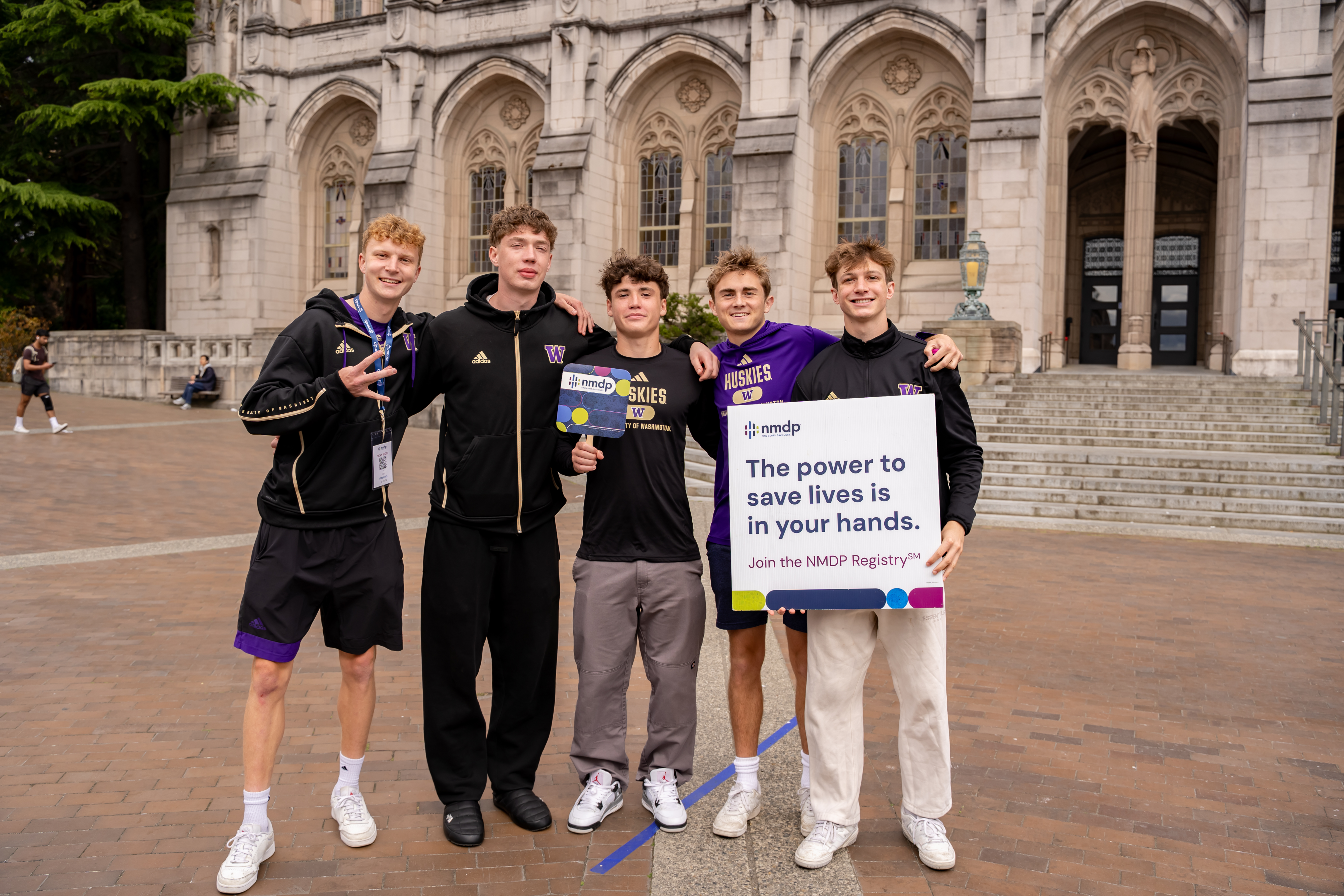
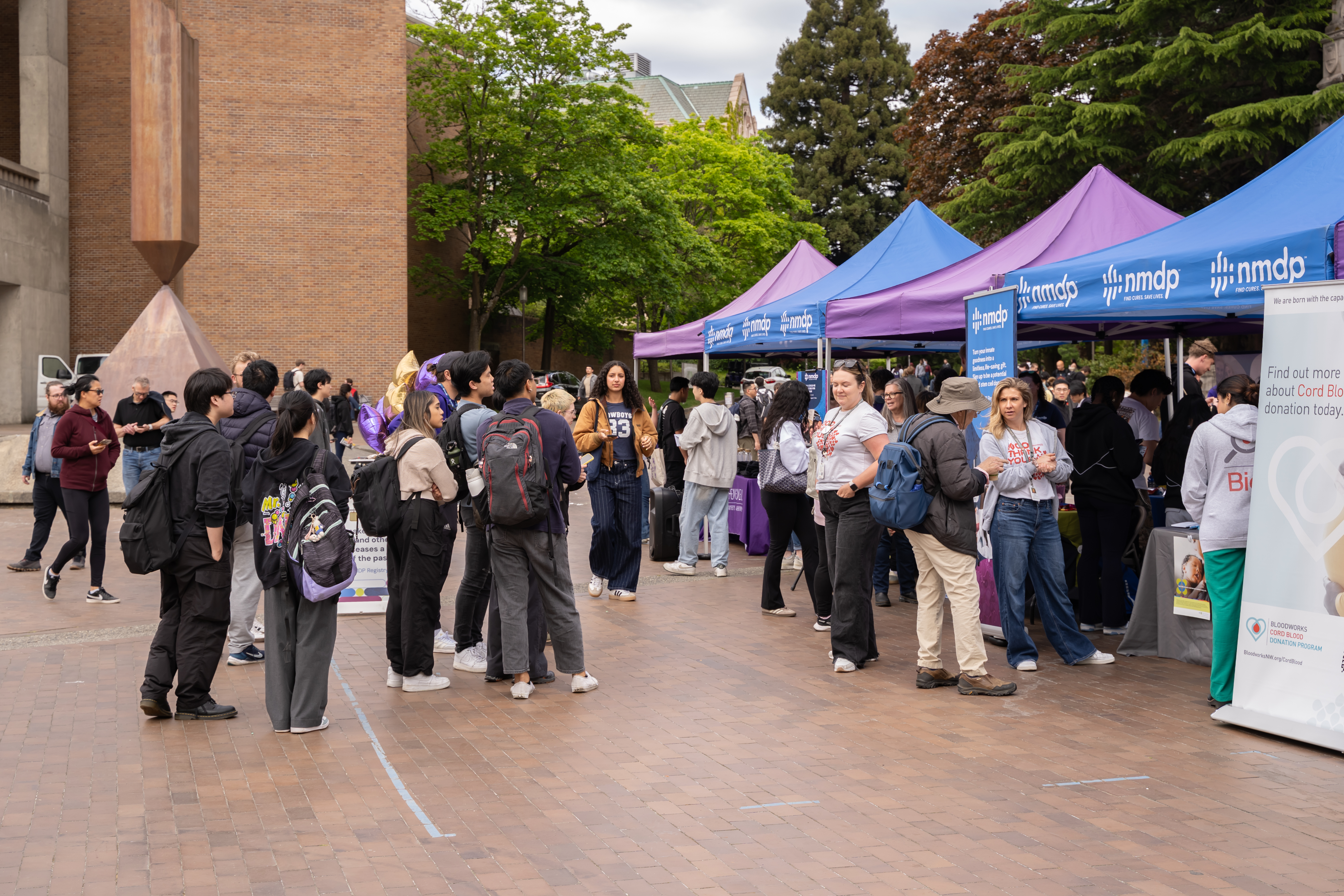
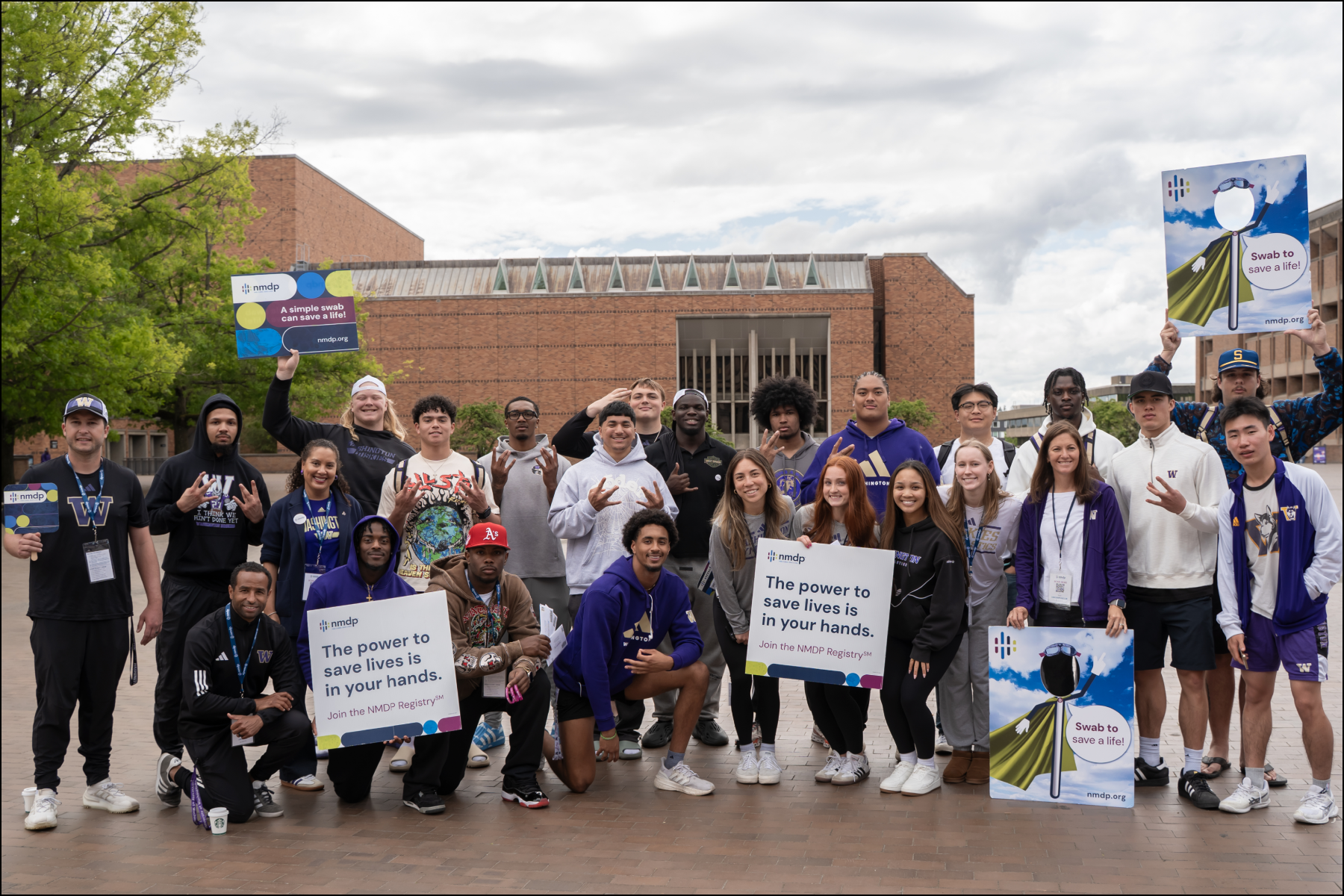
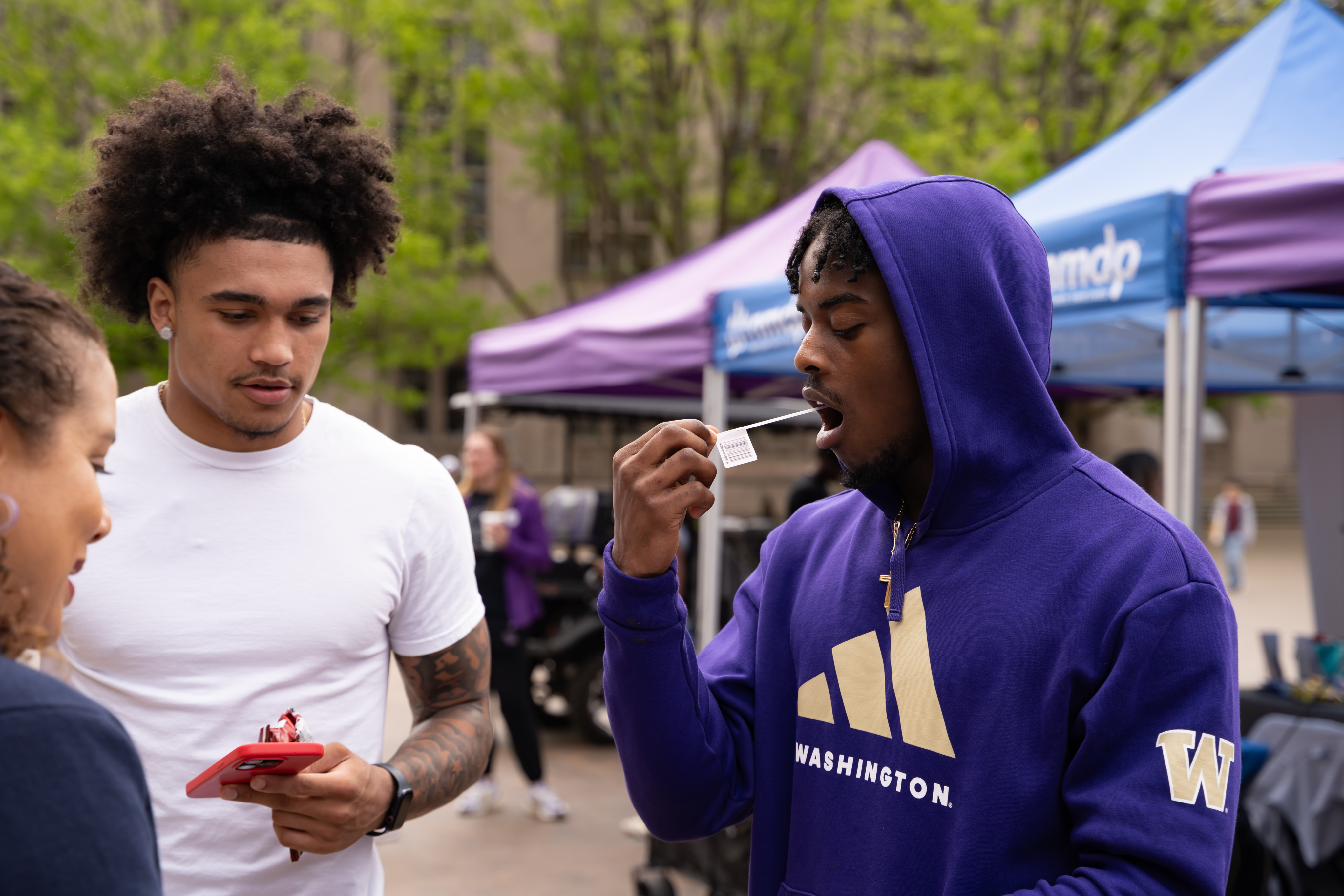
On May 7, Red Square at the University of Washington was transformed into a powerful center of hope and action as students, faculty, staff, and UW Athletics joined forces for the annual Get in the Game event. Hosted in proud partnership with the National Marrow Donor Program (NMDP) and the NMDP UW Registered Student Organization, this initiative is dedicated to expanding the bone marrow registry and educating the UW community about the life-saving work of the NMDP.

This year’s event also welcomed Bloodworks Northwest, who engaged with students, faculty, and staff to share the impactful work they’re doing throughout the Pacific Northwest.

We are thrilled to announce that 193 new potential donors were registered during this year’s event, including 104 from ethnically diverse backgrounds—an incredible step toward building a more inclusive and life-saving donor registry.

A powerful partnership with purpose

UW’s partnership with NMDP is centered on a life-saving mission: connecting patients battling life-threatening blood diseases and cancers with matching bone marrow donors. Finding a perfect match can be the difference between life and death, and unfortunately, the odds of finding a match are significantly lower for people of color and those of mixed-race ancestry. While white individuals have a 75% chance of finding a match, Black and African American patients face just a 19% chance. That’s why increasing diversity in the donor registry is not just important—it’s essential. And thanks to efforts like Get in the Game, UW is helping lead the charge toward a more inclusive future in marrow donation.


This partnership plays a crucial role in linking individuals battling life-threatening blood diseases and cancers with potential life-saving donors. Learn more about this partnership.

Keep the momentum going

To date, more than 500 UW students, faculty, and staff have registered to be part of the marrow donor registry. And we’re just getting started.

You can also support NMDP through the UW Combined Fund Drive by making a one-time or recurring donation. Every swab, dollar and voice bring us closer to curing over 70 blood disorders, including many forms of leukemia.
Alexes Harris’s passion project

Dr. Alexes Harris, professor of Sociology and UW Regent is the heart of this annual event. Her passion for raising awareness and growing the NMDP registry comes from a personal battle with myelodysplastic syndrome.

As Dr. Harris reminds us: “The registry is about giving people more time. It brings me so much joy to see students out there and recognize that they have the power to fight cancer.”

This event would not be possible without the partnership of NMDP and the help of all our volunteers within UW Athletics and the UW student body. Here are some of our favorite moments from the afternoon!

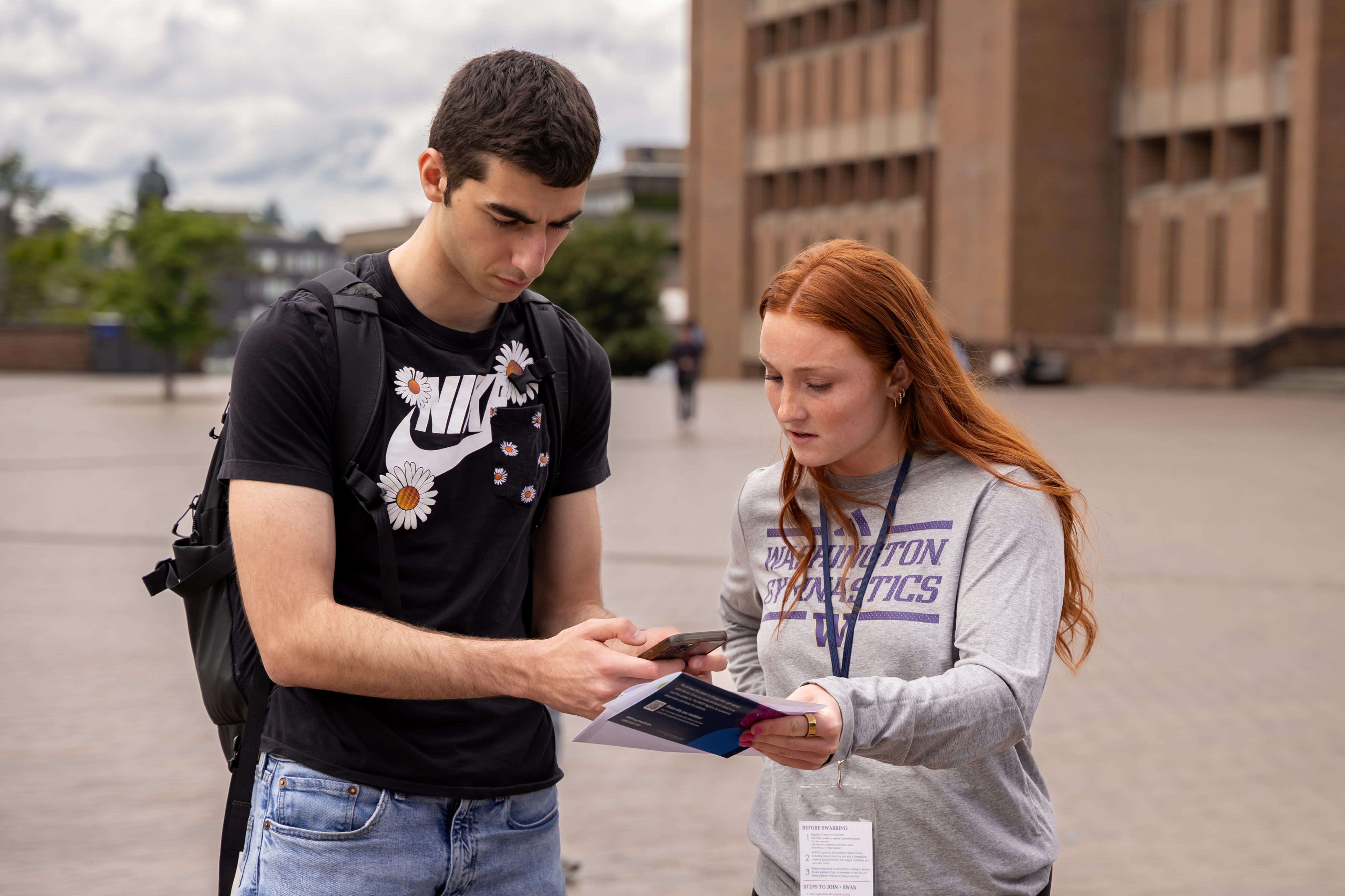
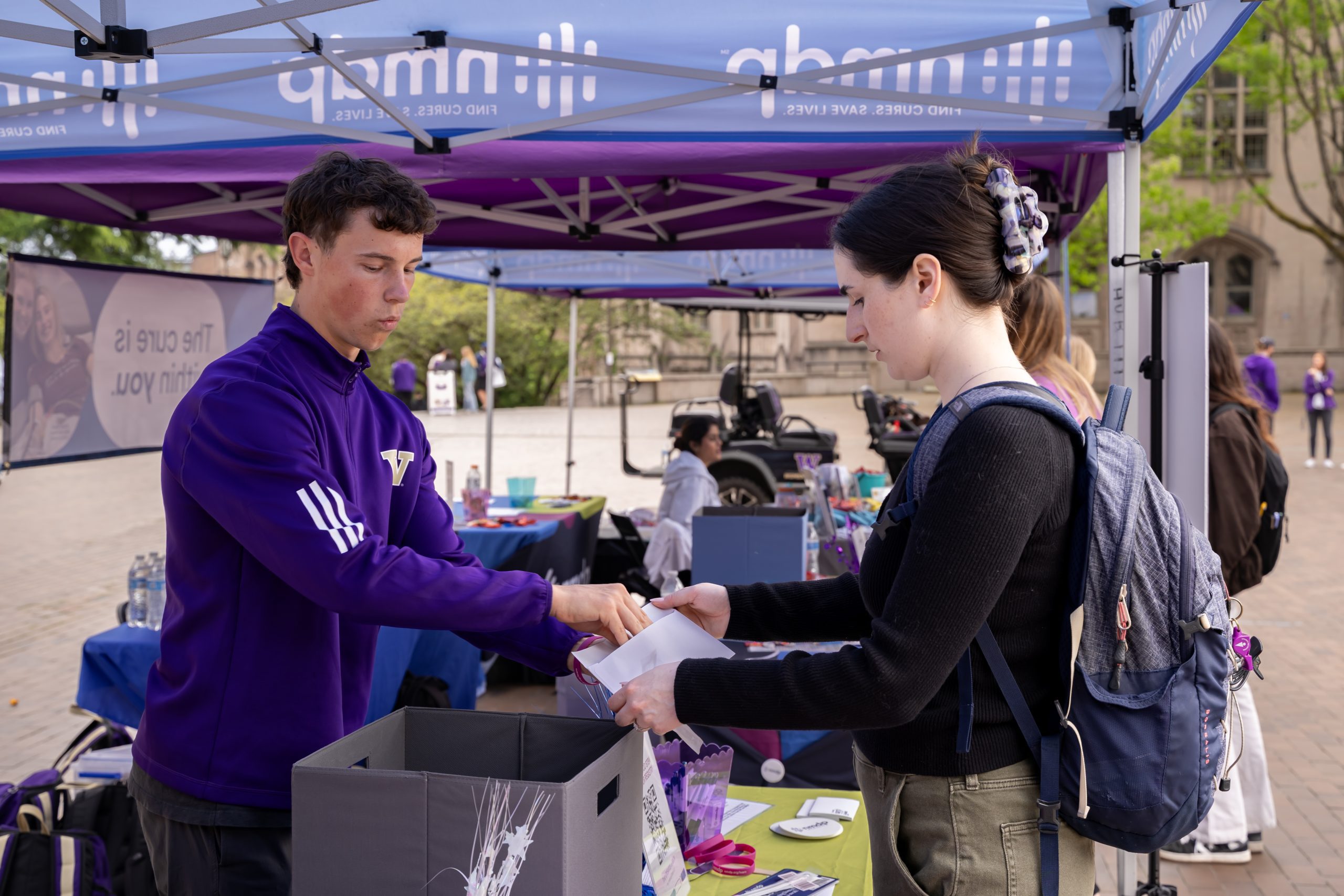
UW Athletics volunteer helps a student finish the registration process.
Two UW Football athletes make the decision to join the registry before starting their volunteer shift!
UW Men’s soccer pose for photo during volunteer shift!
A student passing on their way to class learn about NMDP from a UW Gymnastic athlete.
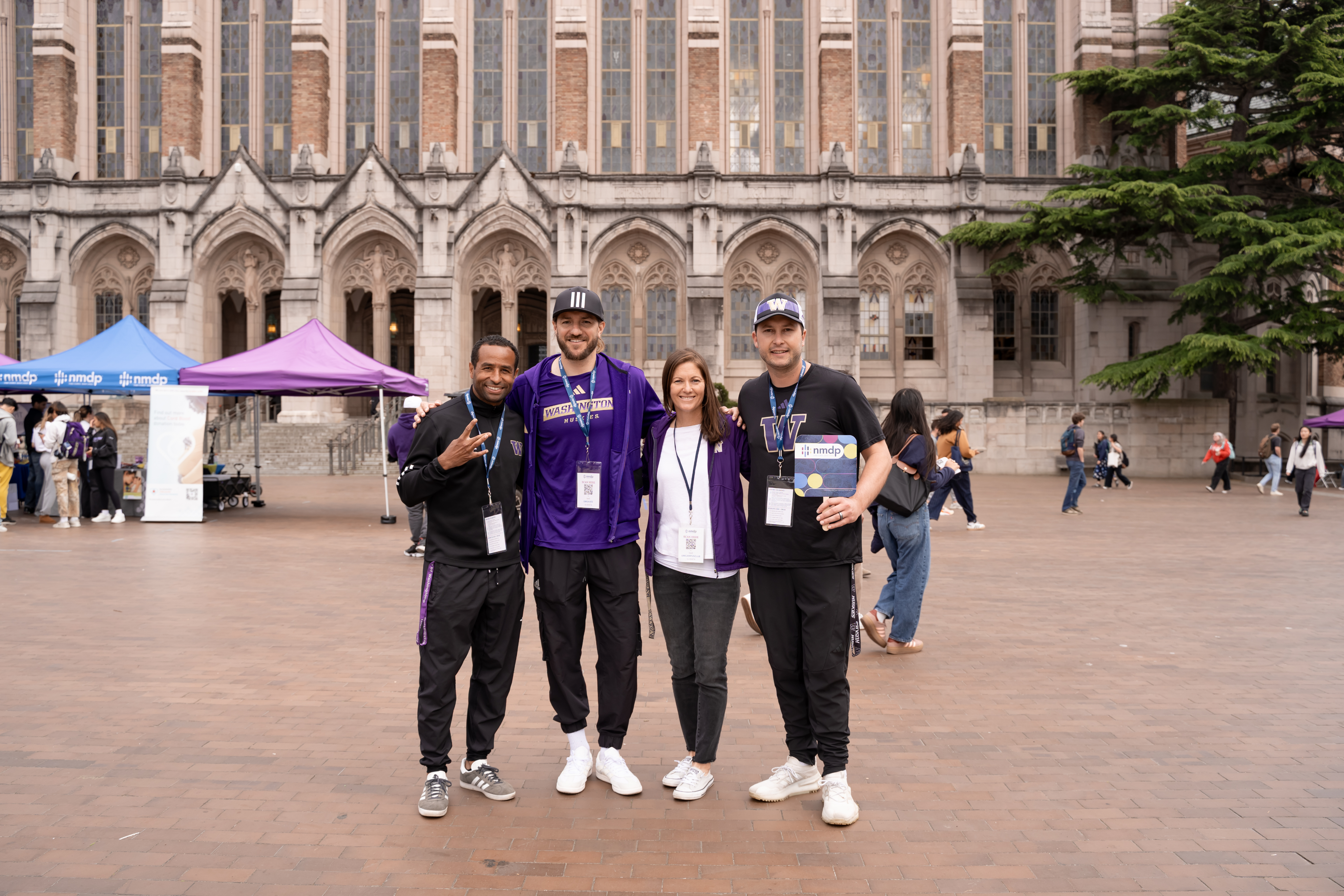
UW Women’s Soccer coaches join the fun!
NMDP, UW Athletics, The Whole U and student volunteers were very busy spreading the word and walking new donors through the registration process.
The Whole U team snaps a photo with Dubs!

Let’s continue this momentum—and keep fighting for more time, more matches and more lives saved.

A thank you to our sponsors and partners: TIAA, NMDP and BloodWorks NW!