

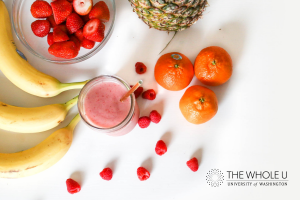
We all know fruits and vegetables are good for us — but did you know eating five or more servings a day can lower your risk of stroke by up to 26% and reduce your chance of dying from cardiovascular disease? Research has even found that the antioxidants in fruit and vegetable juices may help delay the onset of Alzheimer’s disease.
The bottom line: the more produce you eat (or drink), the better. But getting in all those servings isn’t always easy — especially on busy days. That’s where juicing and blending come in.
What’s the difference?
Juicing extracts the liquid from fruits and vegetables, leaving behind most of the pulp and fiber. The result is a thin, concentrated beverage rich in vitamins, minerals, and phytonutrients — but without the filling fiber. Juicing requires a juicer designed to separate juice from pulp.
Blending, on the other hand, uses the whole fruit or vegetable. Everything you put in the blender ends up in your glass, creating a thicker drink (a smoothie) with more fiber and volume. You can use a standard blender or a higher-power version like a Vitamix.
Example: You’ll need about two oranges, one stem of kale, half a red pepper, one cup of berries, and one stalk of broccoli to make one cup of juice — but the same amount of produce makes roughly three cups of smoothie.
Juicing at a glance
- Produces a smooth, nutrient-dense drink in a smaller amount of liquid.
- Works well for those who need a low-fiber diet or prefer lighter beverages.
- Because it’s concentrated, keep portions smaller to avoid excess sugar.
- Requires more produce per serving, which can make it more expensive.
Example: Two oranges, one stem of kale, half a red pepper, one cup of berries, and one stalk of broccoli make about one cup of juice.
Blending at a glance
- Uses the entire fruit or vegetable, keeping all the fiber intact.
- Results in a thicker, more filling drink that supports digestive health.
- Lets you add extras like nuts, seeds, yogurt, or oats for healthy fats and protein.
- Produces a larger portion — about three cups of smoothie from the same amount of produce used for one cup of juice.
Which one is healthier?
Both can be part of a healthy lifestyle — it depends on your needs and preferences.
- Choose juicing if you want a quick vitamin boost or need to reduce fiber temporarily. Just keep portions small to avoid excess sugar.
- Choose blending if you want the benefits of fiber, protein, and healthy fats. Smoothies keep you fuller longer and support digestive health.
- Do both! Alternate between juicing and blending to mix things up and use produce before it spoils.
Tips for juicing and blending success
- Keep fruit to 1–2 servings per drink (½–1 cup) to avoid excess sugar.
- Load up on greens — kale, spinach, parsley, and cabbage taste milder than you might think.
- Add citrus (especially lime or lemon juice) to cut any bitterness.
- For juicing, use high-water veggies like cucumber and celery for extra volume.
- For smoothies, add water, coconut water, or milk to reach your ideal consistency.
- Invest wisely — higher-horsepower machines perform better and last longer.
Whether you prefer the clean taste of fresh juice or the hearty texture of a smoothie, both are easy ways to boost your daily fruit and veggie intake — and reduce food waste in the process. Always consult your medical provider before making significant dietary changes, especially if you have a medical condition.