This article was provided by our partners at BECU.
If you live in Washington and want to enjoy a break without breaking the bank, consider taking a summer vacation a little closer to home. Here are some ideas from our partners at BECU to help you save while exploring your own backyard.
While scrolling through Instagram pictures of tropical resorts, luxury lake homes and international excursions, you might think everyone is taking high-dollar vacations this summer.
But the prospect of spending thousands of dollars on a summertime getaway can be disheartening if you’re trying to save money and pay off debt. Even though travel costs have decreased since last year, airfare, hotel and care rentals can add up.
The good news is, if you live in Washington, you’re surrounded by great opportunities to explore and have fun. Here are some ideas to help you control costs in four main vacation spending categories: entertainment and activities, food, lodging and transportation.
Entertainment and Activities
One way to control costs on your vacation is by being selective about your entertainment choices. Here are some ideas.
Go Hiking
Enjoy trails ranging from easy to expert in Washington’s diverse geography. Trail access is typically free, but you may need to pay for parking and park entrance fees. Some trails in backcountry and wilderness areas require paid permits, and access may be limited through a permit lottery. Check the requirements before you get to the trailhead. If you’re new to hiking, learn how to stay safe before you go.

Washington offers thousands of hiking trails for any activity, skill level or season.
Visit Snoqualmie Falls
If you like waterfalls, this stop is for you. Plus, it’s free and viewing areas are ADA accessible. According to the Snoqualmie website the falls are more than twice as tall as Niagara Falls and the second-most visited natural landmark in Washington after Mount Rainier. After you visit the falls, you can head into town for local ice cream at Snoqualmie Ice Cream (temporarily located at 8125 Falls Ave.), or local beer at Snoqualmie Falls Brewery.
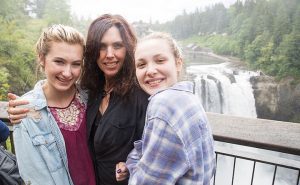
A visit to Snoqualmie Falls is free. You can choose an easy stroll to the top viewpoint, or, if you have more energy, take the trail to the bottom and back.
Play at the Beach
With more than 3,000 miles of outer coastline, Washington provides lots of opportunities to play at the beach. You could try surfing at Westport, exploring tide pools at Rialto Beach or clamming at Illahee State Park. (Clamming requires a license from the Washington Department of Fish and Wildlife, and you’ll need to check the health status of beaches with the Washington Department of Health.)
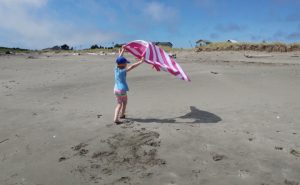
Enjoy beaches along the Pacific Ocean, Puget Sound, lakes and rivers across Washington
Visit a Lighthouse
With so much coastline, Washington also is a lighthouse fan’s dream with 30 lighthouse sites. One example: View the Cape Flattery Lighthouse from the rugged northwestern-most point of the lower 48 states. Be sure to stop at the Makah Indian Reservation to buy a recreation permit before you go, or buy and print a permit from the Makah website.
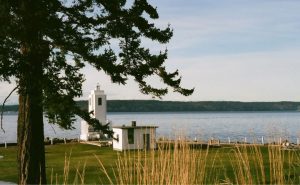
Lighthouses dot Washington’s shorelines. Some still have active lenses and you can go inside some for tours.
Go for a Scenic Drive
If you’re looking for a great view and have gas money as part of your vacation budget, Washington has some spectacular options. Here are a few favorites:
Mount Baker Highway, or Highway 542, winds east from Bellingham through Whatcom County, ending at an elevation of 5,140 at Artist Point, with stunning views of Mt. Baker and Mt. Shuksan. If you’re coming from the south, consider taking Chuckanut Drive to Bellingham.
Olympic Peninsula Loop on U.S. Highway 101 is a 300-mile route around the perimeter of Olympic National Park. Drive the whole loop or pick sections to see rainforests, Pacific Ocean beaches and lakes. Highway 101 is also the road to Forks, made famous by the “Twilight” movie series.
Highway 14 along the Columbia River Gorge is the Washington counterpart to the popular I-84 route on the Oregon side of the gorge. You’ll be treated to views of the Columbia River and Mount Hood, see the top windsurfing spots in the world, and you can visit a Stonehenge replica, built as a World War I memorial, at Maryhill.
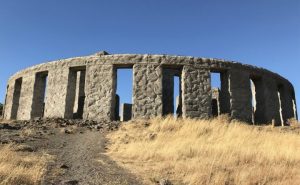
A Stonehenge replica, built as a World War I memorial, is one of the scenic stops along Highway 14.
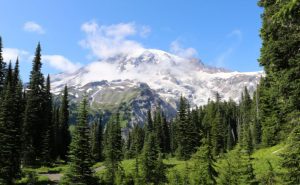
Take a drive to Paradise in Mt. Rainier National Park for breathtaking views.
Tour a Bunker
During World War II, military forts were built along the Strait of Juan de Fuca to defend Puget Sound. You can visit many of these sites, whether you’re interested in learning some history, or you like the spooky factor of walking around old bunkers.
Many locations require a Discover Pass or other paid parking permit. Here are some of the bunkers you can visit:
- Camp Hayden in Port Angeles.
- Fort Worden in Port Townsend.
- Fort Casey on Whidbey Island.
- Fort Ebey on Whidbey Island.
- Fort Flagler on Marrowstone Island.
- Fort Ward on Bainbridge Island.
Food
Whether you stay in a hotel, camp in a tent or crash with friends, meals can be one of the most expensive parts of any travel plan. Here are some ideas to control food costs:
Make Your Own Meals
If you pack your groceries (or buy them when you get to your destination) and limit yourself to one restaurant meal per day, you can reduce your food expenses and treat yourself to some truly delicious dining experiences.
Pack Your Meal as Part of the Fun
Pack your meals to make eating part of your outdoor experience. Whether you’re hiking, road-tripping, beachcombing or visiting a park, plan to enjoy your surroundings while you take in a meal. Bonus: You don’t have to take a break from your activity to go find a restaurant.
Prepare Local Food
The diversity of Washington’s geography supports a wide variety of food. Here are a few suggestions for places to pick up local food that you can take back to your kitchen and prepare:
- Pike Place Market in Seattle.
- Shellfish farms like Hama Hama and Taylor Shellfish.
- Berry and apple farms in Whatcom County.
- Farmers markets across Washington like The Scale House Market in Spokane.
- Dungeness crab at dockside fish markets and grocery stores.
- Farm stands, orchards and other produce in Yakima Valley.
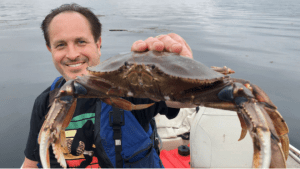
Crabbing in the Puget Sound makes the perfect meal for seafood lovers. Licenses are required for this activity.
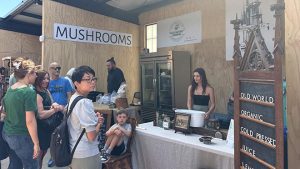
Shop at local farmers markets for the fresh produce and regional specialties.
Lodging
Lodging can be another big chunk of vacation expenses.
Staying with friends and family can be fun — and economical. If you take your friends out for a meal or two to repay their kindness, you’ll still spend less than the cost of a hotel stay.
But what if you don’t know anyone who lives in your vacation destination or just prefer not to stay with friends? Here are a few money-saving options.
Go Camping
Washington is home to beautiful camping options, offering an array of mountain, rainforest, desert, beach, lake and river locations.
If you’re a new camper and starting from scratch, getting geared up can be an investment. You’ll want to build savings goals into your budget for purchases like a tent, sleeping bag, sleeping pad, stove and cooler. But once you have your setup, you’ll have plenty of options for low-cost accommodations.
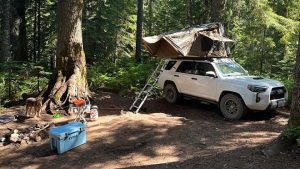
Camping can be a low-cost lodging option that gives you a chance to connect with nature and unplug.
Here are some examples:
Washington State Parks campsites cost $12 for a primitive campsite, up to $56 for a full-utility campsite.
National Parks campsites costs vary by park and by campsite. Olympic National Park, for example, costs $15 to $24 for a campground spot. Some National Parks also have entrance fees. For example, Olympic National Park charges $30 for a standard non-commercial vehicle with up to 15 passengers.
Washington Department of Natural Resources manages 80 campgrounds in the state. Campsites are free, but they are first come, first served, and you do need to have a Discover Pass.
If you’re not quite ready for tent camping, you can spend a little more for a “glamping” experience in a yurt or cabin, but be aware: Some cabin rentals can rival the cost of a hotel stay.
Sort by Hotel Price
If you don’t already have your heart set on a destination and you just want to get away for a few days, consider choosing your vacation spot based on the price of lodging.
Go to a hotel or vacation rental website, enter your vacation dates and sort by price. For example, a search on Booking.com for three-star accommodations in Washington for a week in July, flexible dates and two adults returned 1,217 properties. The lowest price was $310 for a hotel in Yakima, including breakfast — so maybe a winery tour is in your future.
Transportation
Transportation costs — including flights, rental cars, gas and ride services — can add up.
Even though airfare is the lowest it’s been in three years, according to Hopper, you can cut out a big chunk of your vacation expenses by finding fun and relaxation closer to home.
U.S. domestic flights still average $265 per round trip, and international travel prices are much higher.
Here are some transportation suggestions to get you to your local vacation spot and enjoy the sights once you’ve reached your destination.
Take Local Public Transit
Many Washington cities and counties offer bus services and other types of public transportation.
King County Metro is the largest local public transportation agency in the region, serving Seattle and all the surrounding cities and unincorporated areas of King County. An adult single-ride fare is $2.75 and a regional day pass is up to $6.
You can even take the bus to popular hikes along I-90 near North Bend using Metro’s Trailhead Direct service. No gas or parking money required.
Other fun and affordable public transit options include Seattle’s South Lake Union Streetcar and Seattle Center Monorail and Sound Transit’s Link light rail.
Ride the Ferry
In addition to being a great option for getting you to and from a destination, ferries can be an affordable alternative to water tours and cruises.
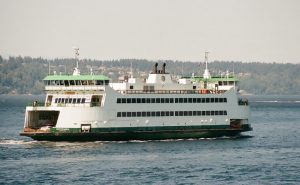
Riding a ferry can be an affordable way to get your vacation destination or just get out on the water.
Washington State Ferries are a division of the Washington State Department of Transportation and an extension of the state highway system. Ferry routes (PDF) connect passengers to locations throughout the Puget Sound and the San Juan Islands.
Prices vary, but as an example, from Seattle, an adult can walk on the ferry to Bainbridge Island for $10.25. The ride back to the city is free. If you decide to drive on the ferry with an adult passenger and two kids under the age of 18, you’ll pay $33.45. That’s a pretty good deal, considering you aren’t paying for airfare.
If you’re planning to travel to Port Townsend or the San Juan Islands, you can save yourself a long wait during busy travel times by making a reservation.
Find Activity-Based Transportation
If your vacation involves a specific activity, like hiking, mountain biking, wine tasting or brewery tours, check if shuttle services are available.
Here are some examples:
Little Hopper provides shuttle service for craft brewery and winery tours in Yakima Valley.
Visit Walla Walla’s website has a list of wine tours and transportation options.
Olympic Hiking Co. Trailhead Shuttle offers transportation to backpackers who want to leave a car at one end of their point-to-point trip through Olympic National Park.
Talking Rocks Outdoor Company, based in Enumclaw, specializes in trailhead shuttle service to the South Cascades.
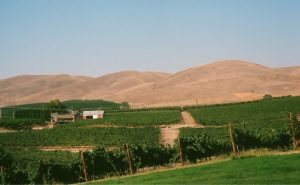
Enjoy a winery tour and explore vineyards in Washington.
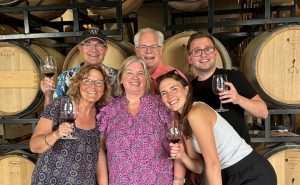
While on vacation, sip and learn the history of popular Washington wines.
Resources
Figuring out where to go and what to do can be overwhelming. Here are a few suggestions to get you started:
Local newspaper entertainment guides: The Seattle Times, for example, has an event and entertainment guide called “The Ticket,” and The Stranger has “EverOut.”
Tourism bureaus and organizations: State of Washington Tourism, Visit Seattle, Visit Spokane and Yakima Valley Tourism are examples.
Bargain-based listings: Greater Seattle on the Cheap has a whole website dedicated to low-cost fun.
Your local library: Public libraries are great places to find free entertainment, festivals, classes, art and history.
This article was written by Katie J. Skipper, BECU Community Content Manager. Katie manages the BECU Blog and writes about personal finance topics including credit cards, budgeting, debt management, loans, taxes, home improvement, inflation, fraud and scams. She also writes about race, gender and social equity, and features the stories and expertise of BECU employees and community members. A former journalist, she has reported for daily newspapers in Washington and Montana, including The Daily (Everett) Herald, Great Falls (Montana) Tribune and The Bellingham Herald, covering a range of topics including government, law and justice, and the environment.
Thank you to BECU for sponsoring The Whole U!